
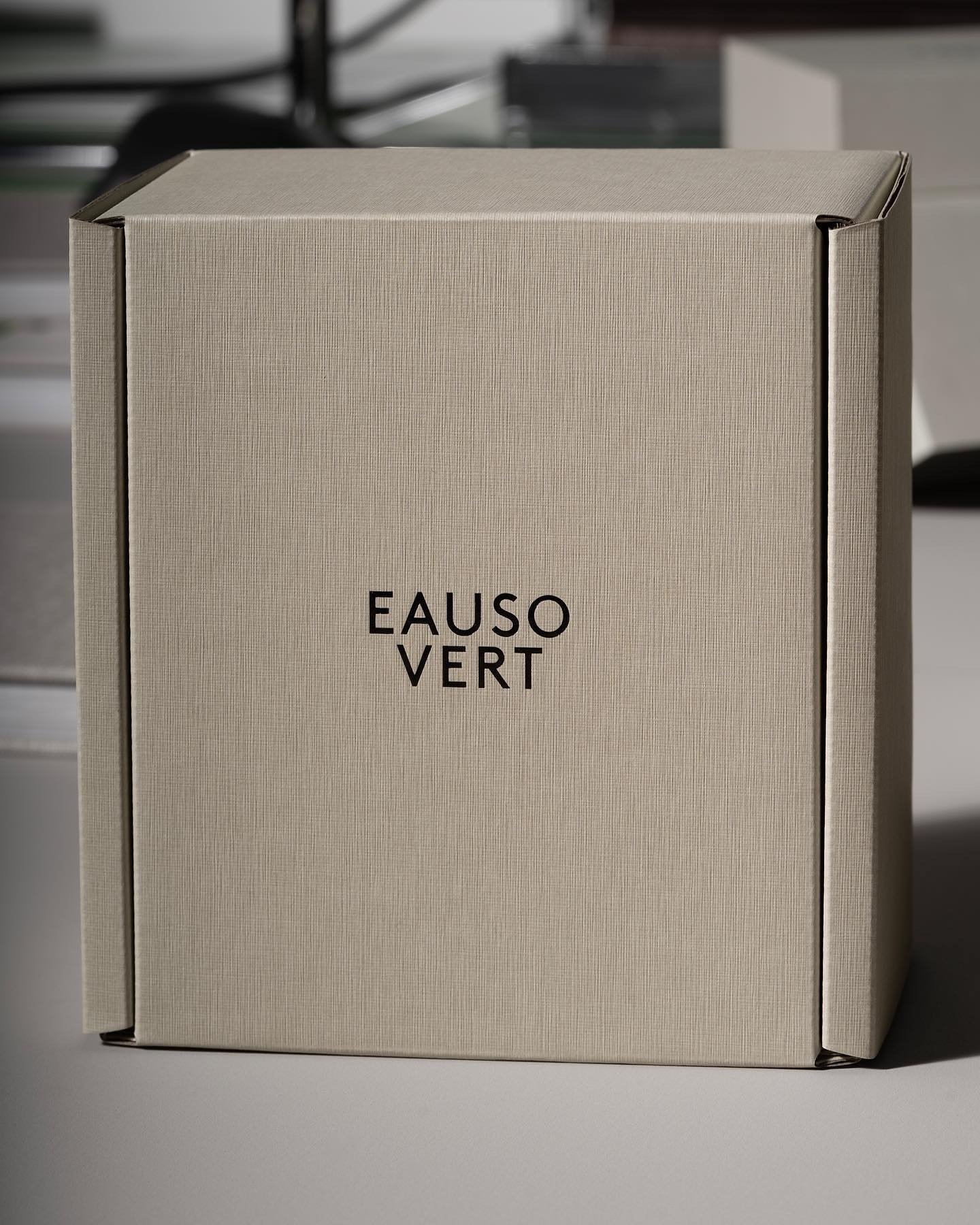
The closed Eauso Vert fragrance mailer shows an external box envelope. No measuring tool, dimensions, contents or shipment carton count are shown. Third-party reference; not a Bravo Package project.
A useful discussion of perfume packaging dimensions separates the product, the finished retail box and the fully packed, closed shipping carton. A smaller retail box does not automatically increase the number that fits in a carton, and dividing volumes does not establish an actual layout. Define the real product, protective materials, permitted orientation and packing quantity, then trial-pack the arrangement. Record final dimensions, carton counts and actual weight before confirming charging terms and quotes with the relevant shipping channel.
Separate three levels of dimensions

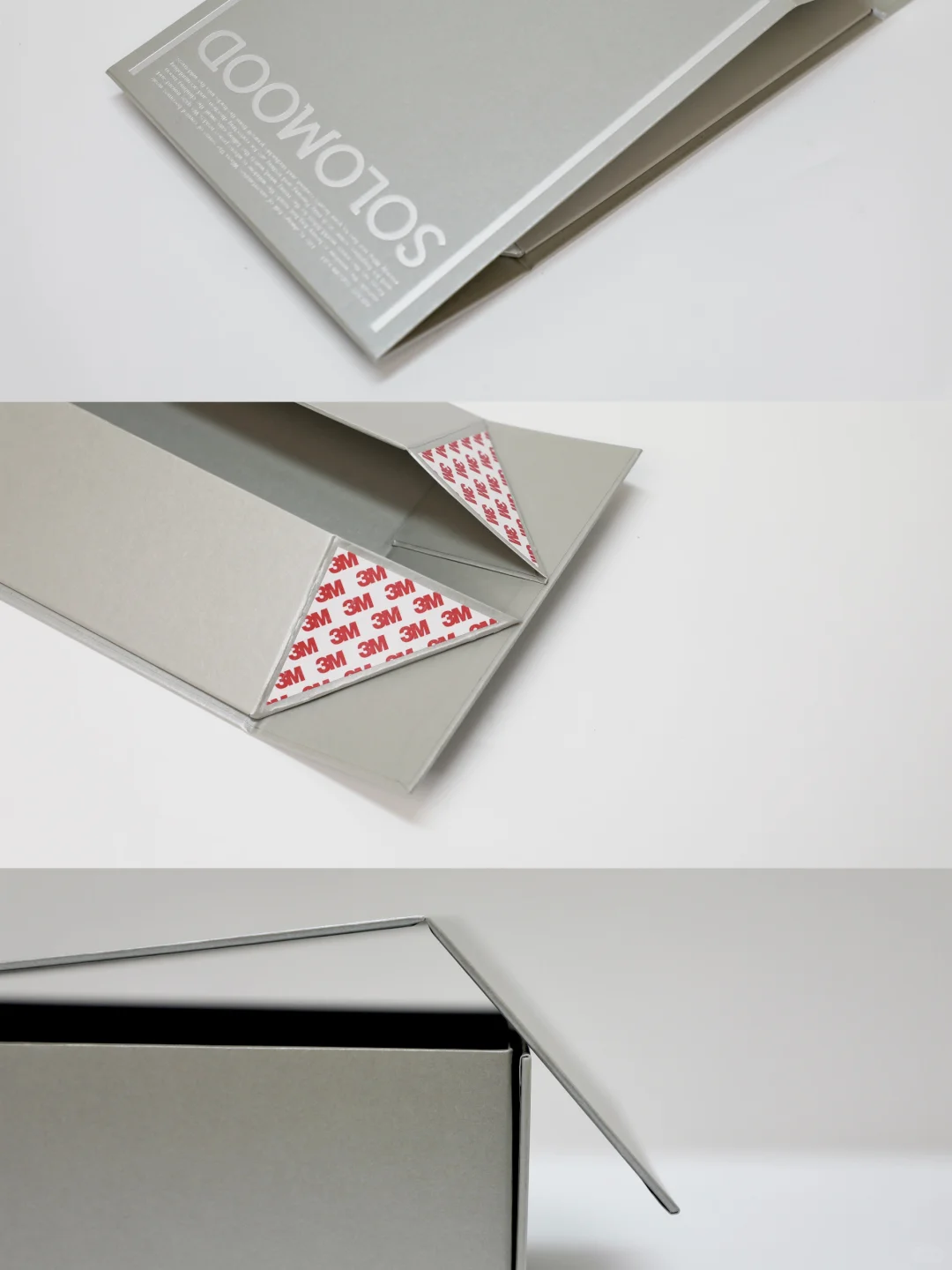
Product dimensions refer to the actual final product with its cap and accessories. Retail-box dimensions refer to the completed packaging with its specified materials and internal components. Shipper dimensions refer to the dispatch carton packed and closed in the agreed configuration. Record identity, measuring points, units and revision, distinguishing usable internal dimensions from external ones. Bottle dimensions cannot simply be supplied as carton dimensions.
State which level a proposed adjustment changes. With the bottle unchanged, the box, insert and shipper may still change independently. Flat dieline dimensions are not formed external dimensions. Mark drawings and estimates as planning information rather than mixing them with measured results.
Confirm quantity through a real packing arrangement

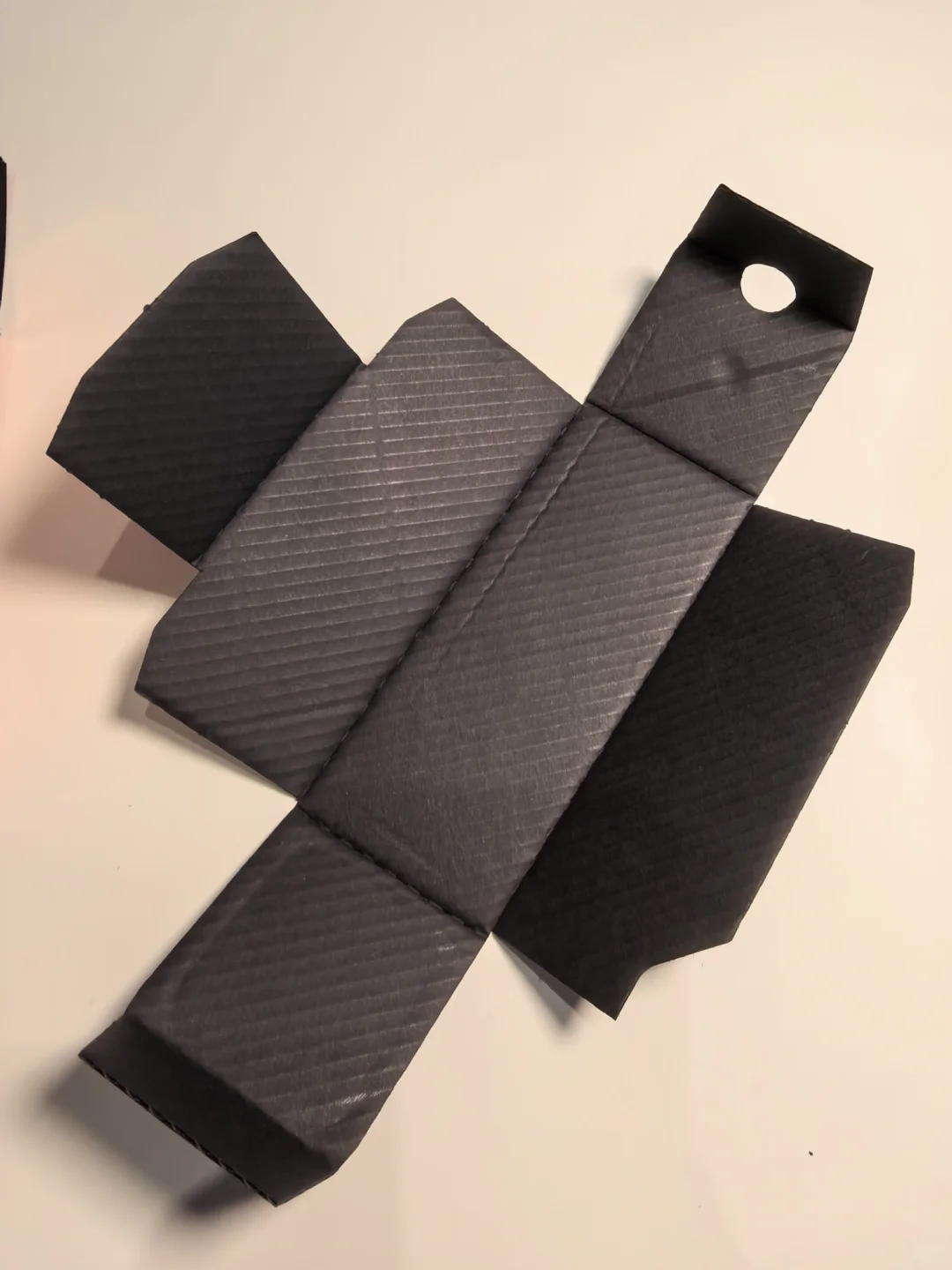
List the intended SKUs, quantity, permitted orientation and any mixing conditions for each carton. Include separation, surrounding protection and the space needed for closure. Draw an understandable arrangement, then trial-pack it with real items. Directional relationships, access and removal can affect placement beyond whether the combined volume appears small enough.
Dividing carton volume by retail-box volume gives an abstract volume relationship, not proof that the boxes fit in the required orientation. Planning software also needs the current dimensions and constraints; a calculated quantity does not replace a physical sample. Retain a revised layout after changing dimensions.
Record carton data after complete trial packing

Pack the actual products, retail boxes, protective components and shipper in the specified sequence. Close the carton, measure its maximum external length, width and height, and weigh the complete package. Record contents and quantity alongside these measurements. Distinguish full cartons, partial cartons and different SKU configurations rather than representing visibly different states with one sample carton.
Retain photographs, dimensions, counts and instructions so the arrangement can be reproduced. Keep empty-carton specifications separate from the final packed condition, updating data after rearrangement or material changes. Do not compress products, remove protection or cut cartons to achieve a smaller figure. Confirm a new proposal within its project scope.
Review per-carton quantity and total order cartons

Once a real arrangement is established, list full and partial cartons for the order quantity, checking that all specified components are included. A small reduction in one direction may not change the physical layout. If per-carton quantity remains unchanged, the total number of cartons may also remain unchanged. Do not equate a smaller dimension with fitting more units or dispatching one fewer carton.
Compare options using the same products and quantities, listing carton dimensions, units per carton, carton counts and actual weight. Where a pallet or larger loading unit is involved, confirm its arrangement separately. Keep all levels linked without importing unverified standard modules or fixed allowances.
Confirm dimensional-weight terms for the actual channel
For a quote, supply the final packed dimensions, weight, carton count, contents and actual route details. Ask for the measurement basis, dimensional-weight treatment, charging terms and additional items to be identified. Do not treat a divisor, rounding method or comparison rule from an experience post as common to every shipping channel. A light product does not establish a low charge.
Keep geometric volume, actual weight, dimensional-weight information and the final quote as separate records. No carrier calculation formula, rate or eligibility determination is provided here. Whether a dimension change affects price needs confirmation for the same conditions by the actual channel. A percentage change in volume is not a percentage change in cost.
Link dimensions, layouts and quotes by revision


Archive product and retail-box specifications, internal and protective materials, shipper, layout, trial-packing record, measured data and quote scope together. Distinguish estimates, measurements and outstanding confirmations. Link the quote date to its applicable configuration so an earlier price is not presented beside a revised carton specification.
After changing a cap, retail box, insert, quantity or shipper, review affected assembly, arrangement and measurements before updating quote information. Keep protection and use assessments separate; smaller volume or a lower quote does not grant automatic acceptance. Support dimensional decisions with actual packed samples and consistently defined records.