Cath Kidston uses plants, flowers and fine ornament across both fully patterned and quieter color-panel cartons. Brand labels preserve recognition. These packs help examine where a decorative paper box can be detailed, where it needs open space and how instructions can be included without interrupting the main artwork.
This review concerns the paper outer packaging visible in the photographs. Paper weight, concealed construction and finishes need confirmation from physical samples. Development suggestions describe options for a new packaging project.
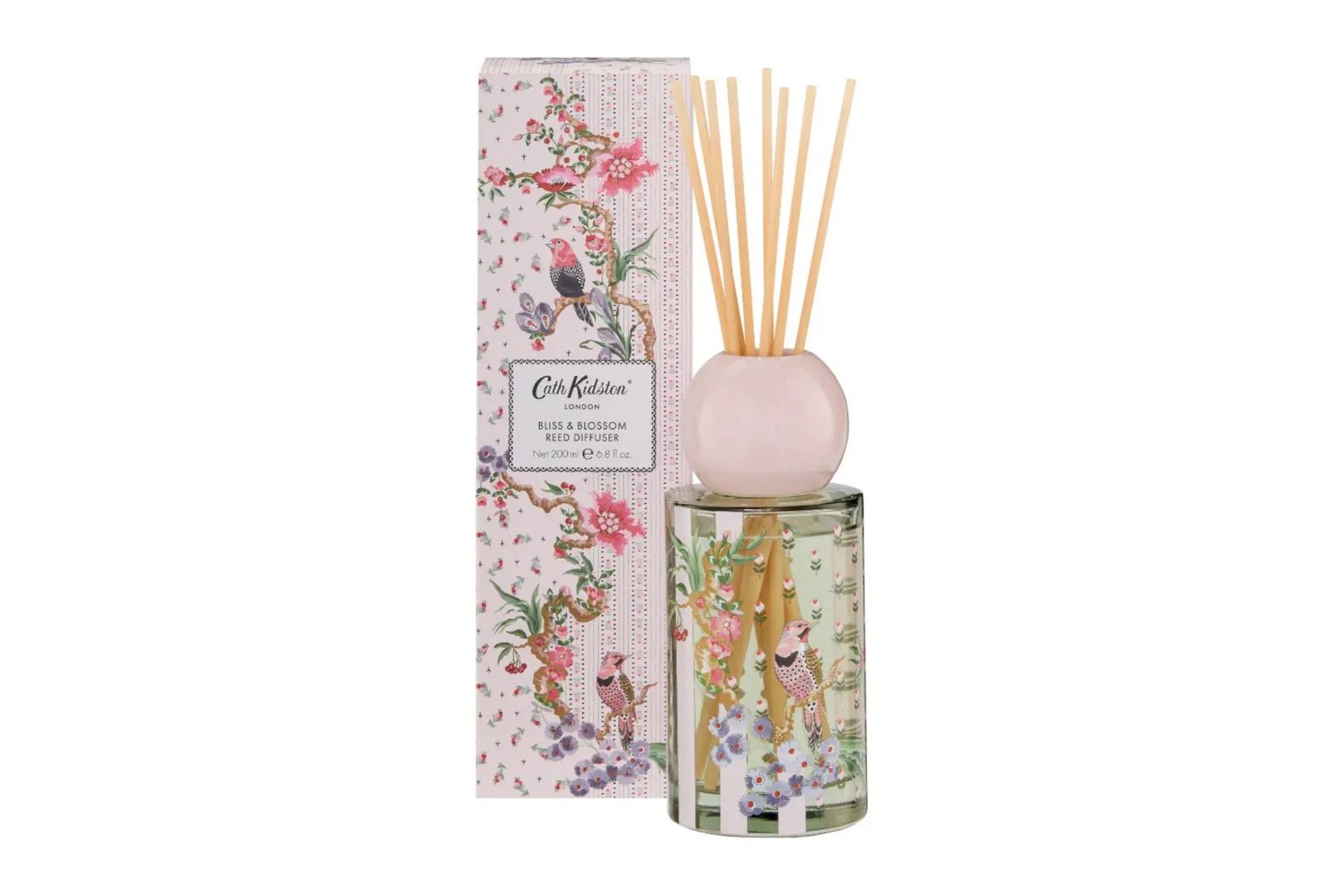
Bliss & Blossom connects its full print with the bottle
Bliss & Blossom combines dense flowers and ornament around an independent brand label, with related elements on the bottle. The paired view shows how motif scale works on two surfaces.
Do not copy one pattern at exactly the same scale onto both. Adjust subjects, text areas and edge crops separately for the visible carton and bottle-label areas.
The back continues the pattern around a separate instruction area
Another back-panel view groups product and usage information in a relatively clear area surrounded by flowers. The reverse contributes to the design while retaining a practical role.
Obtain the brand's actual copy and markings before allocating space; another brand's instructions are not a substitute. Proof small text, barcode, paragraph spacing and clearance from folds at real size.

Fig Tree retains ornamental detail on a quieter green face
Fig Tree keeps most of its face deep green, concentrating decoration in the label border and lower trim. Fewer large motifs still retain a visual connection.
Shared label shapes and border language can connect different pattern densities. Dark backgrounds need separate proofs for small lettering and fine frames, not just enlarged renderings.

A standalone carton reveals print scale and panel boundaries
The standalone Bliss & Blossom carton makes the distances between flowers, ornament and label clearer. It complements the bottle group view by exposing finer panel details.
Review both flat artwork and an assembled box for image endings at lid, sides and folds. Avoid cut-off key subjects, overly tight label margins or abrupt density changes.

Coming Up Roses reduces the floral coverage
Coming Up Roses uses a broad pale pink area with decoration near the label and base. Localized bottle flowers echo the carton with a lighter overall pattern.
Fix brand-label position and basic proportions while allowing more and less decorated versions. Compare every carton with its bottle for color, pattern weight and information hierarchy.

Plan instructions and paper choice alongside the all-over print
Cath Kidston diffuser boxes balance full floral prints, decorative borders and readable back panels. Explore artwork scale and coordinated bottle packaging.
Provide the capped bottle dimensions, filled weight, reed length, reed quantity and bundling method. If the pack also contains a candle, refill or other accessory, record each item and the intended removal sequence before setting internal clearances and retention positions.
Compare paper options for stiffness, base color, print detail and feel. When considering a folding carton or a rigid gift box, include the insert, assembly method and shipping volume in the quotation. An insert not shown in the photographs is not described as the brand's existing construction; folded paperboard supports or compartments can be evaluated separately.
| Development stage | What to confirm |
|---|---|
| Unprinted structural sample | Bottle and reed retention, closure, removal sequence and assembly efficiency. |
| Printed sample | Brand and fragrance readability, background color, fine lines and artwork at folds and adjoining panels. |
| Delivery validation | Quantities per design, assembled or flat delivery, and compatibility with the shipping carton and cushioning. |
Confirm fine artwork, then test contact with the actual product
First samples should establish structure, lettering and base printing. If foil, embossing or another surface effect is wanted, compare it on a brand mark or selected graphic area before choosing on appearance and cost. A reflection in a photograph is not a process specification.
Place the actual products in the sample and check movement, label rubbing and pressure on the reeds. For parcel delivery, test it with the intended shipping carton and cushioning. An attractive display box does not establish transport protection.
Developing custom paper boxes for a reed diffuser range? Share your product dimensions, quantities per design and preferred packaging details with Bravo Packaging. We can discuss box formats, paper choices, printing and paperboard insert options for a suitable sample.


