
Packaging Papers Explained:
Basic Papers, Specialty Papers
& Structural Materials
Understand the materials behind paper packaging. Explore their appearance, typical applications and the details to confirm when choosing paper for perfume boxes, gift boxes and coordinating packaging components.
A finished box may combine several materials: a printed or textured covering paper, a structural board and a separate insert. Start with the role each material needs to play.
Basic Packaging Papers
Familiar paper families for printed surfaces, wrapping and folding cartons. Their suitability depends on the exact grade and the role they play in the pack.
Coated Art Paper
A smooth surface for printed packaging.
Coated art paper has a surface coating that influences smoothness, ink holdout and print appearance. It is available in different surface finishes, so coated paper does not always mean a glossy result.


Appearance & character
Its relatively even surface makes it a useful direction for detailed graphics, illustrations and broad areas of printed colour. The finished appearance also depends on any varnish, lamination or decorative process applied after printing.
Packaging applications
Used as a covering paper for rigid boxes, as a printed wrap for paper tubes, and for coordinating printed components. A wrapped rigid box combines this surface paper with a separate structural board.
What to confirm
Confirm the coated side, paper weight, printed colour and surface treatment together. Check corners, folded edges and rubbing on a converted sample. Paper coating and film lamination are separate processes.
Uncoated Paper & Offset Paper
A paper-led surface with a quieter sheen.
Uncoated paper is a broad family without the pigment coating associated with coated printing papers. It can be smooth, rough or textured. Offset paper is one familiar type within this family, rather than a name for every uncoated stock.


Appearance & character
The surface often has a low sheen and a noticeable paper feel. White, natural-white and ivory shades influence the overall colour impression of both the paper and the printed artwork.
Packaging applications
Common applications include instruction leaflets, brand cards, thank-you notes and envelopes. Suitable uncoated grades can also be selected for box wrapping or carton construction; a thin leaflet stock cannot replace structural paperboard.
What to confirm
Review ink absorption, colour and fine detail on the selected stock. Uncoated paper is not necessarily rough or recycled. Writing suitability also depends on the paper grade and any subsequent finishing.
White Cartonboard
A printable material that can form the carton itself.
White cartonboard is a family of white papers and boards selected for their combination of surface quality, thickness and stiffness. It can be printed, die-cut, creased, folded and glued to form a carton, unlike a rigid box made from wrapped board panels.


Appearance & character
A white surface provides a clear starting point for brand graphics. Board grades differ in fibre composition, bulk, stiffness, coating and reverse-side appearance.
Packaging applications
Used for single-bottle perfume cartons, skincare boxes, discovery-set cartons, sleeves and selected paperboard inserts. Bottle weight, box dimensions, base construction and product support all influence the specification.
What to confirm
Confirm the actual board grade and caliper as well as grammage. SBS/SBB and FBB describe different board constructions. Equal grammage does not guarantee equal thickness or performance. Review creases, edges and fit in the assembled pack.
Kraft Paper
A distinctive paper character for wraps and packaging components.
Kraft paper is associated with the kraft pulping process. Familiar brown grades are only part of the range: bleached versions and different fibre blends are also available. Colour alone does not identify recycled content.


Appearance & character
Brown paper introduces a warm base colour that becomes part of the printed design. Dark graphics and restrained decoration are possible directions, while lighter or brighter artwork needs particular attention to the paper background.
Packaging applications
Depending on the grade, kraft paper can be used for bags, sleeves, wrapping and other packaging components. A folding box requires a suitable kraft paperboard and construction rather than a thin wrapping paper.
What to confirm
Confirm fibre information, surface treatment, strength and printing requirements for the selected grade. A kraft-coloured print on coated paper is a different material choice. Assess the paper and any films, adhesives or accessories separately.
Common Specialty Papers
Explore colour, texture, fibre and touch. These are practical browsing groups: a paper can belong to more than one, such as a coloured stock with an embossed surface.
Pulp-Coloured Paper & Black Card
Colour that belongs to the material.
Pulp-coloured papers are coloured during papermaking, with colour extending through the sheet. Black card is a broader commercial description: black stocks can differ in colouring method, core colour and surface treatment.


Appearance & character
The paper colour can form the main visual field without a full printed background. Cut edges and folded corners help reveal how the stock behaves as a physical material.
Packaging applications
Consider for rigid-box wrapping, perfume packaging, sleeves and coordinating cards. Suitable board grades can also be explored for folding structures or inserts.
What to confirm
Confirm whether the stock is coloured through, review colour consistency, and test white ink, foil or pressure-based finishes as required. Through-colouring does not by itself establish scratch resistance or guarantee unchanged crease appearance.
Textured & Embossed Paper
Surface patterns that give paper a visible dimension.
Textured paper describes a surface with a noticeable grain, relief or pattern. Embossed papers acquire a pattern through an embossing process. Familiar directions include linen-like textures, fine grain, laid lines and more pronounced relief.


Appearance & character
Texture changes the way a surface catches light. A close view shows the grain; a finished pack shows its scale across panels, folds and corners. The pattern can become a design feature alongside limited graphics or generous unprinted space.
Packaging applications
Used for rigid-box coverings, perfume boxes, sleeves and presentation papers, subject to the suitability of the specific grade.
What to confirm
Coarse or deep textures can affect small type, solid printing and foil continuity. Test the intended artwork on the actual paper. An all-over paper texture is different from embossing or debossing a local logo during finishing.
Leather-Effect Covering Paper
A paper-based route to a defined surface texture.
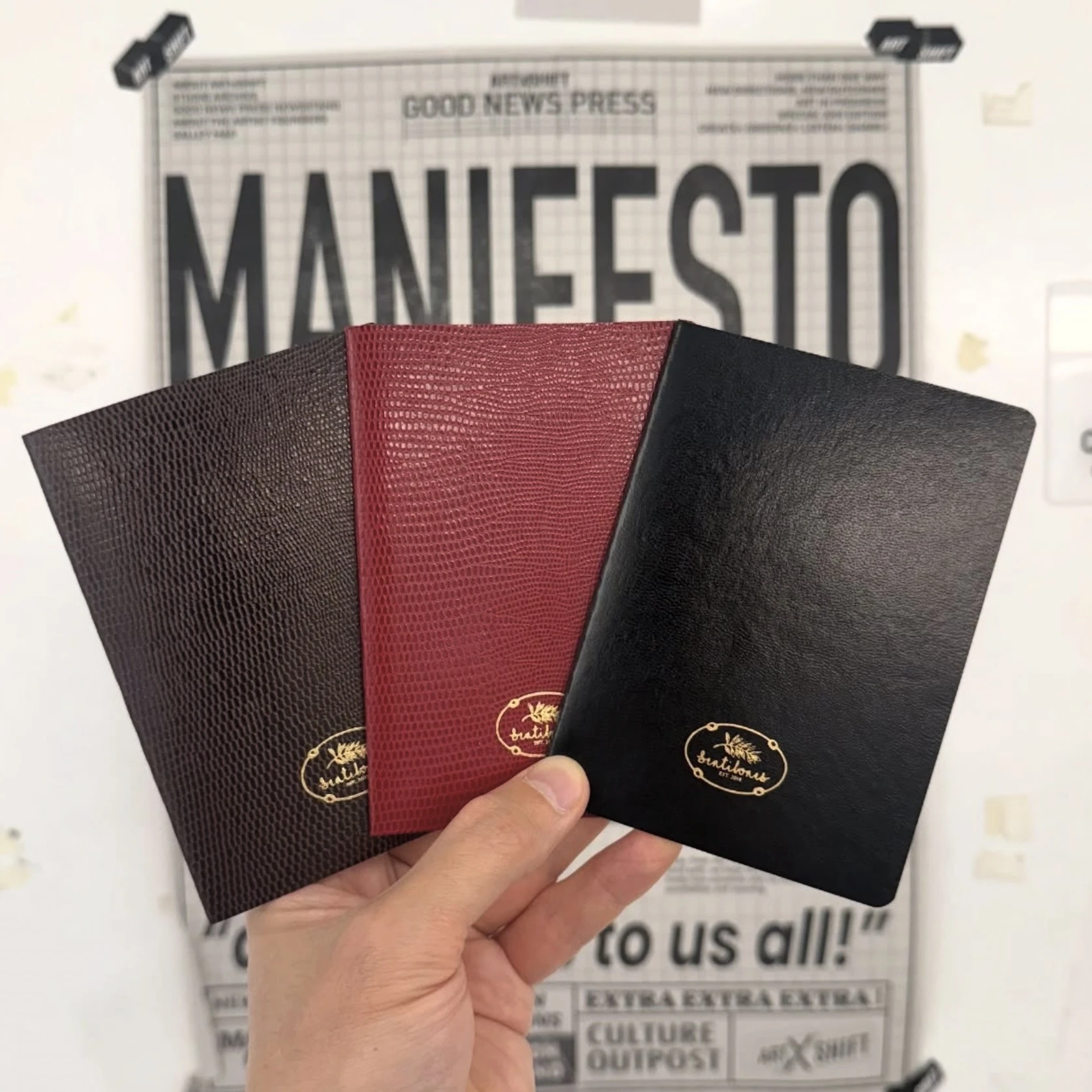
Leather-effect covering paper is a commercial family of paper-based materials designed to evoke a leather-like appearance or feel. The result may combine embossing, colouring and surface treatment, with different constructions across products.

Appearance & character
Textures range from fine grain to more pronounced patterns. Close-up viewing is useful because grain depth and reflection influence the character of the finished surface.
Packaging applications
Consider for jewellery boxes, perfume gift boxes, presentation cases and other wrapped structures. A restrained graphic treatment can leave more of the texture visible.
What to confirm
Confirm the substrate and treatment rather than relying on the name alone. Paper-based coverings, genuine leather, synthetic leather and book cloth are different materials. Folding, abrasion, adhesive compatibility and foil results require grade-specific review.
Cotton-Content & Cotton-Feel Paper
Understanding fibre composition and tactile character.
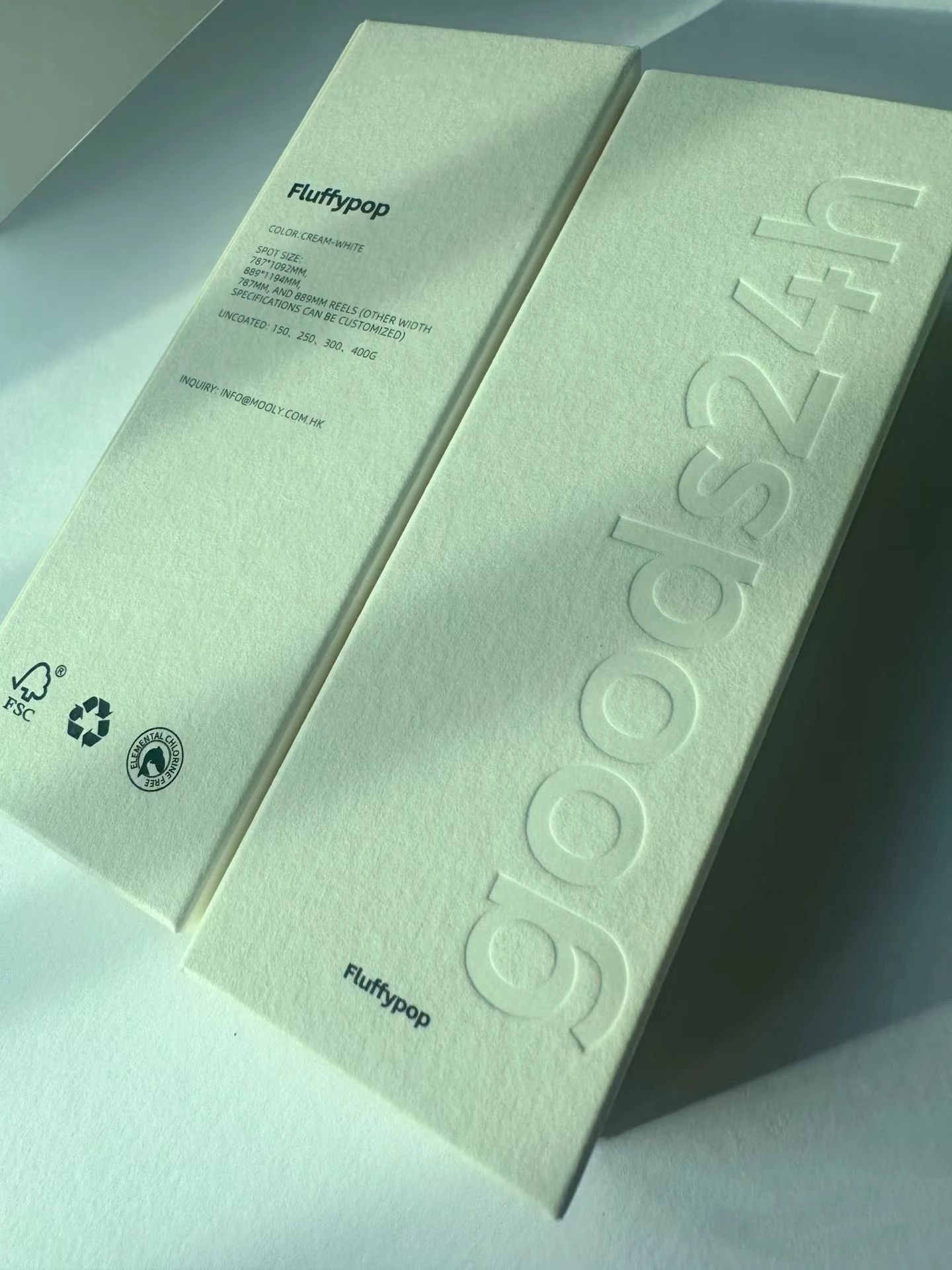
Cotton-content paper includes cotton fibres in its furnish, either alone or in a blend. Cotton-feel names may instead describe a tactile effect or a commercial range; a soft surface does not establish the fibre composition.

Appearance & character
Grades can vary in softness, bulk, roughness and colour. These characteristics result from the fibre blend, sheet structure and surface processing together.
Packaging applications
Suitable grades may be considered for rigid-box wrapping, folding cartons, brand cards or labels. Simple graphics and pressure-based finishes can be explored through sampling when the tactile surface is central to the design.
What to confirm
Confirm cotton content where it matters to the specification. Check surface strength, ink behaviour, folds and wrapped corners. A thick sheet should also be reviewed for reverse-side marks and crease behaviour after debossing.
Pearlescent Paper
A reflective surface that changes with the light.
Pearlescent paper uses a surface treatment to create a pearl-like sheen or metallic visual effect. It is available in different colours, textures and levels of reflection, rather than only in white.


Appearance & character
The paper surface and printed artwork work together to create the finished appearance. Viewing the material from different angles helps reveal its reflection and tonal variation.
Packaging applications
Consider for gift-box coverings, sleeves, presentation cards and selected labels. It offers a material direction for beauty, jewellery and gifting packs where a reflective surface is part of the design.
What to confirm
Test ink, drying, adhesion and foil on the actual stock. Pearlescent surface treatments, pearl-effect film laminates and local metallic foils are different constructions even when their appearances overlap.
Soft-Touch Paper
A surface selected for the way it feels in the hand.
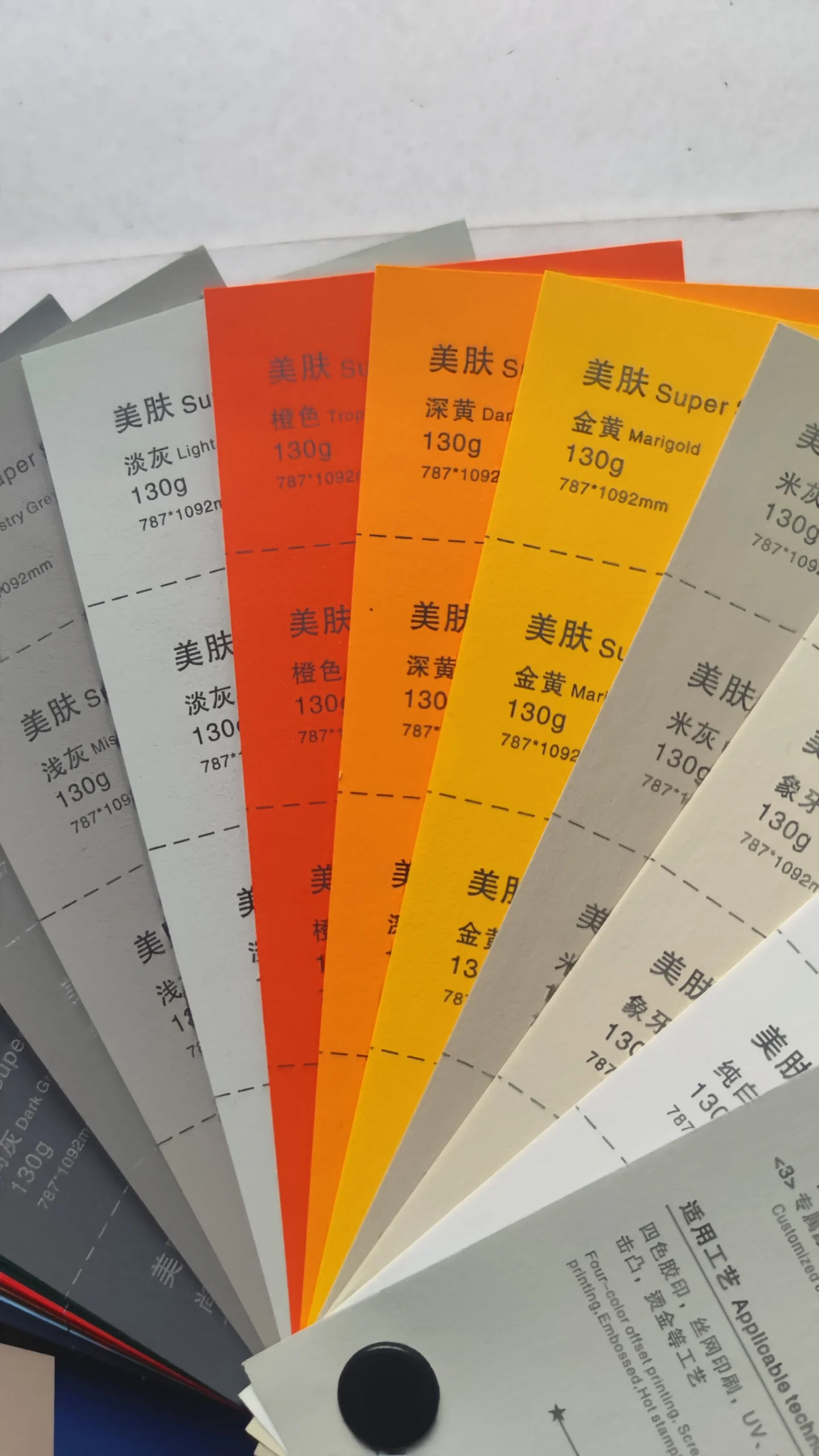
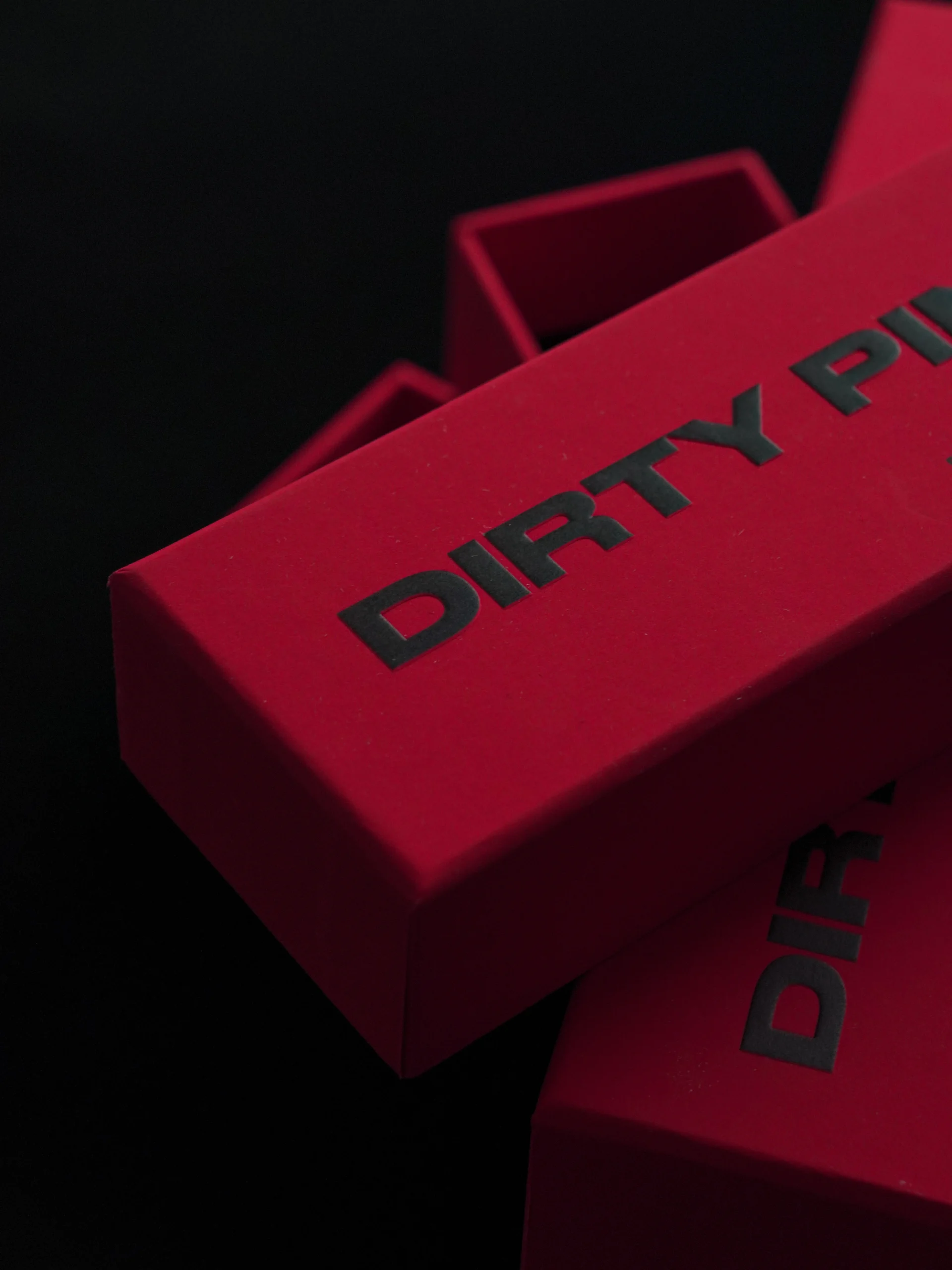
Soft-touch paper describes papers with a specially treated surface that produces a smooth, fine or skin-like feel. It is a tactile description, and both the construction and performance can vary between grades.
Appearance & character
Photography can show colour, sheen and surface detail, while a physical sample is needed to assess the feel. Fingerprint resistance and abrasion performance are specific product properties rather than universal features of the category.
Packaging applications
Used for box coverings, sleeves, covers and other paper components handled during opening. Low-sheen grades can be explored when colour and tactile experience are central to the packaging.
What to confirm
Compare a treated paper with the alternative of applying a soft-touch film to another stock. Review scratches, fingerprints, bonding and foil on the selected material. Similar touch does not mean identical construction.
Paperboard & Structural Materials
Materials that form panels, walls and protective structures. A finished package may combine them with a separate decorative surface paper.
Greyboard
The core behind many rigid-box structures.
Greyboard is a thick board used to create structural panels. In a wrapped rigid box, the lid, base and walls are formed from board and covered with a separate surface paper. The visible texture and structural thickness can therefore be selected independently.


Appearance & character
Key considerations include caliper, flatness, stiffness and performance after conversion. Exposed-board packaging makes the board surface part of the visible design and needs its own appearance review.
Packaging applications
Used for lid-and-base boxes, rigid drawers, book-style boxes and selected presentation structures. Panel dimensions, openings and product weight influence the design.
What to confirm
Distinguish greyboard from white-lined chipboard and pre-laminated board. More thickness is not automatically a better solution. Confirm recycled content and material claims against the exact grade rather than its grey appearance.
Corrugated Board
Flat liners and fluted paper working as one structure.
Corrugated board combines flat liner papers with a fluted inner medium. A familiar single-wall construction has one fluted layer between two liners; single-face and multi-wall combinations are also available.


Appearance & character
The layered construction provides different combinations of weight, thickness and support. Liner colours and print treatments also vary, so corrugated packaging is not limited to a plain brown appearance.
Packaging applications
Used for shipping cartons, mailer boxes, selected retail packs and protective inserts. For perfume, the presentation box and shipping pack can be designed separately or considered together as a complete system.
What to confirm
Confirm flute profile, liners, layer construction, dimensions and packed-product performance. Thickness or layer count alone cannot establish protection. Review the printed surface and complete assembly as part of sampling.
Bring the paper and the packaging together.
Identify the material’s role, exact grade, thickness or grammage, colour and intended finish. Then review the converted sample for appearance, fit, opening and handling. Screen images help establish a direction; a physical sample confirms the material in the finished pack.