

Coqui Coqui identifies its outer boxes through fine borders, palm graphics and tall lettering, repeated across black and white versions. An opened view adds a reference for separate bottle and reed positions. Limited graphics create a complete panel when their proportions suit the box height.
This review concerns the paper outer packaging visible in the photographs. Paper weight, concealed construction and finishes need confirmation from physical samples. Development suggestions describe options for a new packaging project.
The white carton frames lettering and palms as one composition
The white tall carton places gold-colored borders around brand, vertical text and palm graphics. A related pale bottle label connects the pack despite limited decoration.
Set margins, hierarchy and graphic scale before choosing a finish. Proof fine-line completeness, pale-ground contrast and fold clearance; the photo does not establish foil stamping.
The open pack gives bottle and reeds separate positions
The opened pack gives the bottle a larger area and arranges reeds along one side with a band-like restraint. The image does not identify insert material or hidden attachments.
Develop paperboard retention around bottle shape and the reed bundle, allowing removal clearance. Test the method with actual contents rather than copying only the visible band.

The black box changes the tonal balance, not the graphic language
The black version repeats frame, palms and tall lettering, making gold-colored details more prominent through a stronger light-dark difference.
Keep mark and border rules consistent but proof readability separately on black and white versions. Check dark coverage, rubbing and folded edges.

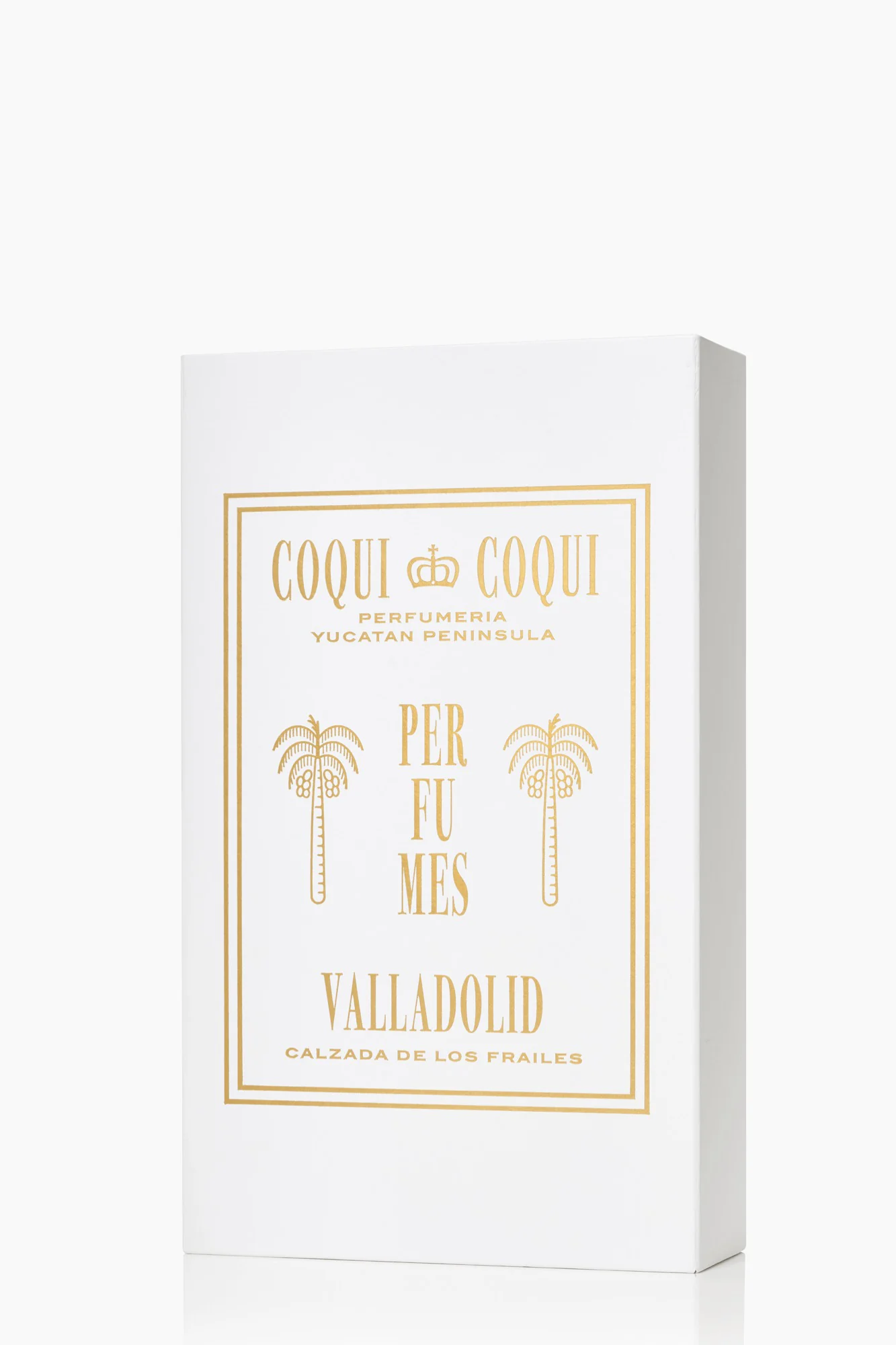
A standalone front helps judge text spacing at actual size
A standalone white branded box exposes the full frame, text arrangement and supporting palm motif. The image alone does not justify identifying its exact fragrance.
Use an actual-size structural sample to judge height and type before placing borders. Reserve instructions and barcode on appropriate sides rather than compressing the front later.
The dark bottle label echoes the carton border and mark
The black carton, bottle label and cap share related dark, light and gold-colored elements without matching every text area exactly.
Review carton, label and product together for size and color. Validate retention from filled weight, diameter and reed length; exterior images do not replace assembly and transport tests.

Use actual panel dimensions to balance frame and palm imagery
Coqui Coqui diffuser cartons use fine borders, tall lettering and palm graphics. Explore black-and-white variants, bottle-label links and separate reed positions.
Provide the capped bottle dimensions, filled weight, reed length, reed quantity and bundling method. If the pack also contains a candle, refill or other accessory, record each item and the intended removal sequence before setting internal clearances and retention positions.
Compare paper options for stiffness, base color, print detail and feel. When considering a folding carton or a rigid gift box, include the insert, assembly method and shipping volume in the quotation. An insert not shown in the photographs is not described as the brand's existing construction; folded paperboard supports or compartments can be evaluated separately.
| Development stage | What to confirm |
|---|---|
| Unprinted structural sample | Bottle and reed retention, closure, removal sequence and assembly efficiency. |
| Printed sample | Brand and fragrance readability, background color, fine lines and artwork at folds and adjoining panels. |
| Delivery validation | Quantities per design, assembled or flat delivery, and compatibility with the shipping carton and cushioning. |
Proof black, white and fine lines before testing the filled box
First samples should establish structure, lettering and base printing. If foil, embossing or another surface effect is wanted, compare it on a brand mark or selected graphic area before choosing on appearance and cost. A reflection in a photograph is not a process specification.
Place the actual products in the sample and check movement, label rubbing and pressure on the reeds. For parcel delivery, test it with the intended shipping carton and cushioning. An attractive display box does not establish transport protection.
Developing custom paper boxes for a reed diffuser range? Share your product dimensions, quantities per design and preferred packaging details with Bravo Packaging. We can discuss box formats, paper choices, printing and paperboard insert options for a suitable sample.


