

Celia Loves combines bright yet soft backgrounds with animals, fruit and other illustrations that give fragrances memorable identities. Corresponding colors on vessel labels connect the product and carton as a pair. This case considers how an illustration-led range can retain order: the pictures can change substantially while customers continue to find the brand and fragrance in recognizable places. For custom development, that repeatable information framework is as important as any individual illustration.
Visible details in the photographs inform this case study. Proposed paper, printing and structural options are custom packaging recommendations, rather than confirmed production specifications for the brand.
Use illustration as one layer of fragrance identification
Changing pictures and colors make the products appear distinct from a distance. Names and descriptions then confirm the choice at closer range. The illustration does not need to carry every product detail; it gives the customer a memorable visual entry into the range.
Begin with the intended fragrance associations or everyday settings before choosing representational or abstract artwork. An animal or botanical motif should have an explainable role rather than being assigned simply to make the collection more colorful. A playful image can still be part of a coherent product story.
Where a picture depicts a specific ingredient, check it against the actual product description. Expressive illustration and accurate information can coexist when the brief identifies which elements create atmosphere and which refer to the contents. Establishing that distinction early reduces the risk of an unintended ingredient claim.

Keep the information structure stable as the picture changes
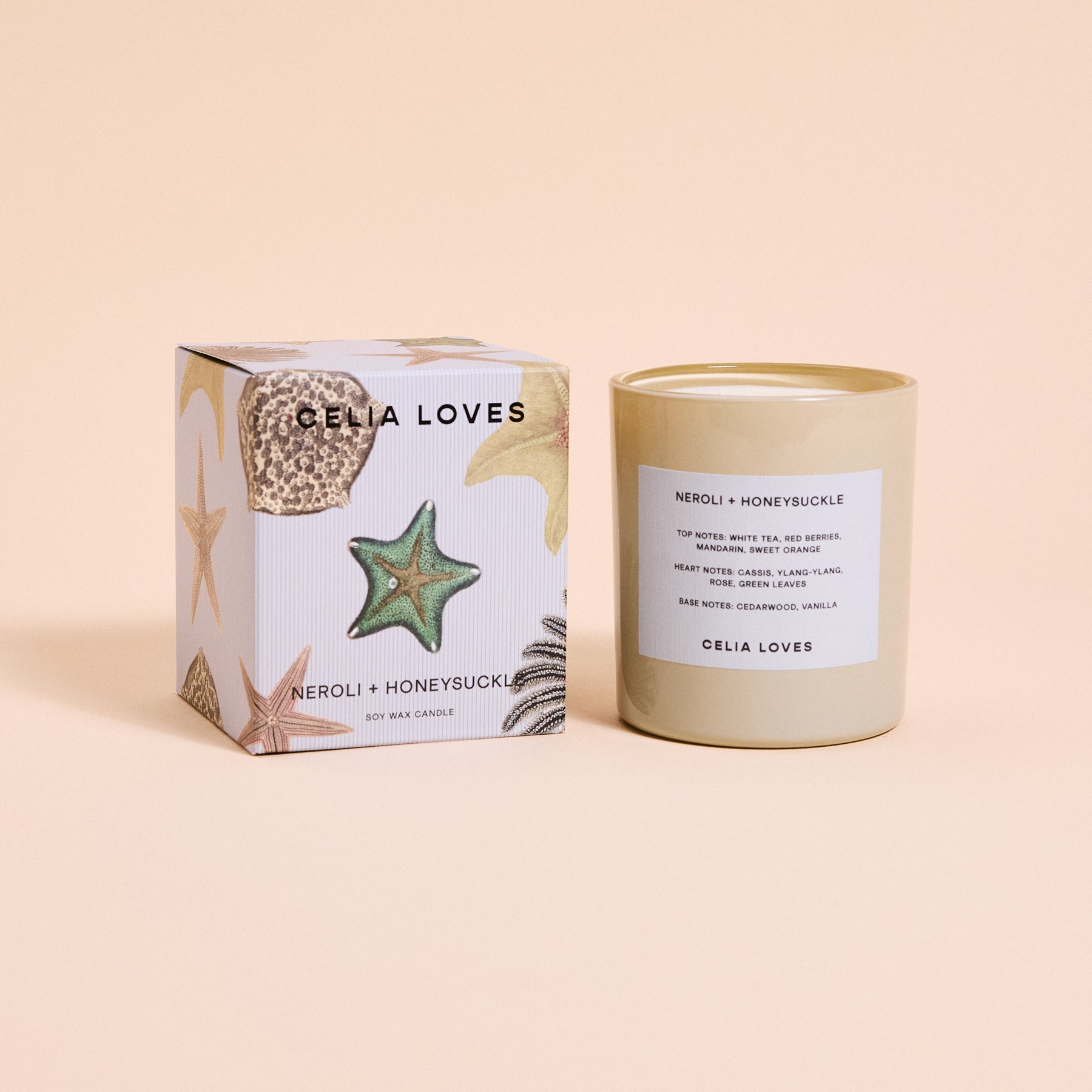
The cartons vary in imagery while retaining related levels for the brand and fragrance wording. Customers therefore do not need to learn a new reading order for every item. A shared framework connects the different pictures more effectively than requiring every product to repeat one composition.
Define areas for the brand, name and supporting copy before developing artwork in the remaining space. Some motifs can extend across panels and others can remain on the front, provided the primary wording stays readable. The image should work with that hierarchy rather than displacing it.
Test different name lengths in advance. A long fragrance name should not make one product significantly harder to read because its type has been reduced excessively. Develop short, medium and long-name cases with a related visual weight and explicit line-break rules.

Make the carton and vessel label a dependable pair
The vessels and outer packs correspond in color and fragrance information. The carton provides richer imagery at purchase, while the vessel label keeps the product identifiable after the outer pack is removed. This division suits candles that need to work as gifts and as objects displayed in everyday use.
Match colors on the real substrates rather than only on screen. Vessel labels and cartons may have different papers, printing processes and surface treatments. Shared digital values do not guarantee the same appearance. Approve each material separately, then compare their overall relationship.
Use exact wording and product references for packing checks. Memorable illustration does not replace a SKU list. Products with related colors or similar imagery need particularly careful pairing so that a vessel is not placed inside the carton for another fragrance.

Allow production variation in artwork crossing panels
The visible fronts, sides and tops demonstrate that the artwork must negotiate three-dimensional transitions. Establish the location of critical elements in the dieline. Keep important faces, names and focal details away from folds and seams where an interruption would undermine the design.
For continuous artwork, use rhythms or repeating motifs that can tolerate a natural break rather than requiring every detail to meet exactly at a corner. A considered tolerance makes the collection more stable in production and avoids a visual concept that depends on exceptional assembly precision.
Turn the complete sample during review. An unexpectedly crowded side, an empty patch or a top graphic facing the wrong display direction can weaken the experience. A flat rendering does not replace assessment of the assembled carton from the angles customers will actually see.

Proof the color relationships and fine detail before adding effects
For a comparable illustrated range, compare coated white paperboard with high-white uncoated paperboard. Coated stock can support bright color and fine detail; uncoated stock introduces a softer feel but may require adjustments for absorption. Sample animal outlines, small wording on pale backgrounds and dark areas across folds. Check registration, broken lines and corner wear, then compare thin matte film and aqueous varnish. Match the vessel labels alongside the cartons without assuming shared color values. These are development proposals, not confirmed brand specifications.
Pale printed backgrounds respond to the stock’s underlying color, while brighter colors need batch-consistency checks. Keep a reference for the full collection rather than approving one representative color. Compare each new fragrance with existing products to identify accidental similarity or an unexpectedly dominant color.
If foil, embossing or selective gloss is proposed, compare its value against a base print sample first. Illustration already carries substantial visual content. An added process should not reduce name clarity or crowd the image, and both its effect and cost need to be assessed on a real sample.

Verify the individual-candle structure and shipping layer separately
The photographs show individual candle cartons without a full opening and interior sequence. Their exterior does not confirm a particular standardized construction or the absence of internal support. Measure the vessel, lid and weight before defining the structure and any retaining components.
Where several vessels have identical measured dimensions, assess common tooling and internal parts. Verify the opportunity with loaded samples rather than photographic proportions. Check movement, removal and rubbing, then set clearance and retention according to the observed requirements.
Online orders need an assessed shipping layer as well. The display carton provides presentation and basic packaging, while the transit case and cushioning have separate responsibilities. Evaluating them together but distinctly makes material choices clearer and avoids expecting an illustrated retail carton to provide untested parcel protection.
Maintain the illustrations as an expandable brand asset
Create a reference for artwork, color and wording that maps each fragrance to its image, version and size. This supports accurate selection when producing product pages, display cards and replenishment files. A memorable visual style still benefits from unambiguous records.
Place new samples beside the existing collection to compare brand position, image density and name hierarchy. Consistency does not prohibit change; it provides a reference against which the change can be evaluated. The new product should strengthen the family without making established items harder to distinguish.
The lesson is to place rich imagery inside a stable information system. Illustration supports memory, color helps pairing, text confirms the choice and structure protects the actual product. Together, these responsibilities turn an attractive picture into packaging that can be maintained and extended.
Agree the permitted use of the artwork. Identify long-term brand elements, fragrance-specific illustrations and assets that can extend to bags or promotional material. A simple usage guide supports reuse without allowing arbitrary repetition to erase distinctions between products.
In photography, keep carton edges and wording clear rather than reducing contrast so far that a soft mood conceals the design. A consistent basic angle helps customers compare fragrances; additional views can explain sides, opening and details. Each image should provide useful information.
Keep a complete set of finished collection samples. New launches and replenishments can then be compared on real materials for color and image density, providing a more dependable reference than revisiting screen artwork alone.
Three Things to Bring to Your Packaging Sample Brief
- Allow the illustrations to change while keeping the brand and fragrance reading order stable.
- Sample vessel labels and cartons on their own materials and use SKU references for pairing.
- Validate panel transitions, base printing and product protection on complete physical samples.
For an illustrated candle collection, organize the fragrance stories and specifications first, then establish a color, artwork and information framework that can accommodate future additions.