

Coastal Candle Co. presents two approaches to paper packaging: natural-toned boxes with white labels for individual vessels, sometimes finished with narrow ribbon, and windowed boxes for shell-shaped tealights. The visible brand and product information connect the packages to their contents. Coastal props establish atmosphere rather than construction evidence. For custom packaging, the interest lies in organizing different products with a limited material palette and label system while keeping single-vessel protection distinct from multi-item display.
Visible details in the photographs inform this case study. Proposed paper, printing and structural options are custom packaging recommendations, rather than confirmed production specifications for the brand.
Start with the box, then explain the coastal setting
Individual candle photographs show fronts, sides or tops of three-dimensional boxes. The shell-tealight packs also show clear paper borders and an internal arrangement. These are identifiable outer packages, rather than vessel labels, background surfaces or loose decorative cards.
Waves, shells, woven surfaces and other props create coastal associations, but do not establish a paper grade, fragrance or special finishing process. Describe the actual box first, then explain how the setting reinforces its mood. Keeping these roles distinct prevents photographic styling from becoming an unsupported packaging claim.
Bottles and other scene objects likewise do not establish what the pack contains. Product descriptions and captions should make the main product clear, and production briefs should not add contents based on props. Atmosphere can guide presentation, while delivery still requires an accurate component list.

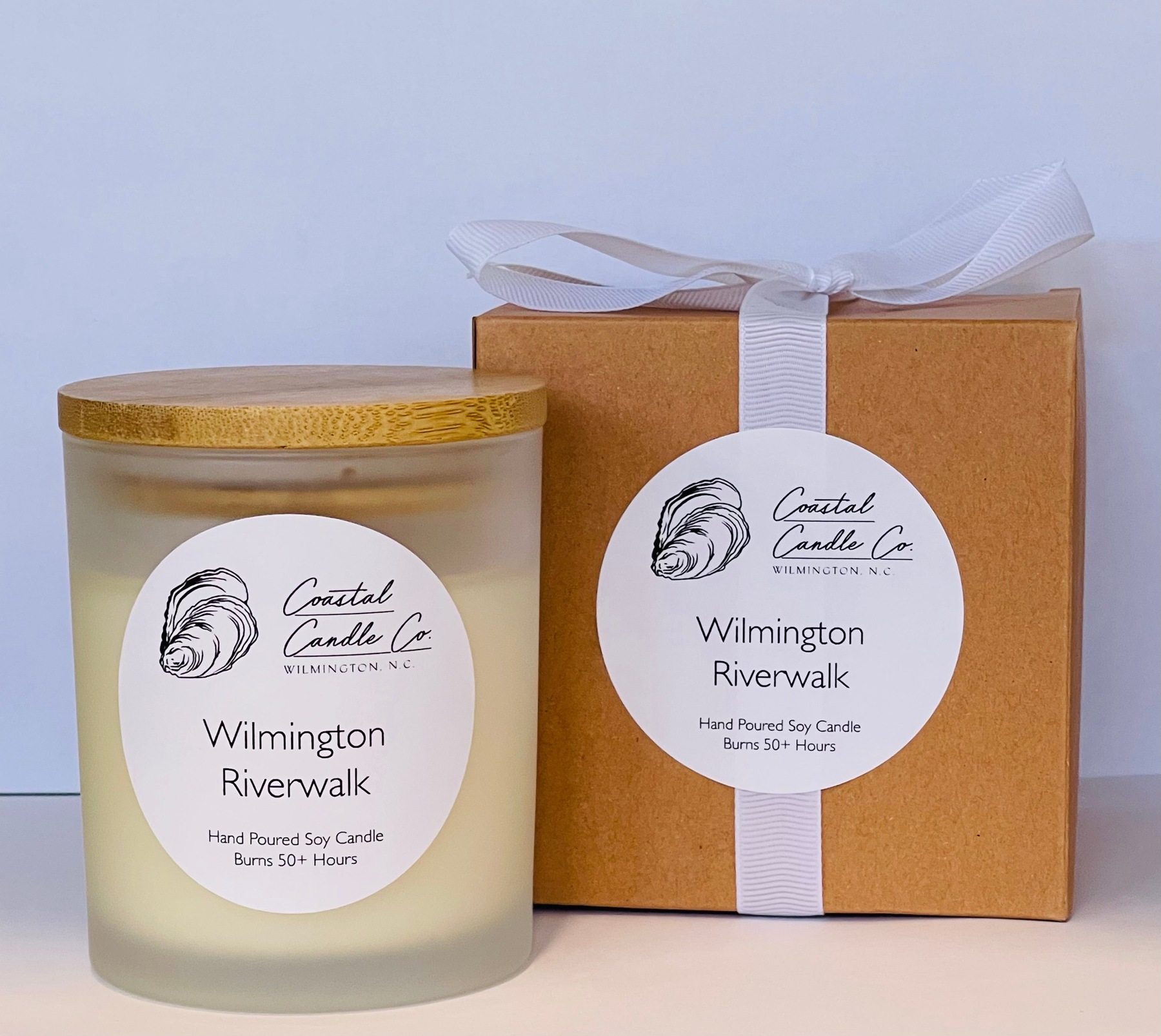
A natural-toned surface gives white labels a clear role
Individual boxes have a natural-paper-colored appearance, with white circular or rectangular labels forming a distinct information area. Brand, name and supporting details are concentrated there, rather than scattered as small text across the whole box.
For a similar natural-toned box, compare a natural kraft paperboard folding carton with a greyboard gift box wrapped in kraft paper. The former suits flat storage, while the latter may suit a fixed gift format. Trial coated and uncoated label papers for small-type clarity, alignment and lifting after ribbon abrasion. The shell-tealight window frame also needs compression samples. These are optional material routes; a brown appearance alone does not identify the brand's stock as kraft or recycled paper.
Separate labels require checks for placement, edges and assembly speed. A directly printed label effect requires a plan for producing the white area and its cost. The photographs do not establish a single manufacturing method for every label; samples should determine the appropriate route.
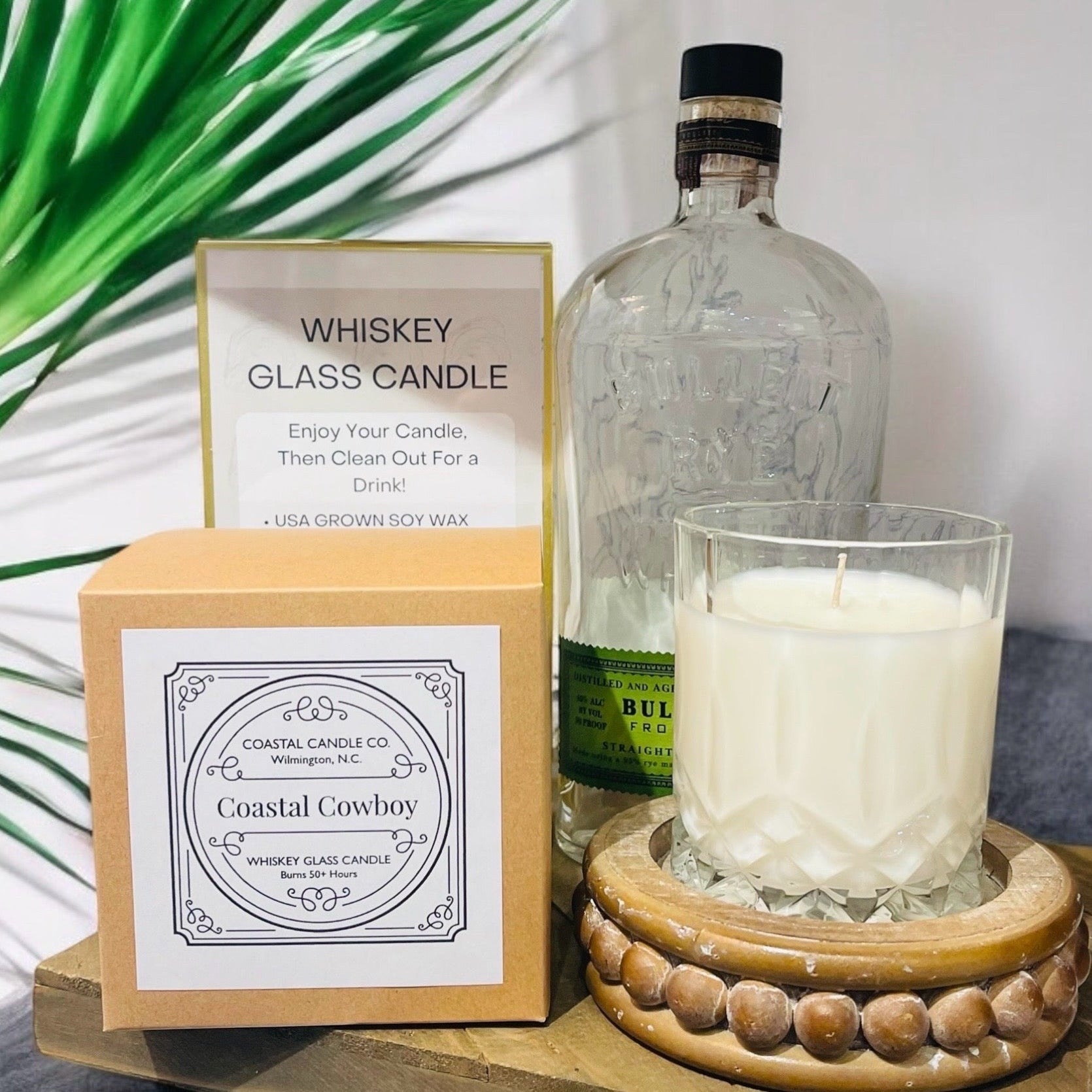
Round and rectangular labels support different product voices
Some products use a lighter circular white label for brand and fragrance. Coastal Cowboy takes a more rectangular approach with a stronger border. Both concentrate information, although their proportions and character differ.
These changes can serve different product themes while retaining shared identification. Brand name, primary hierarchy and essential information need continuity so customers do not have to learn an entirely new reading order when the label outline changes.
Define the permitted variations before development: suitable box sizes for each label shape, name lengths and line counts. Boundaries help prevent a range from becoming a collection of unrelated items. The shape should serve the product information instead of being selected solely for its appearance.

Narrow ribbon signals gifting and adds assembly work
Some individual boxes use narrow ribbon and tied details in colors related to the product mood. They add a tangible gift cue to a simple surface, but remain decorative components rather than evidence of the underlying box construction.
Actual ribbon needs cutting lengths, fixing methods, knot standards and assembly allowances. Specify acceptable bow sizes and positions, checking whether they cover the brand or fragrance. Ribbon may move during transit, so information must remain readable beyond a photographer's carefully arranged sample.
Opening should remain straightforward. Compare whether the ribbon needs untying, can slide off or can be reused. The photographs do not demonstrate the complete opening sequence, so they cannot establish a specific attachment method. Decoration should support access instead of obstructing removal.

A window reveals the shell tealights and their quantity
The shell-tealight set displays its shapes and arrangement through a window, with a paper frame forming the boundary. Tags and ties add information and a gift association. Unlike a single-candle box, it must communicate a group of products as well as their fragrance.
A window reduces printable area and changes box strength. Check its edges, internal restraint and the arrangement after actual transit. Where a clear window component is present, its material and attachment still need confirmation; the photograph alone cannot specify them.
Test the removal sequence for multiple pieces. Taking one tealight out should not displace or damage the others. Provide clear assembly diagrams for item positions and label orientation so the finished arrangement can be repeated consistently.

Verify protection separately for single and multiple products
An individual box needs space determined by vessel diameter, height, lid and weight. A tealight set must manage contact between several shaped items. They can share natural tones and white labels without requiring identical board thicknesses or internal supports.
The images do not fully reveal interiors or bases, so they cannot establish each locking or fixing method. Pack actual products and check movement, abrasion and access before selecting a paper insert, bottom pad or another solution.
For ecommerce delivery, distinguish the display package from the shipping layer. A windowed box can present the shapes but should not be assumed to provide all impact protection without testing. Giving each layer a defined job makes material choices and costs easier to evaluate.
Simple graphics still need accurate version management
Natural-toned boxes and white labels may look easy to share, but names, label shapes and dimensions vary. Maintain a matching chart linking vessel, label, box and shipping case. Assembly should follow accurate names or codes rather than rely only on color or decorative knots.
A common box may reduce dedicated inventory if fit and protection are confirmed first. Adding excessive filler to force several products into one size is not necessarily more efficient than using appropriate dimensions. Assess materials, labor and shipping volume together.
White labels are conspicuous against natural tones and readily reveal placement errors. Give assemblers position references, edge distances and allowable offsets. Translating visual expectations into workable standards makes simple packaging more consistent in production.
Ground the coastal theme in the physical packaging experience
Useful customer-facing views should explain opening, tealight restraint and product removal, rather than only add more coastal backgrounds. Different angles should reveal different information. A new crop of the same image cannot show a previously unseen construction detail.
Coastal Candle Co. illustrates how natural tones, white labels and limited tied decoration can create an approachable gift character, while a window presents shaped items in a set. Individual boxes and multipacks have different jobs. A common visual language need not mean a common structure.
Explain graphics, assembly and protection together so the coastal character carries into the package customers receive and open. The result can have both emotional appeal and a clear basis for production.
Three Things to Bring to Your Packaging Sample Brief
- A natural-toned appearance does not identify the paper grade; test label production options.
- Round labels, rectangular labels and tealight windows serve different information and structural roles.
- Include ribbon in assembly costs and test restraint and removal for the windowed set.
For natural-toned individual candle boxes or shaped-tealight gift packs, start with dimensions, quantities and delivery conditions before comparing labels, ties and construction.