
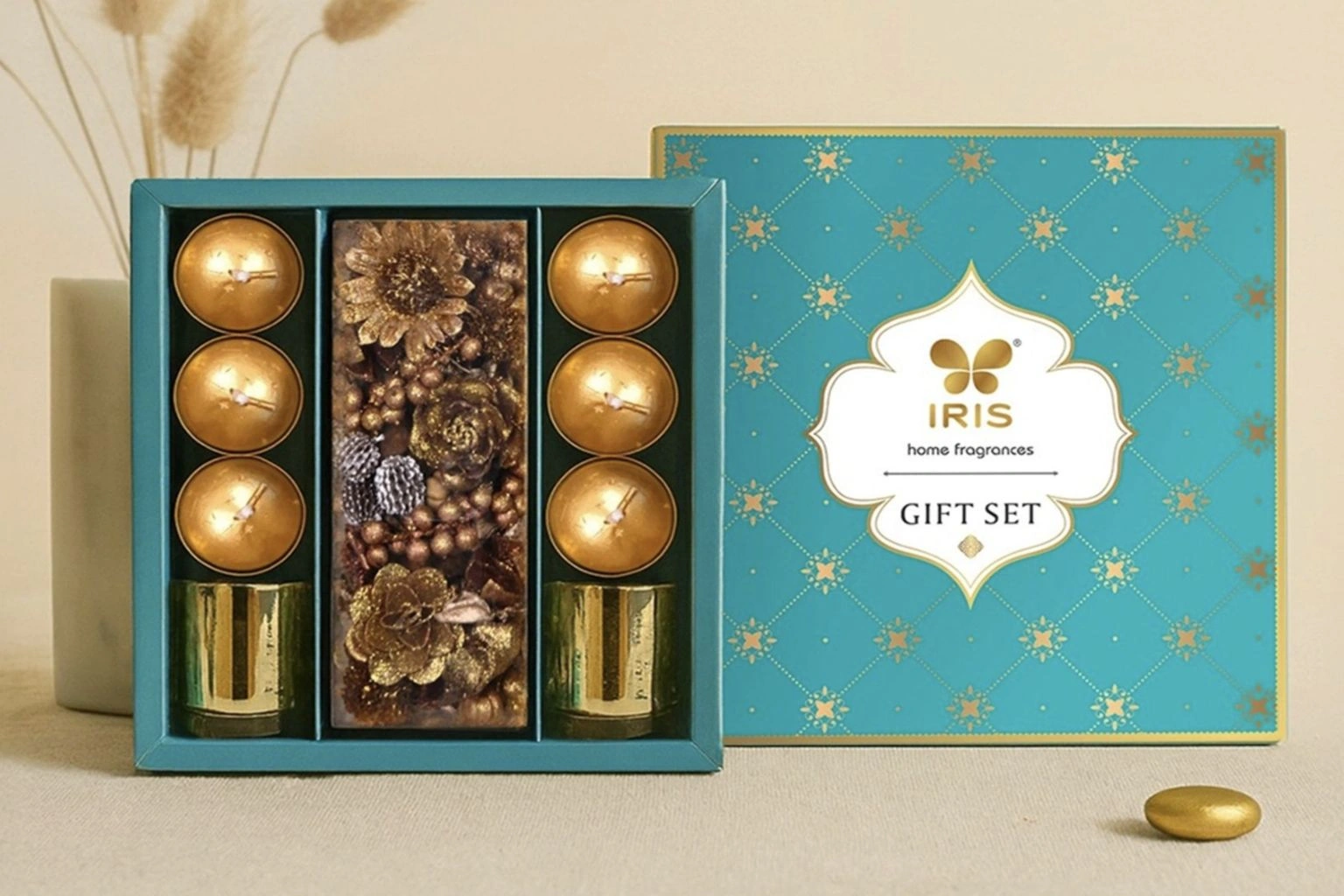
IRIS uses paper packaging for several distinct tasks. Fifteen tealights enter a long windowed box, thirty tealights use a more direct folding-carton format, and a Romance candle relies on bold color and a brand plaque. Festive gift boxes organize candles with other fragrance or decorative items in separate areas. These are not one universal construction, but flower-shaped branding and clear product information connect them. The example shows how quantity and occasion can determine structure before shared identity is applied.
Visible details in the photographs inform this case study. Proposed paper, printing and structural options are custom packaging recommendations, rather than confirmed production specifications for the brand.
A tealight window helps explain contents and quantity
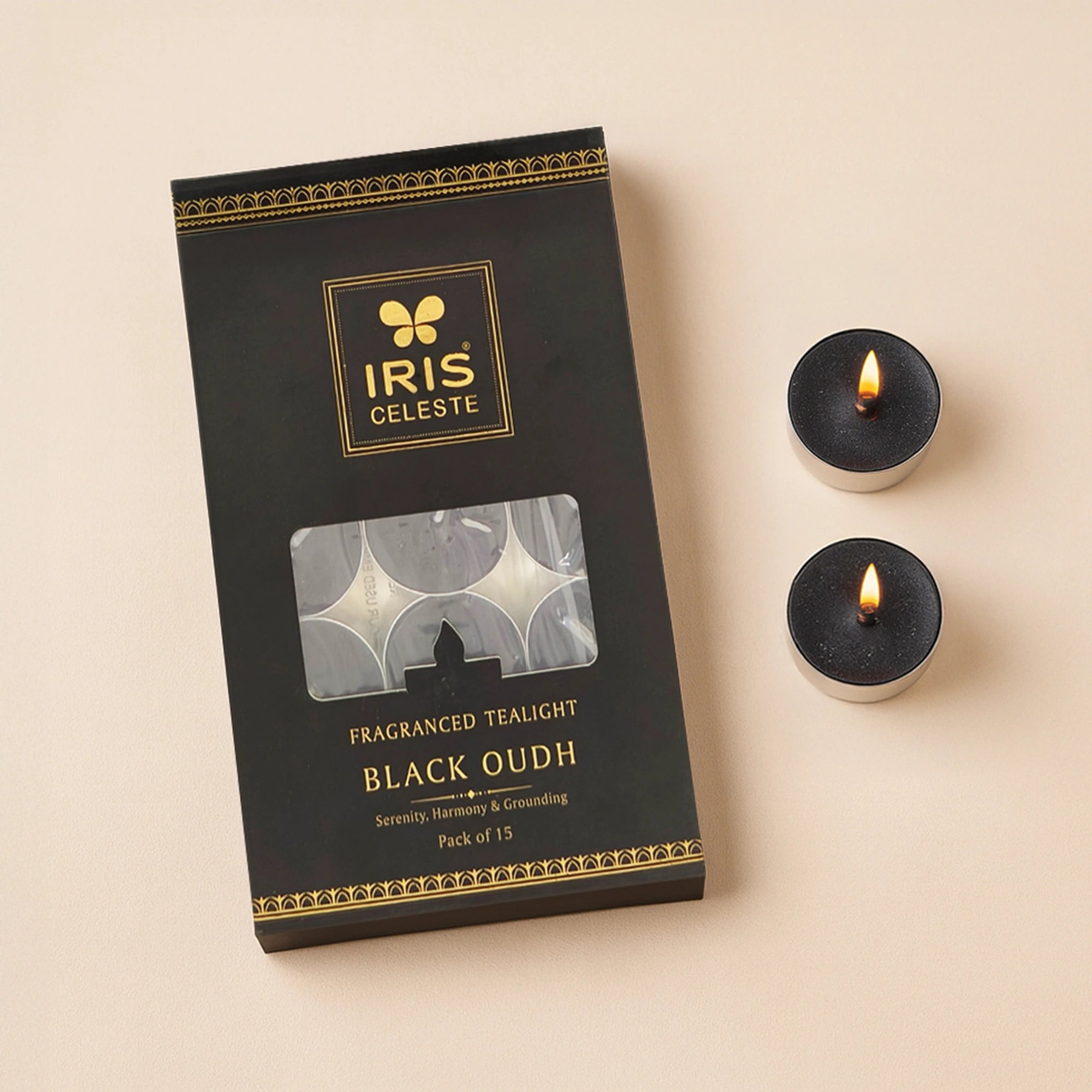
Celeste Rose Gold and Black Oudh use rectangular front windows that reveal part of the tealight arrangement. Deep red and black bodies contrast with brighter branding and borders, with product naming and quantity information below. The window supplements wording with a direct view rather than replacing the text.
Establish the tealight arrangement before positioning a window. An oversized opening may weaken the front, while a small one may show too little to be useful. Use real products to check whether the view communicates an ordered group or an ambiguous fragment, and verify clearance around the opening.
The photographs do not specify the clear component or internal fixing method. Describe the visible relationship without assigning film grades or process parameters. Structural samples should also test handling, movement in transit and compression so presentation and protection work together.

The thirty-pack puts quantity at the front of the hierarchy
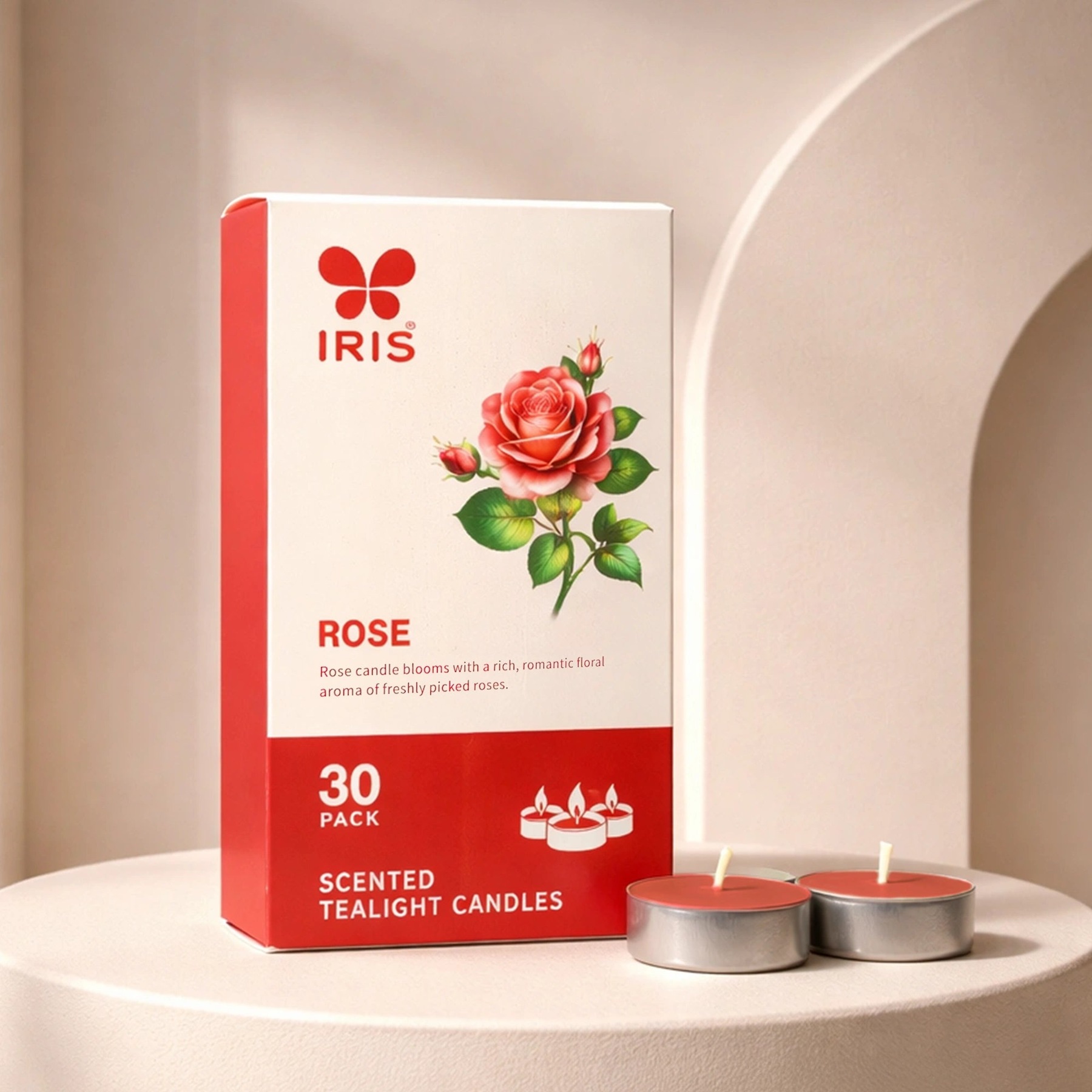
The Rose tealight carton has a pale upper area and red lower portion, with a flower suggesting fragrance and prominent wording identifying thirty pieces. Compared with the dark windowed series, fewer framing details give category and quantity a more direct role. Different tasks need not use the same visual density.
Quantity packs require matching names, units and internal configuration. Two tealights displayed beside the box illustrate the product, rather than establishing a two-piece pack. Use carton wording and product information for the actual count. Record quantity, individual dimensions and total configuration together so artwork and assembly agree.
If more counts are introduced, make the differences clear rather than only changing box height. Customers comparing shelf or online products and staff picking orders both need accurate quantities. A fixed quantity zone can coexist with variable fragrance pictures and colors.

An individual candle shifts emphasis to color and branding
Romance pairs a square vessel and its carton through pink and red, concentrating the brand symbol, theme and category within a clear area. Unlike tealight quantity packs, it identifies one finished candle as a gift. Its proportions and hierarchy therefore have different demands.
An individual box can retain the brand symbol without inheriting a tealight window. Decide whether a window benefits the vessel and sales channel rather than retaining it solely for visual consistency. A complete printed panel may suit theme expression and stock management when it already explains the product accurately.
Measure the square vessel's maximum dimensions, height and weight, checking corner clearance and removal. A box photographed beside its vessel does not establish internal restraint or courier protection. Set separate objectives for display, packing and transport, then verify their relationship physically.

Shared festive boxes organize different objects into zones
An open orange festive box shows objects of different sizes in separate areas, beside its decorated common lid. Pink and teal gift boxes also combine candles, decorative items or other fragrance contents within one outer structure. These are genuine shared gift boxes, distinct from photographs of several individually boxed products.
List every component before arranging the pack. Large, small and mobile items need different spaces, with a sensible removal sequence. Visible divisions do not identify insert papers, fixing strength or transit performance. Record each object's dimensions and weight and validate with the actual contents.
Distinguish replaceable contents from fixed construction. An annual fragrance or decorative change may allow established outer-box design rules to continue. Frequent changes in object shape need renewed internal fitting. Shared graphics can remain, while assembly cannot rely only on the previous year's experience.

Borders and flower branding connect multiple structures
Dark tealight cartons, red individual-candle boxes and bright festive packs use different artwork, but the flower-shaped brand mark recurs. Festive borders, central plaques and brighter decoration establish gifting. A small set of recognizable elements can connect formats without forcing identical colors or graphics.
Gold-toned effects do not prove hot-foil stamping or metallic ink. For a custom box, establish the graphic hierarchy in ordinary print first, then compare optional metallic samples. Test fine rules, the central symbol and large color areas together so brighter decoration does not make product information harder to read.
Match festive complexity to quantity and selling period. Quote lids, internal divisions, decoration and assembly separately to show where the budget goes. A shared brand symbol simplifies visual communication without eliminating the development work behind each new structure.

Build specifications around each packaging task
Keep format-specific records: tealight cartons need counts and arrangements, individual boxes need vessel dimensions and restraint, and gift sets need every component and the removal order. Artwork checks can share brand, name, fragrance and quantity fields. Different structures remain manageable when each has explicit approval points.
For custom production, compare coated white paperboard folding cartons with printed uncoated paperboard for tealight packs. Quote festive sets separately in greyboard wrapped with printed facing paper and with folded paperboard partitions. Windowed formats need opening-margin, reinforcement and small-type tests; sets need division and assembly checks. Price ordinary gold-toned printing and hot-foil stamping separately. These are proposed routes rather than IRIS material specifications, and shipping conditions need confirmation with the transport case.
Several small candles photographed beside a closed common box establish a set but do not reveal an unseen insert. IRIS demonstrates a structure-led approach: quantity, category and gifting needs drive the format, while stable branding connects the results. Each box performs its own job, making the full collection easier to extend clearly.

Three Things to Bring to Your Packaging Sample Brief
- Define separate objectives for windowed tealights, quantity cartons, individual boxes and shared gift sets.
- Confirm counts from product information; verify windows, arrangements and clear components separately.
- Link formats through branding while listing set contents, inserts and assembly costs individually.
For a brand selling tealights, individual candles and festive sets, organize structures by quantity and use, then establish common checks for the brand information.