Myariella Candles combines several paper-packaging formats: natural kraft-toned tubes beside individual vessels, a pink upright carton, a small tin box with a semicircular opening notch, and flatter gift boxes dressed with paper bands and twine. Rather than forcing every size into one silhouette, the brand connects them through light typography, botanical illustrations and natural tones. The approach offers a practical starting point: select structures around real packing needs, then assign each a role within the visual family.
Visible details in the photographs inform this case study. Proposed paper, printing and structural options are custom packaging recommendations, rather than confirmed production specifications for the brand.
A paper tube gives an individual candle a continuous form
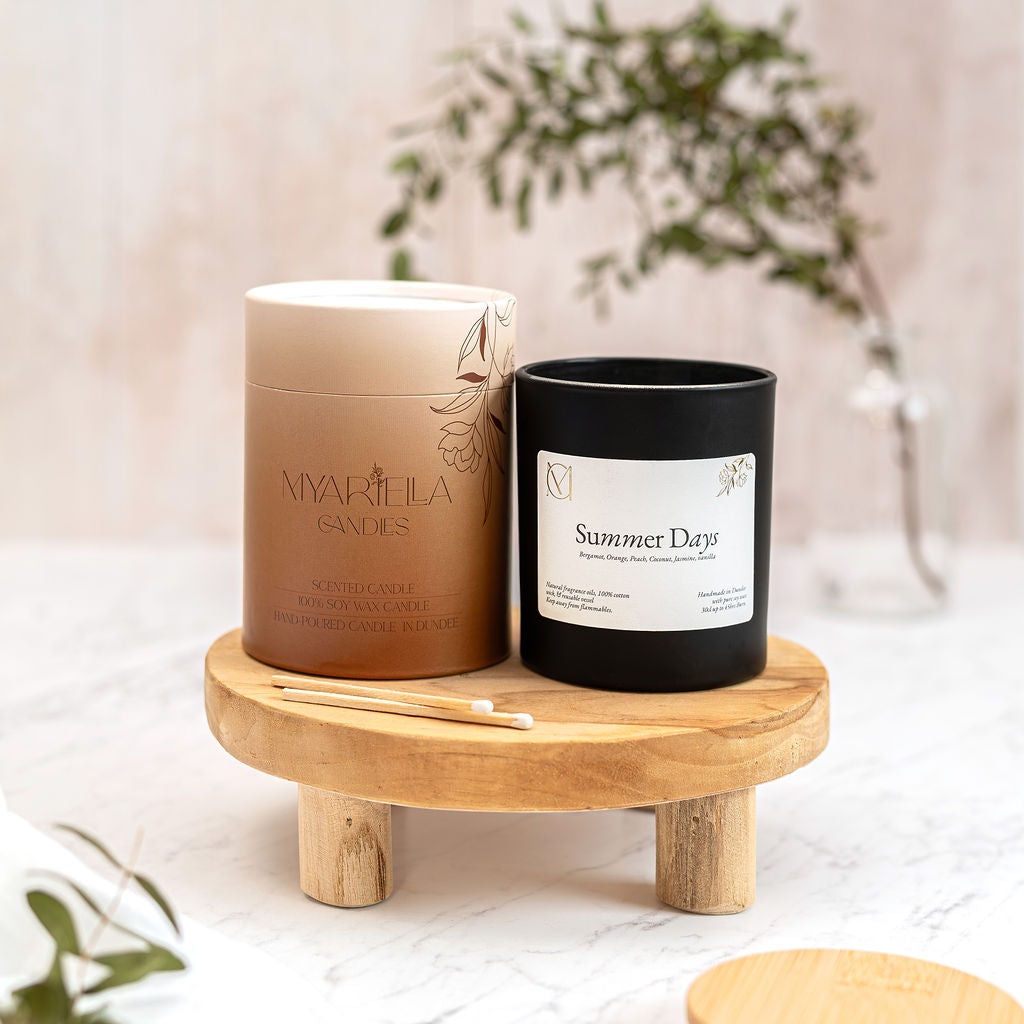
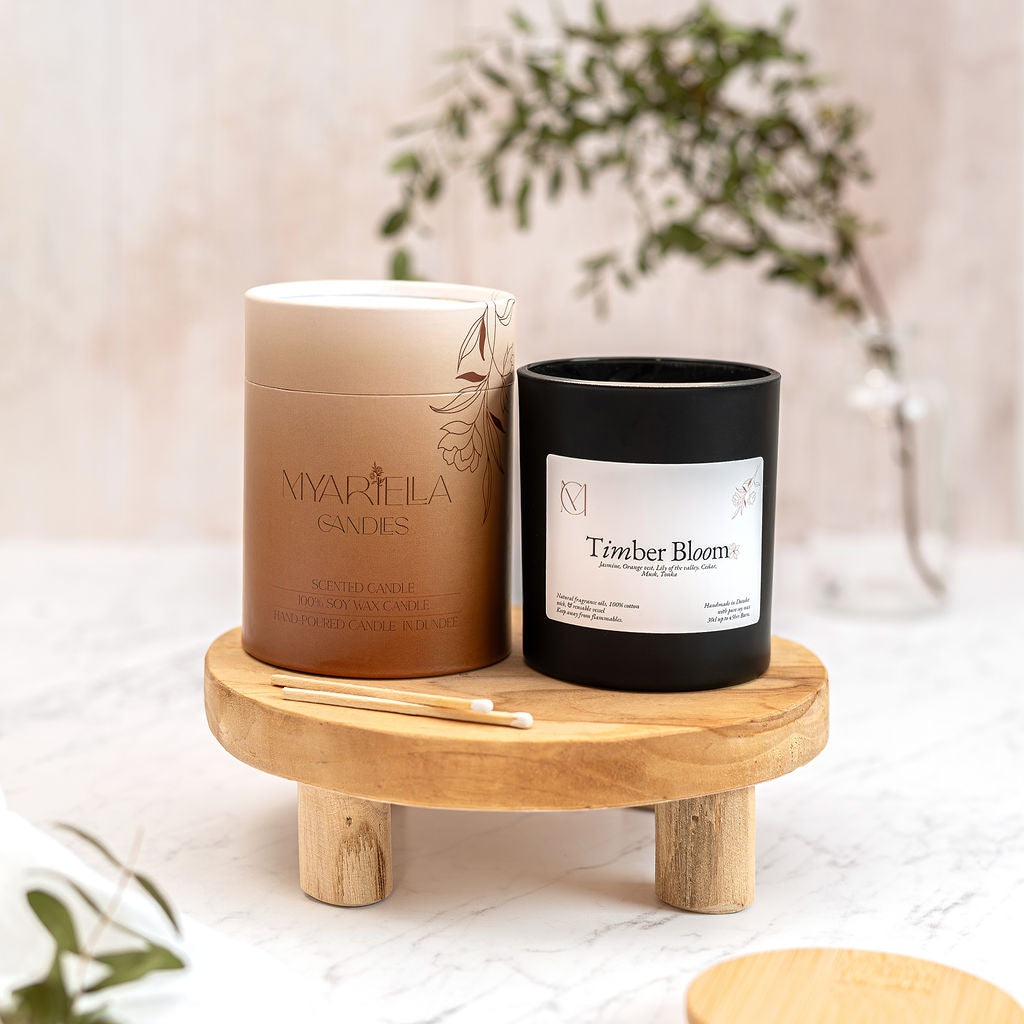
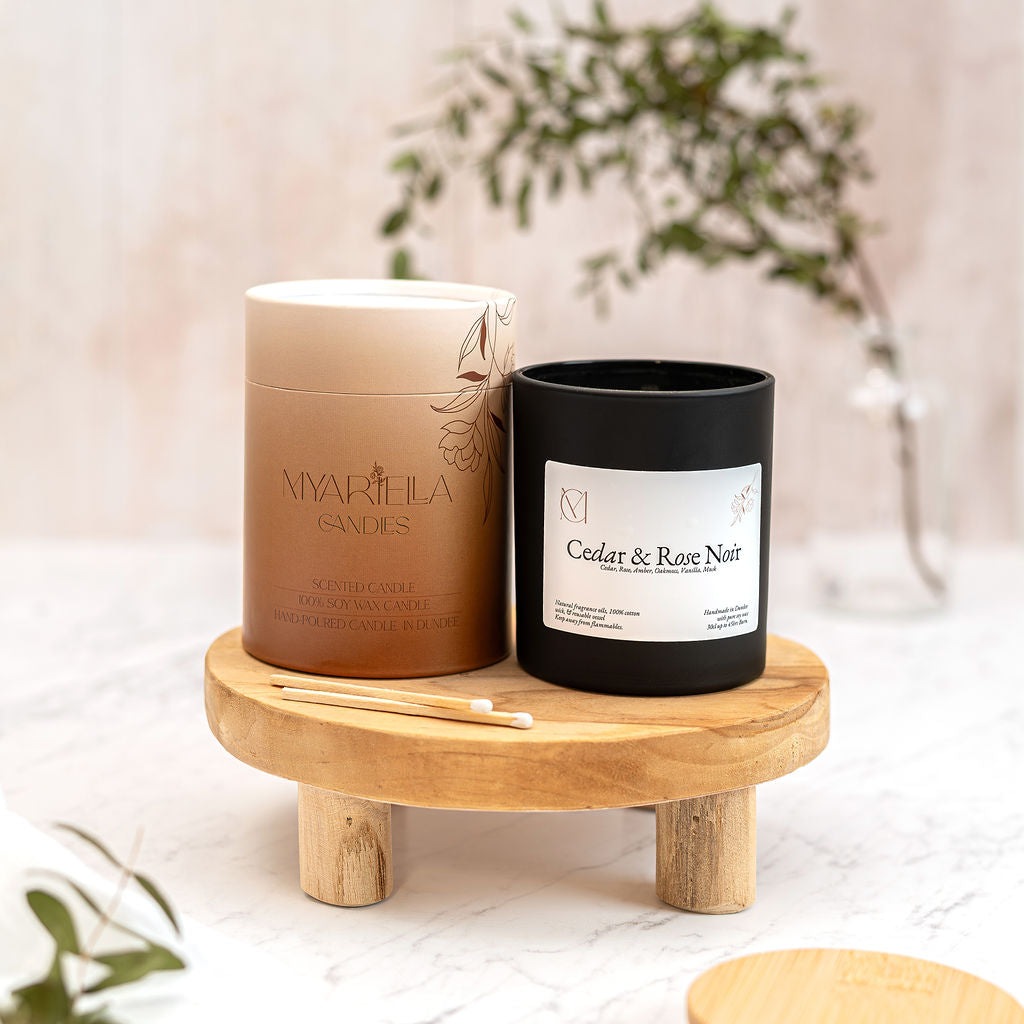
Summer Days, Timber Bloom, Sweet Grove and Cedar & Rose Noir pair black vessels with kraft-toned tubes. An upper lid joint is visible, botanical lines rise from the side, the brand sits centrally and product information appears below. Black vessels contrast with warm paper colors, while cylindrical outlines connect the two objects.
The tube graphics are similar, with variant names more prominent on the white vessel labels. This preserves a common exterior but makes closed-pack identification important. The photographs do not fully show bases or backs, so additional labels cannot be ruled out. Treat fragrance names, product codes and barcodes as a separate task so customers and assemblers need not open the tube to identify it.

Botanical lines leave space around the information
The plants do not form an all-over pattern. They gather near the edges, leaving substantial clear areas around brand and product wording. Fine, relatively pale lines reduce visual weight and relate to the black vessel's white label. This is a visible restrained, nature-associated style, not proof of paper origin or environmental certification.
For botanical tubes, compare kraft wrapping paper printed with dark lines against coated wrapping paper printed with a warm background. For small folded boxes, separately compare kraft paperboard with labeled white paperboard. The first retains natural stock variation; the second offers more color adjustment. Test fine plants and small type across both. Sample tube seams, the longest name, carton notches and labels together for ink absorption, adhesion and opening tolerances. These are development routes, not identified brand papers or environmental performance.
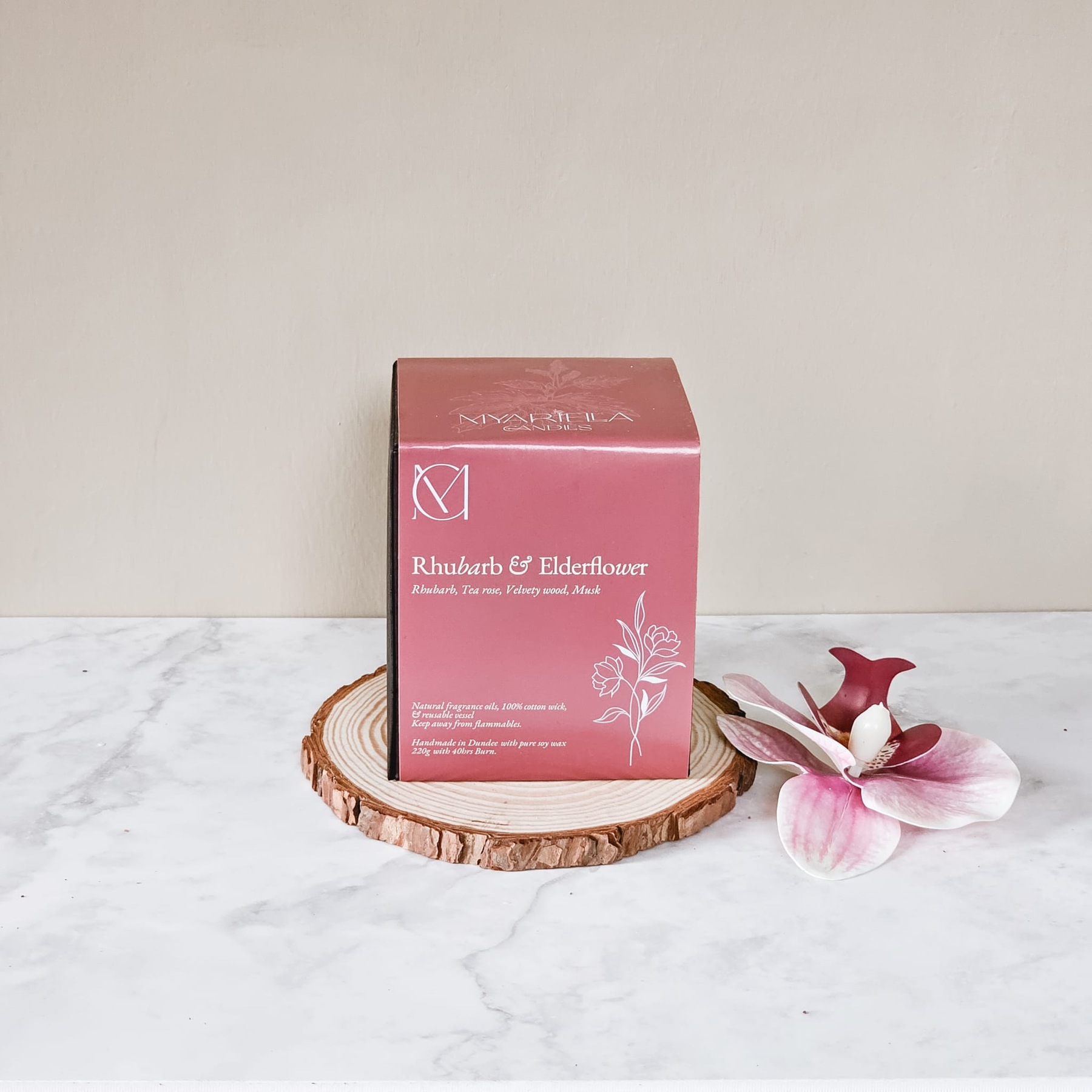
A pink carton provides a concentrated front panel
Rhubarb & Elderflower uses a pink upright box with branding, fragrance wording and botanical lines. A rectangular carton offers a defined flat surface for longer wording and clearer separation of front and sides. It shares the tubes' botanical character but is a distinct structure, requiring its own die and assembly review.
Solid pink needs checks for white exposure at creases and rubbing, while pale wording requires sufficient contrast. The base lock and insert are not shown, so load capacity cannot be inferred from the silhouette. Start with a real-vessel unprinted sample to test clearance, closure and removal. Increased stock thickness alone may not resolve base loading or movement in transit.
Flat gift boxes build layers with bands and twine
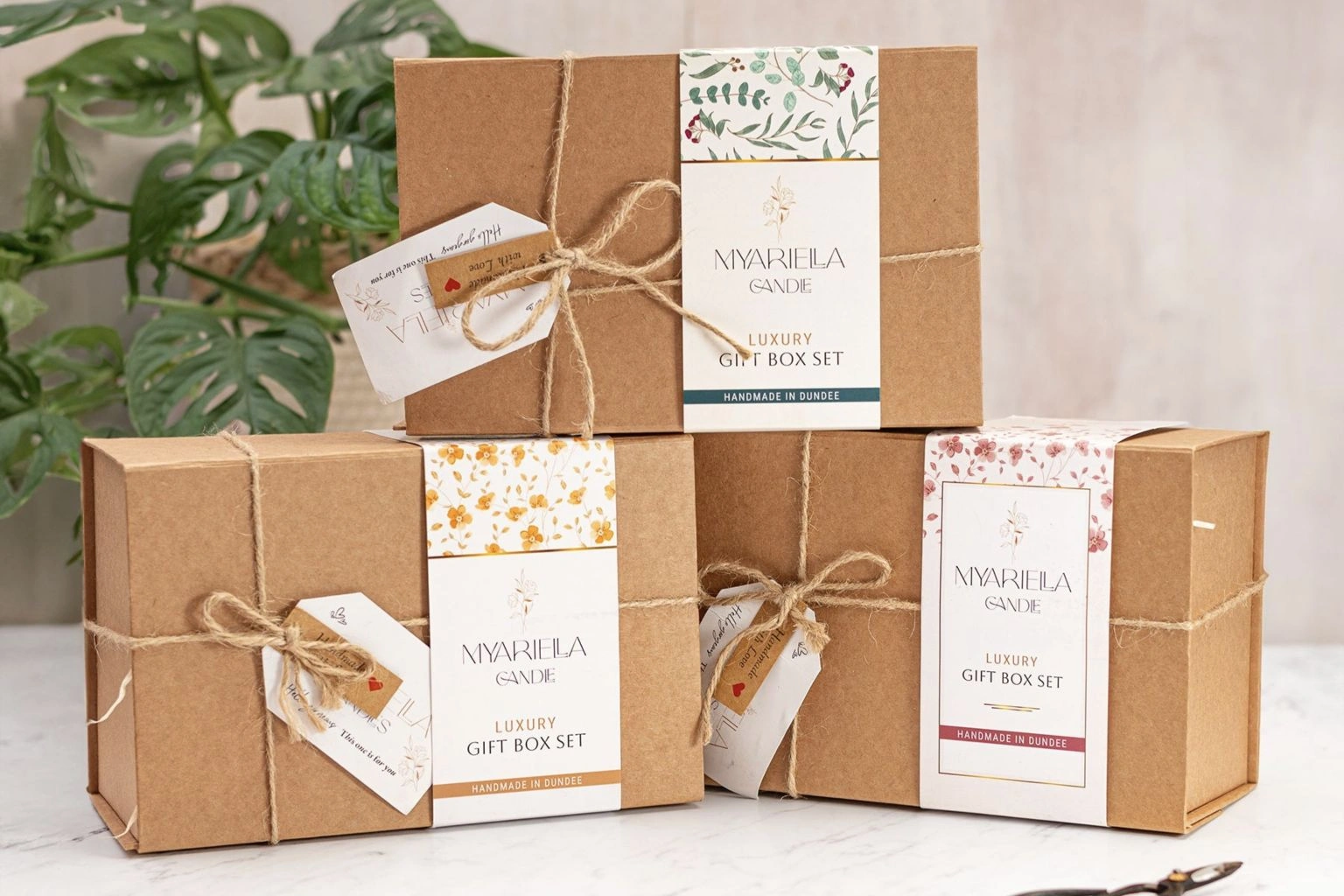
A gift photograph shows three separate flat kraft-toned boxes stacked together. Each has a pale vertical band with different botanical artwork above gift information, plus twine and a small tag. They are three independent gift boxes, not a single three-level construction. Closed views do not reveal the candle count or partitions inside each.
A paper band can carry fragrance or gifting information on a common box, but its sealing function needs structural confirmation. Twine adds manual work, knot height and transit tidying, all of which belong in the quote. If the band mainly supplies information, test its completeness without extra decoration before deciding whether twine and tags add enough value.

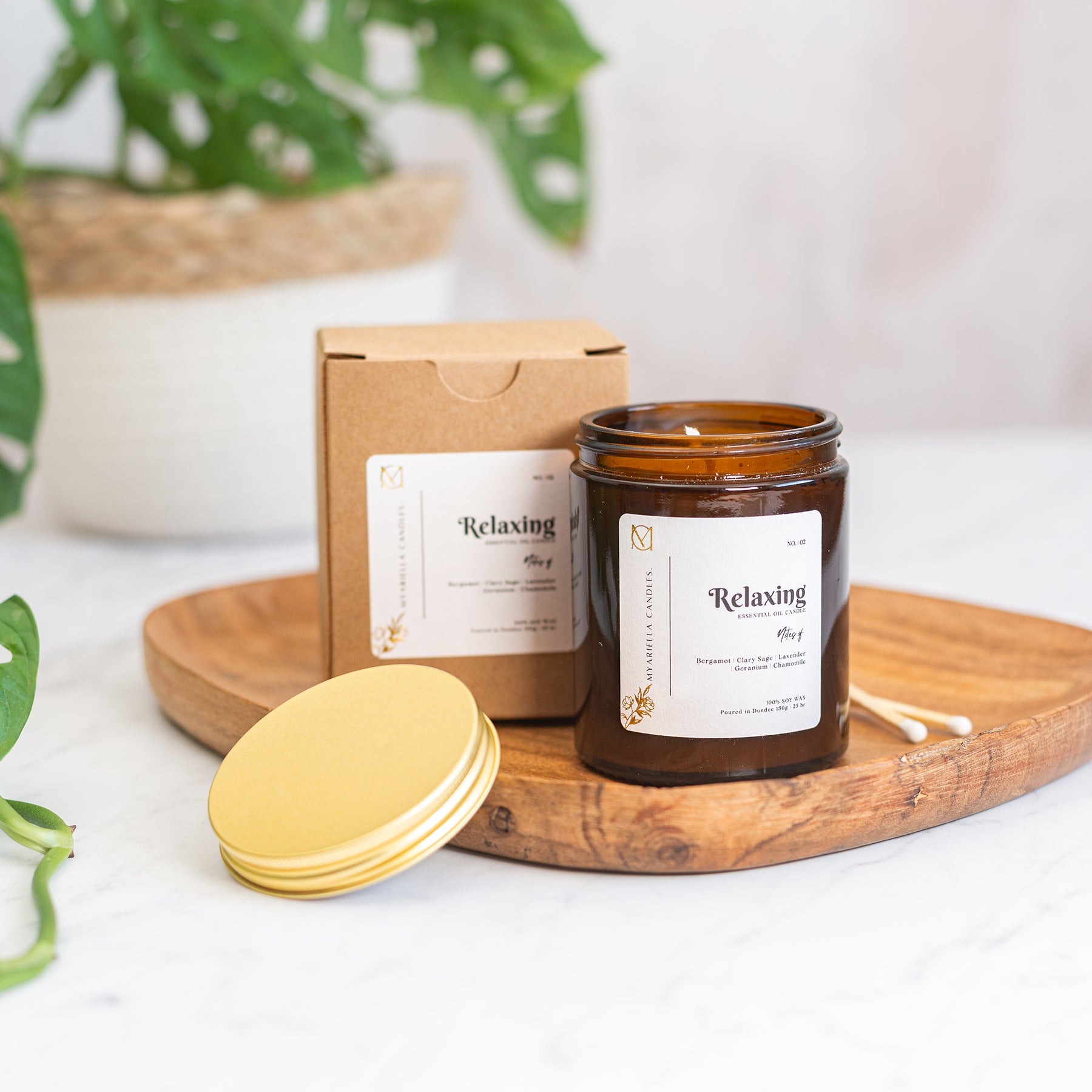
A small folded box reveals an opening detail
Beside the Relaxing tin, a kraft-toned box shows a semicircular top notch, folded edges and a white front information label. Compared with a tube, it suggests a simpler folded relationship and a visible place to start opening. The notch does not establish the base design, wall layers or presence of a lining.
Check whether label area and notch placement conflict. Fingers opening the box should not press important text or lift a label edge. Match adhesive to the selected surface and test corners, rubbing and environmental changes. Similar vessel and carton wording supports pairing, but curved and flat applications still need separate adhesion checks.
An isolated tube clarifies the silhouette, not material credentials
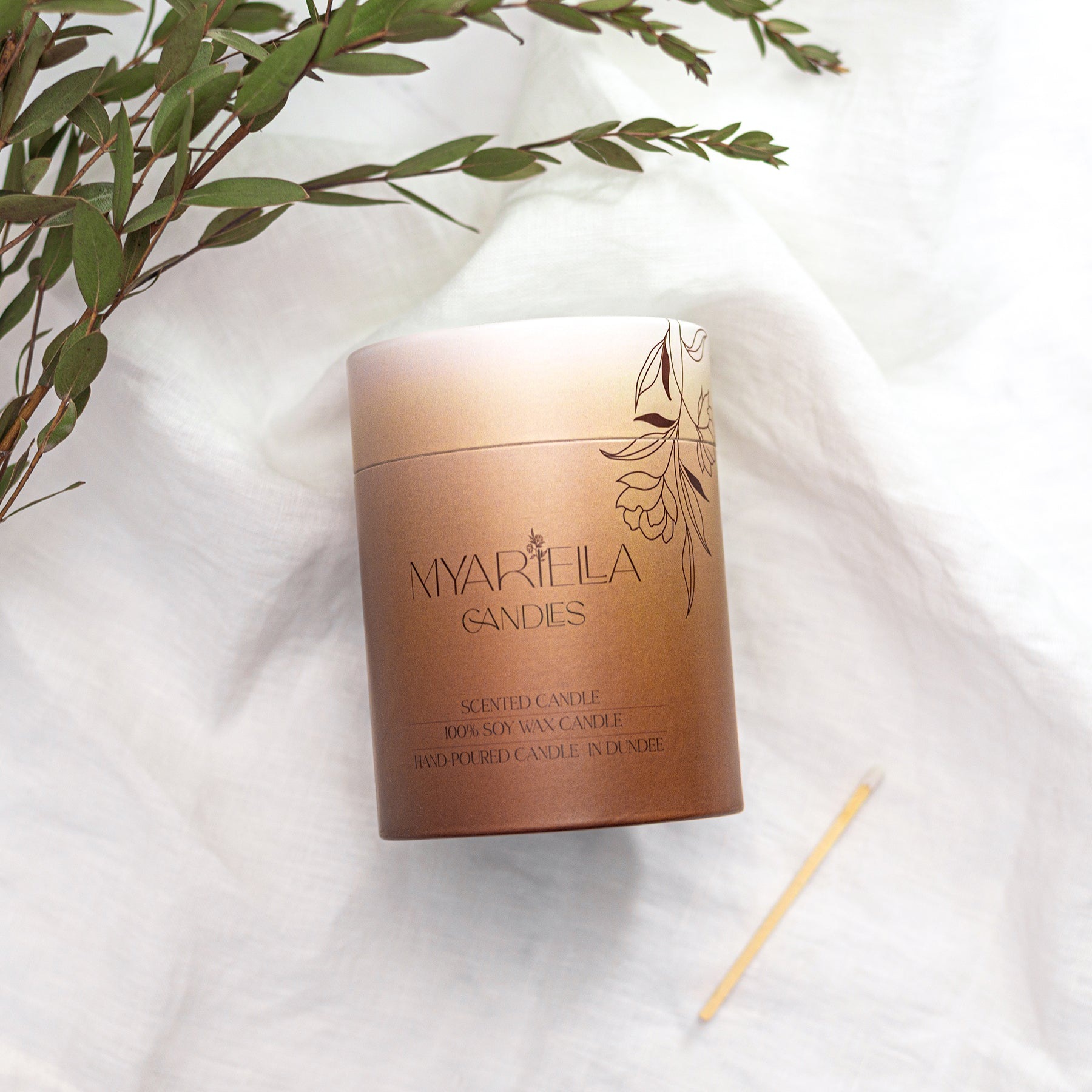
The Vanillawood tube stands alone on pale fabric, revealing its proportions, upper joint and side botanical detail without a vessel obscuring it. The image helps explain spacing and information positions. Different photographic distances and perspectives prevent precise dimensional comparisons between variants.
Inspect the entire circumference for seams, wrapping quality and roundness. A front view can hide rear joints that customers will see during handling. Set tolerances where graphics cross a seam, or define whether the logo and lid must align when the seam stays at the rear. These basic requirements can improve completion more than another decorative layer.
Share rules without forcing common dimensions
Brand lettering, botanical line weight and reading order can connect tubes, upright cartons and flatter gift boxes while their structures respond to vessels and gifting needs. More formats also complicate purchasing and storage. Define the problem each solves instead of adding components only to make every product look new.
Compare assembled-tube storage volume, folding-carton forming time, gift-band and twine labor, and each format's protective inserts. Empty-box prices alone are insufficient. A shared box with variant labels may suit small seasonal orders, but a complete packing trial must establish stability.
Retain approved fully packed samples of every structure, recording variant identification, opening actions and surface changes after transit. Customers receive an object they handle, open and put down, rather than a static image. Aligning those actions with the visual tone turns delicate graphics and natural colors into a dependable experience.
Test actual display directions. A rotated tube can hide the vessel name, while a stacked flat box may expose only its band. Early shelf trials help determine whether lid or side identifiers are necessary, avoiding temporary labels after customers report difficulty selecting variants.
Three Things to Bring to Your Packaging Sample Brief
- Tubes, upright cartons and flat gift boxes serve different packing tasks.
- Botanical lines and light information styling connect the structures.
- Closed gift boxes do not establish their internal candle count.
For a multi-size candle range, select structures around products and channels first, then build continuity through common graphic and information rules.