

Nicobar combines a broad range of paper structures. Individual cartons use botanical patterns and contrasting upper and lower areas; three-candle gifts use triangular boxes; five-candle packs and thirty-tealight sets have different shared outer packages. Graphics connect them, while counts and shapes determine their construction. The example shows how a brand can span multiple formats without forcing a visually consistent but physically unsuitable universal box.
Visible details in the photographs inform this case study. Proposed paper, printing and structural options are custom packaging recommendations, rather than confirmed production specifications for the brand.
Individual cartons establish an extendable language
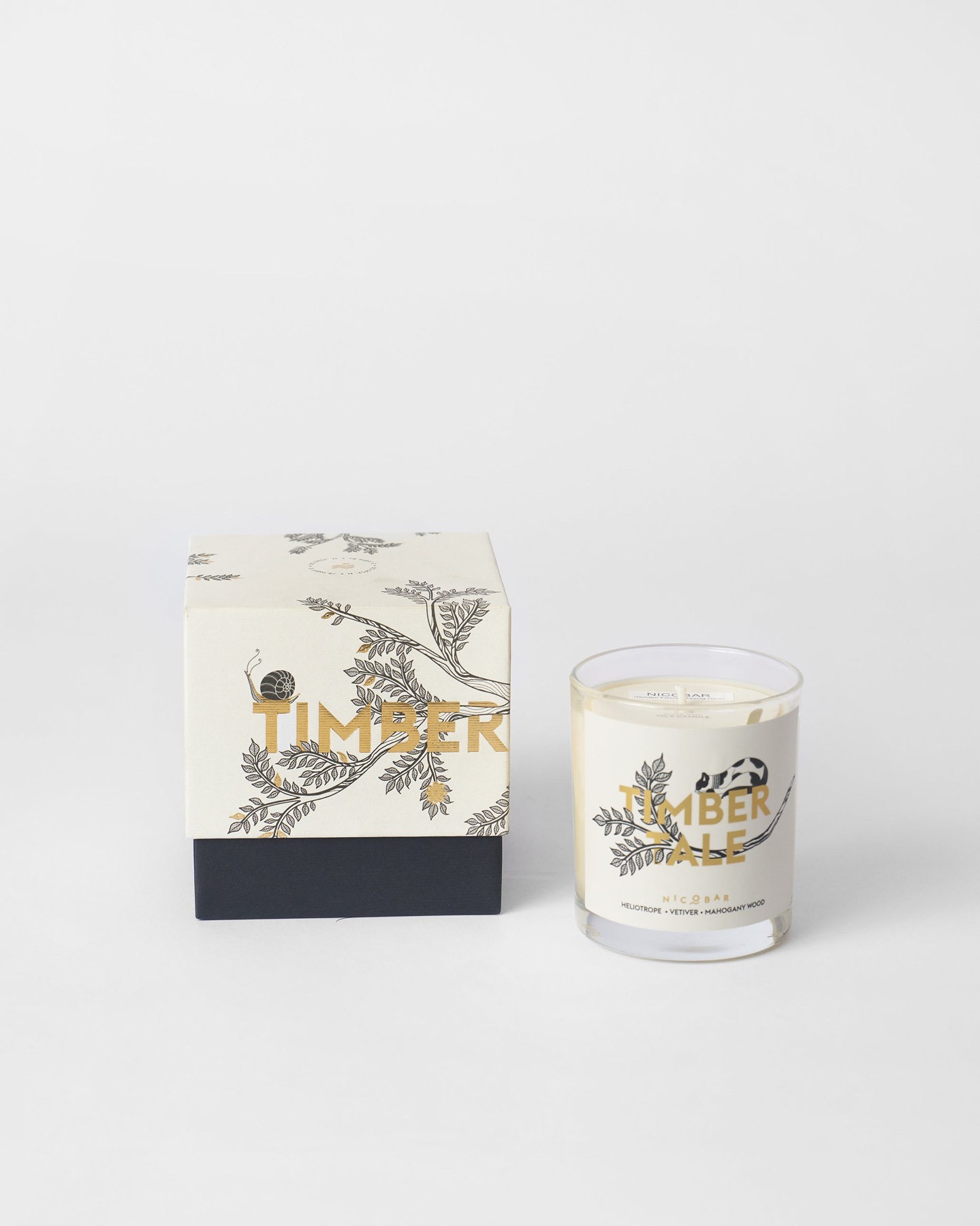
Wanderwood, Timbertale and Ramblerose use large pale areas with plant-like drawings, anchored by darker lower bands. Names retain prominence within the illustration, and vessels continue related artwork and wording.
The box and vessel form a coordinated pair: the carton carries a larger composition, while the vessel retains recognition after opening. Define brand, name and graphic positions before deciding decorative density. Every surface need not be filled.
Lower color blocks create rhythm across a shelf, but should not obscure capacity information. Check whether names remain visible behind shelf rails or front-row products rather than relying only on unobstructed studio views.


Brighter individual cartons provide another fragrance mood
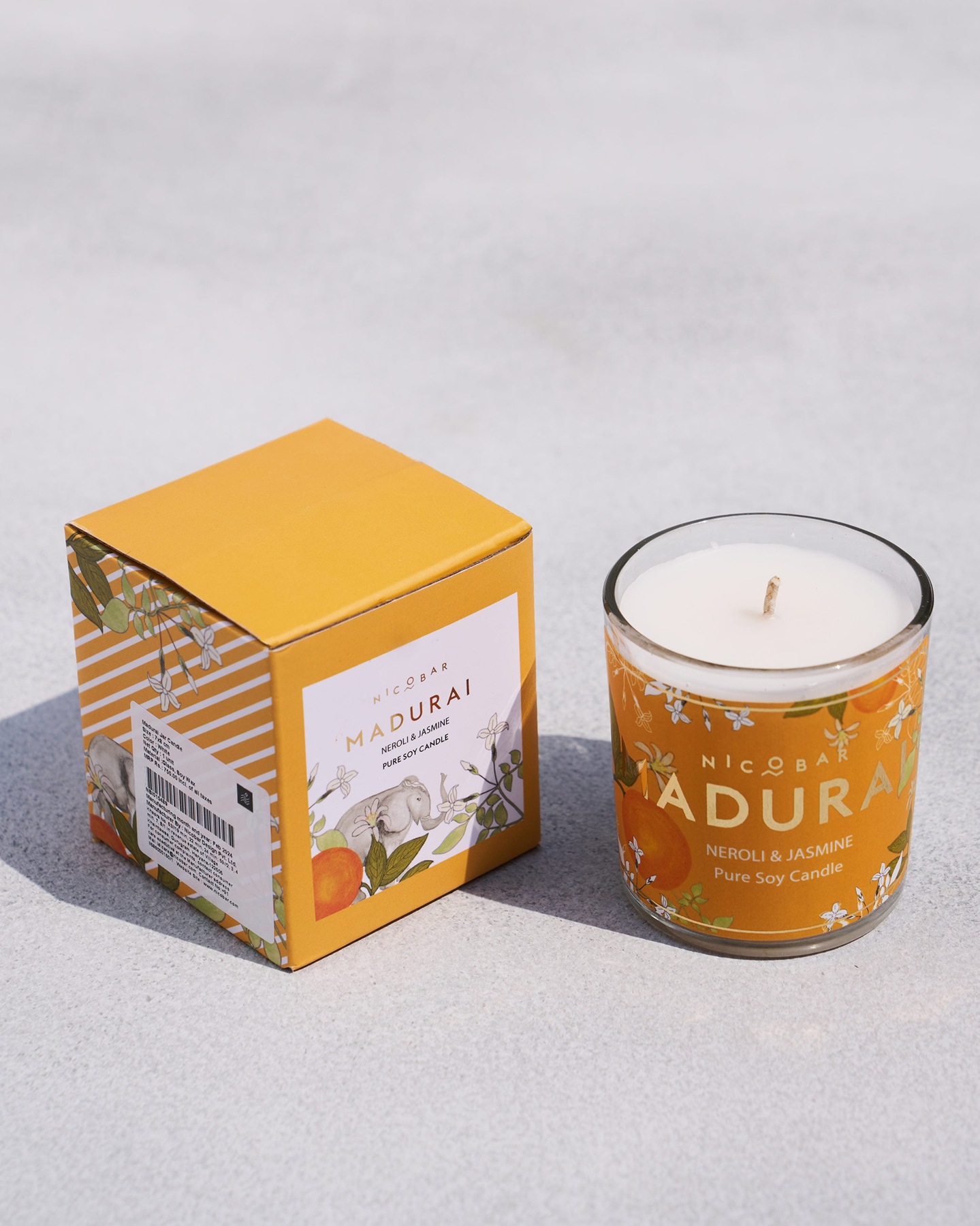
Casablanca and Madurai use stronger colors and information frames, differing from the pale botanical boxes. They remain part of the brand without having identical artwork.
Extract the shared reading order instead of requiring identical colors and motifs. Easy-to-find branding and fragrance names connect different expressions. Color supplies mood, while accurate naming supports selection.
A custom range using two graphic approaches should define why particular fragrances use line drawings and others use color blocks. Continuous typography, panels or selected marks make intentional variation easier to maintain over time.

Three candles reshape the outer box into a triangle
The three-candle gift uses a triangular outer box, with three small vessels beside it clarifying the count. It differs from an upright individual carton and requires construction around the arrangement of three products, not an enlarged version of one die.
A triangular outline may create a distinctive gift memory while changing material yield, supports and assembly. Establish the internal arrangement, first opening view and finger access. The exterior's character must work with the usable internal space.
No unfolded design is shown, so the folding or wrapping method is unconfirmed. Give structural designers the intended outline, compare alternatives and test loaded samples for stability and cost.
Five-candle gifts and tealight trays need separate restraint
The five-candle set has a horizontal shared box, while thirty tealights are organized in a shallower tray-style paper package. Different contents cannot automatically use the same lining logic.
Multiple vessels need separation and orientation, while small tealights need movement control and count verification. Trial spacing and removal with actual products rather than treating a neat photographic arrangement as performance evidence.
Confirm any clear covering or closure separately for material and fixing. The visible tray and paper frame explain presentation but do not establish a complete transport solution. Visibility and protection need joint validation.
Gift combinations need accurate contents information
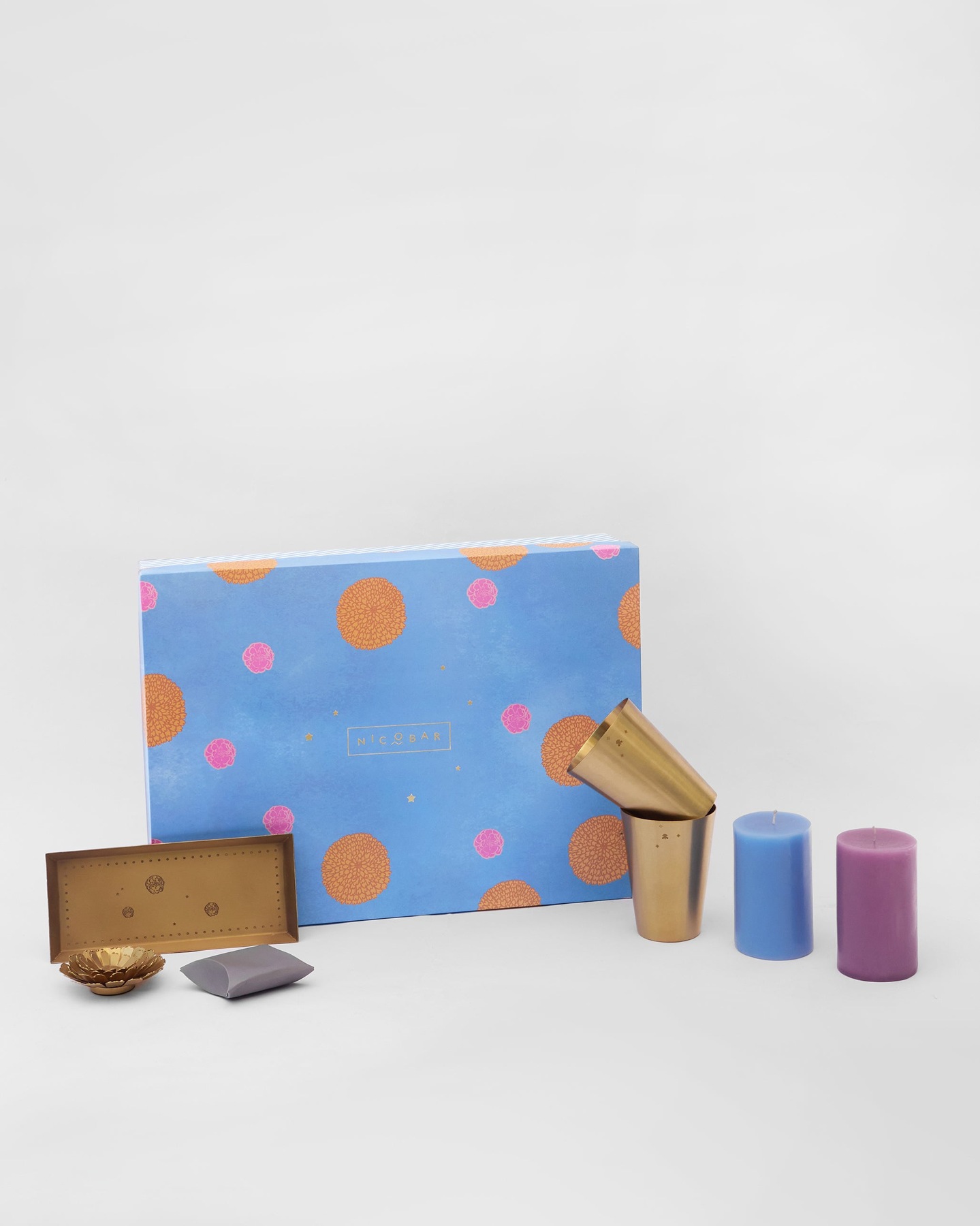
Where a gift scene contains different objects, use the actual product list rather than automatically including surrounding props. Artwork can establish atmosphere, while descriptions must accurately distinguish supplied contents.
State quantity and item types on the front or another easy-to-find area. Customers should not need a photograph to guess whether they receive one candle, three or another combination. Names and capacities should communicate that directly.
Assembly teams also need placement diagrams and checklists. If combinations vary, define the common box's suitable range. Shared inventory is not a reason to force different contents into an inappropriate space.

Botanical lines and color blocks need different print checks
Fine botanical lines need clarity and text contrast; colored cartons need uniformity and batch matching; dark lower bands need fold-abrasion checks. Choose proofing targets around these demands instead of requesting an unspecified premium paper.
To share graphics across individual and multicandle formats, compare coated white paperboard folding cartons with greyboard gift boxes wrapped in uncoated paper. The first supports flat storage and artwork changes; the second can suit heavier gifts while increasing volume. Test triangular facets under compression, and compare microflute corrugated board with die-cut paperboard supports for tealight trays. Inspect fine plants, dark base bands and exposed white at corners without imposing identical thicknesses on all structures.
Plan cross-panel graphics around folds and glue seams. Keep principal names on stable areas. Botanical details that can tolerate interruption may cross corners, while complete symbols should avoid processing-sensitive positions. Inspect finished boxes as well as flat artwork.

Share structures only where real dimensions support them
Individual boxes for matching vessels may share dies and restraints; different diameters, heights or lids need renewed verification. Triangles, long boxes and tealight trays each have their own loading and protection conditions.
Internal supports need stability and natural extraction. Tight fits can increase assembly effort; loose ones can lose the arrangement in shipping. Actual movement, opening and transit tests provide evidence for clearances and material choices.
Design the outer transport layer separately. A beautifully illustrated display box should not absorb all shipping impacts without validation. Giving each layer a defined responsibility helps assess necessity and control cost.
Use common rules to manage a varied collection
Share brand lettering, name hierarchy and selected graphics, while maintaining structures separately for individual candles, three-candle gifts, five-candle gifts and tealights. Common recognition with loading-specific differences is more useful than identical boxes.
Include material area, supports, labor, empty-box storage and shipping volume in quotations. A distinctive outline may add work while supplying a desired gifting experience. Compare real quantities and proposals rather than ranking shapes abstractly by economy.
Nicobar uses graphics as a bridge between products rather than a structural constraint. When each format explains its contents, protects the product and opens easily, the shared brand can remain coherent across rich variation.
Check storage and case-packing efficiency for triangular boxes. Their outline changes shipping-case arrangements, voids and pressure points. Place real finished samples in a transport case before setting counts and cushioning instead of calculating only the material area of one box.
For larger tealight counts, observe what happens after a few pieces are removed. Continued organization and protection of the remainder affect use as well as the first opening. Adjust tray construction around that sequence rather than solely around an initial display.

Three Things to Bring to Your Packaging Sample Brief
- Verify individual, triangular three-candle, five-candle and tealight structures separately.
- Vary botanical drawings and colors while keeping brand and name hierarchy continuous.
- Test materials, restraints and shipping against real contents rather than brand membership.
For a range spanning candle and tealight sets, group products by quantity and use, then develop common graphics alongside appropriate independent structures.