
You can start a custom perfume packaging enquiry before every design decision is finished. What helps most is a clear account of the product, quantities and delivery requirements, with open questions marked as “to be confirmed.” This gives a supplier a basis for explaining what an estimate covers and what still needs checking.
This checklist is for brands preparing perfume cartons, inserts or discovery sets. For the wider process, read our guide to ordering custom perfume packaging. Here, the focus is the information to send with your first request for quotation, or RFQ.
1. Define the Components and Scope
“One perfume packaging set” can mean different things. List the items you want quoted: the outer box, insert, sleeve, fragrance card, shopping bag or shipping carton. Give a quantity for each component where the quantities differ.
Explain whether the pack is for a single retail bottle, a discovery set, a gift combination or an e-commerce order. A retail carton is only part of a shipping arrangement. If you want the supplier to assess shipping cartons or cushioning too, include them in the enquiry.
Describe the delivery format. Do you need empty flat-packed components or assembled boxes? Who will insert the bottles, add the cards and complete final packing? These questions define the work to discuss; they do not mean every service has already been agreed or is available.
2. Prepare the Bottle Details with the Cap Fitted
Send clear photographs and dimensions of the bottle with the intended cap fitted. State the units and provide the overall height, maximum width and depth. For a round bottle, include the maximum diameter. Add side and top views if the cap, shoulder or decorative parts create an unusual profile.
Capacity is not a substitute for dimensions. Two bottles labelled 50 ml can have different shapes and closures. The height of an uncapped bottle is also different from the overall height that the packaging needs to accommodate.
If you only have the bottle supplier’s drawing, identify its version and date, and say whether the cap is included. Make it clear if the physical sample has not arrived.
| Information | What to make clear |
|---|---|
| Dimensions | Units, overall capped height and maximum external dimensions |
| Weight | Whether the figure covers an empty capped bottle or the filled product |
| Configuration | The bottle, cap and any decorative parts intended for production |
| Source | A measured sample, supplier drawing or provisional information, with its version |
| Handling concerns | Known scratch-sensitive surfaces, heavy caps or parts that should not be compressed |
| Sample availability | Whether a representative physical bottle can be supplied for fit checks |
If a weight or dimension is unknown, mark it as pending rather than estimating it from a photograph. Known surface or handling concerns help the supplier identify contact points and questions to investigate.
Photos and drawings can support an initial discussion. Final box dimensions and insert fit still need to be checked with a physical bottle that represents the intended production configuration. This checklist does not specify a universal clearance to add around the bottle.
3. Break Quantities Down by Variant
A total of 2,000 boxes does not describe the complete order. List the fragrance, capacity, bottle configuration, artwork version and quantity for each line.
| Example variant | Bottle capacity | Quantity of boxes |
|---|---|---|
| Fragrance A | 50 ml | 500 |
| Fragrance B | 50 ml | 500 |
| Fragrance C | 100 ml | 1,000 |
Then explain what might be shared. Do the variants use the same bottle and box structure? Does only a label or part of the artwork change? These are conditions for the supplier to assess, rather than a guarantee of a particular saving.
If the quantity is undecided, request two quantity options against the same specification and ask the supplier to identify any assumptions. Keep the variant and component scope consistent when comparing the results.
For discovery sets, list the number of vials in each set, their capacities and external dimensions, and any cards or accessories. Distinguish the number of complete sets from the total number of individual vials.
4. Explain What You Like About Each Reference
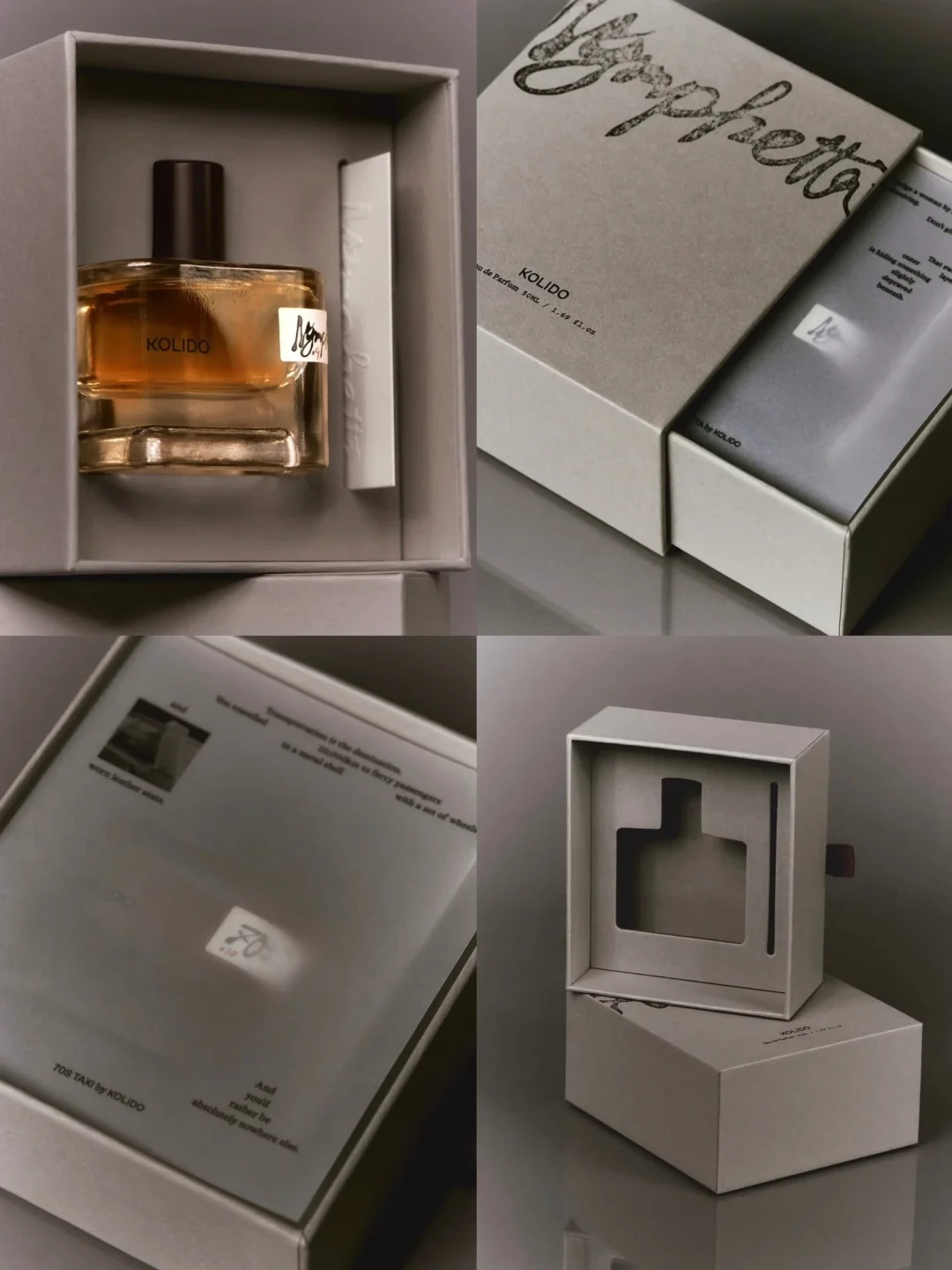
Annotate reference images with a short explanation: the opening style, paper feel, colour, insert layout or finish that interests you. You may want the structure from one reference and the visual direction from another.
Do not infer a paper grade, board thickness or foil specification from appearance alone. Send material names, swatches or an approved physical reference if you have them. Otherwise, describe the intended effect and ask the supplier to suggest options for evaluation.
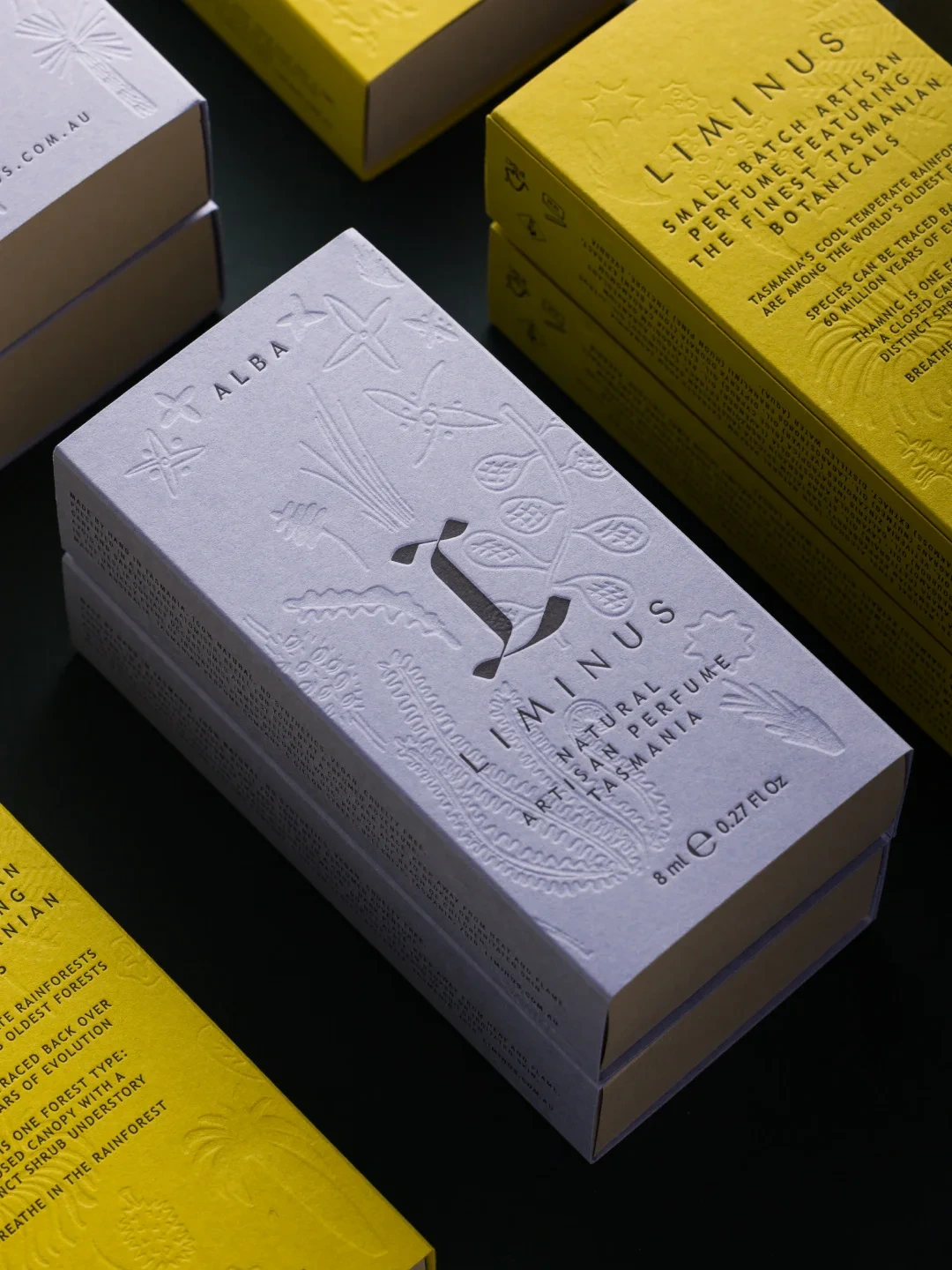
For foil stamping, embossing, debossing or spot finishes, show the intended positions. If artwork exists, a marked preview can distinguish ordinary printing from special finishes. The final production files should follow the requirements confirmed for the project.
5. Describe the Artwork Status and Current Version
Tell the supplier which stage you have reached:
- Reference images only.
- A logo and brand guidelines.
- A graphic design that has not yet been fitted to a dieline.
- An existing dieline and production files you would like reviewed.
Attach a readable preview PDF and explain whether editable source files are available and who will make changes. A preview shared for estimating is different from an approved production file. Sending a file does not, by itself, authorise production.
Use clear version names and identify the current file in your message. Before sharing confidential drawings or third-party files, check your permission to share them and agree on the appropriate channel. Avoid posting those files in public comments.
6. Include Budget, Destination and Arrival Date
Explain what the budget needs to cover: boxes and inserts only, or also cards, samples, development charges and transport. A budget is an input for discussing options, rather than confirmation that the supplier can complete the project at that figure.
Specify when the packaging needs to arrive and where. An arrival deadline and a production completion date are different milestones. Include the destination country, city and postal code, along with any known receiving or transport constraints. A full address can be shared through an agreed channel when needed for a shipping quotation.
Ask the supplier to identify whether sampling, tooling, finish plates, assembly, shipping cartons, freight and taxes are included or separate. Keep unresolved charges visible instead of assuming that everything is covered by the box unit price.
7. Copy This First-Enquiry Template
Replace the prompts below with the information you already have. Keep “to be confirmed” wherever a decision is still open.
Subject: Custom perfume packaging enquiry — [project name]
Hello Bravo Package,
We would like to discuss packaging for the project below.
- Intended use: [retail / discovery set / gifting / e-commerce]
- Components and quantities: [outer box, insert, sleeve, cards, bags, shipping cartons]
- Bottle status: [final / provisional; physical sample available or pending]
- Capped bottle dimensions and units: [overall height, maximum width and depth, or diameter]
- Weight and condition measured: [empty capped bottle / filled product / pending]
- Photographs or drawing version: [attached files and version date]
- Variants: [fragrance, bottle capacity, artwork version and quantity per line]
- Packaging references: [images and the features we like]
- Materials and finishes: [confirmed choices and areas needing advice]
- Artwork status: [preview, source-file availability, current version and person making changes]
- Delivery format: [flat-packed / assembled / advice needed; who will pack the bottles]
- Budget and scope: [what the budget must cover]
- Target arrival date and destination: [date, country, city and postal code]
- Open questions: [items still to be confirmed]
Please state any assumptions used in the estimate and identify separate charges for samples, development, tooling, assembly, outer cartons, freight and taxes.
You can begin the conversation with incomplete information. Showing what is missing and who will confirm it is more useful than filling every field with an unverified figure. When a quotation arrives, compare its assumptions with your brief. If the bottle, components, quantity or artwork changes, ask the supplier to reassess the affected price and timing.
To discuss your project with Bravo Package, start with your bottle photographs, capped dimensions, quantities by variant, packaging references and target arrival date. Explain where you would like guidance.