
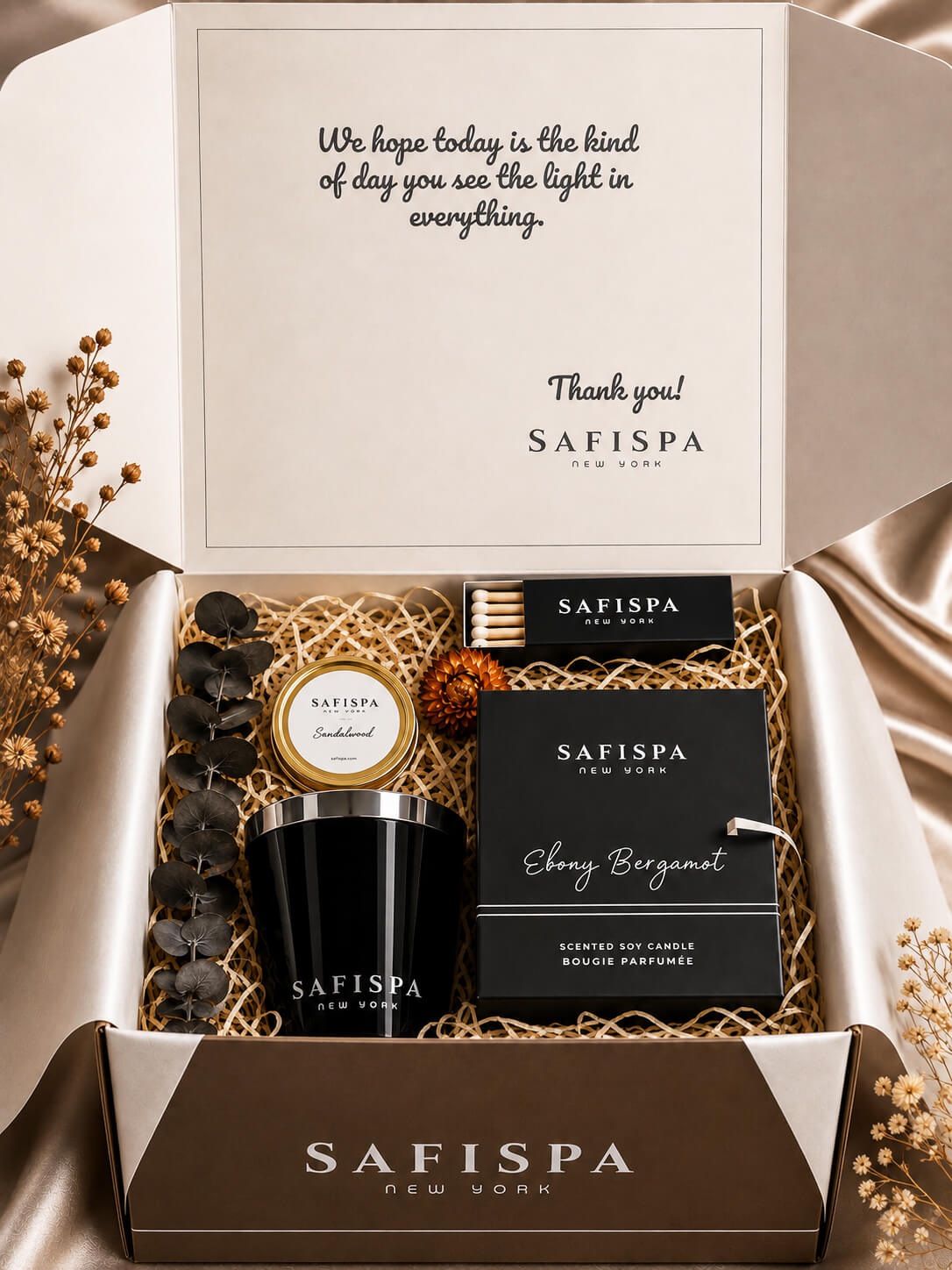
The nine body photographs show open SAFISPA gift boxes. Pale inner lids carry messages, while brown textured filling organizes a candle vessel, a small matching round tin, a matchbox and a separate product carton. Similar arrangements recur across fragrances, with dark vessels and inner cartons for selected variants. The case is useful for studying layered gifting, provided the shared outer box, individual carton and photographic props remain clearly distinguished. A displayed object is not automatically an additional product or a supplied packaging component.
Visible details in the photographs inform this case study. Proposed paper, printing and structural options are custom packaging recommendations, rather than confirmed production specifications for the brand.
Introduce a second information surface when the lid opens
The large light-colored inside lid becomes a prominent plane after opening. An encouraging line, a thank-you message and brand identification sit within a fine border. Different type treatments appear, including italic serif and handwritten-looking styles. The emotional message arrives through the opening action rather than crowding the exterior.
Position that message around the hinge and normal opening angle. Copy too near the fold can remain obscured; copy too high may fall outside a comfortable sightline. Test reading with the box on a table and in other ordinary unboxing positions, so users do not need to rotate it unnecessarily.


Assign different jobs to the shared outer and individual carton
The square carton beside the vessel is a separate component carrying brand, fragrance and product information. The outer gift box groups the objects into one presentation. Their related colors do not give them identical roles. A vessel displayed beside its carton also does not establish that the carton contains a second large candle.
Confirm the actual supplied contents and packed configuration first. A photograph may remove the candle from its carton to show both. Explain the real arrangement clearly and test that configuration, rather than calculating filling and space directly from a styled display. Otherwise, extra material can consume space without improving protection.

Treat loose filling as both presentation and assembly work
Brown curled filling surrounds the objects, with white tissue folded out at the sides. This adds texture and layers, but photographs do not establish exact filling composition, tissue weight or cushioning performance. Loose fill can move during delivery, so a tidy sample is not proof of an identical arrival condition.
Specify filling quantity, compaction and loading order if choosing a similar approach. Check whether the small tin slips beneath the vessel, the matchbox rotates or carton corners become compressed. Compare paper locating components with loose fill if necessary, defining whether each addition addresses protection or presentation before adding it.

Keep fragrance names readable across light and dark variants
Hibiscus, Sea Salt, Fresh Lychee & White Tea, Mango Coconut, Jasmine Marie, Lavender Vanilla and Tropical use pale inner cartons with informal central fragrance lettering. Passion Spice and Ebony Bergamot use black vessels and inner cartons. Some color changes stand out, but most variants still rely on their names for precise distinction.
Handwritten-style lettering can feel personal while requiring careful small-scale and long-name tests. Fresh Lychee & White Tea occupies more space than Sea Salt. Define line breaks, size ranges and clear space instead of shrinking every name into one fixed frame. Check brand, fragrance and product-description priority on the real carton.

Sample pale and black components separately
For a related hinged gift box, compare coated and uncoated wrap papers over greyboard. Test the individual product carton separately as a white-paperboard folding pack, validating it with the vessel weight. Coated wrap can help with fine text and dark-surface scuff control; uncoated wrap offers a softer feel but needs pale-on-black coverage tests. Include the lid message, smallest type, wrapped edges and hinge in a complete sample. Inspect print definition, wrinkles and opening wear. These are proposed routes, not confirmed SAFISPA specifications.
Check the outer box's front branding under different lighting as well. Pale lettering on a dark surface can behave differently in subdued display conditions or after abrasion. Use physical samples to assess wear and text completeness before adding protection. Compare its effects on touch, material separation and packing friction.

Design the gifting experience with the packing process
A multi-item set creates more matching and inspection steps. Vessel, carton, small tin and matchbox need correct fragrance and version checks; light and dark components should not be mixed inadvertently. Define workstation steps: verify products, add fill, locate components, fold tissue and close. A repeatable order also reduces disturbance and waste during rework.
Cost the shared gift box, individual carton, filling, tissue, printing and labor together. For parcel orders, distinguish the presentation box from the shipping carton and state which layer carries the main protection requirement. These open photographs do not establish closure methods or stacking performance; validate the real packed configuration.
Flowers, leaves, shells and fruit in some scenes may suggest fragrance without belonging to the sale. Do not list props as supplied gifts or reserve structural space for unconfirmed items. Separating contents from styling makes it possible to evaluate the packaging's own layers accurately.
The transferable sequence is clear: the lid message creates an initial tone, arranged components explain the set, and fragrance names confirm identification. Stable delivery needs coordinated information, restraint and packing actions. A generous experience also comes from understanding each object and removing or replacing it comfortably.
Approve a completely closed, packed set and reopen it after realistic delivery testing. Record movement, tissue creasing and printed-surface wear to turn the presentation goal into acceptance criteria. If an arrangement works only when styled by hand, adjust location or simplify the decoration.
Retain the approved packing list and physical sample for replenishment. Review material substitutions against both component positioning and the established unboxing sequence.


Three Things to Bring to Your Packaging Sample Brief
- Distinguish the shared outer gift box from the individual product carton.
- Position the inside-lid message around the actual opening and reading sequence.
- Include filling, fragrance matching and assembly labor in the complete set cost.
For a gift set, begin with the confirmed contents list. A complete packed sample can then validate restraint, reading order and unboxing actions together.