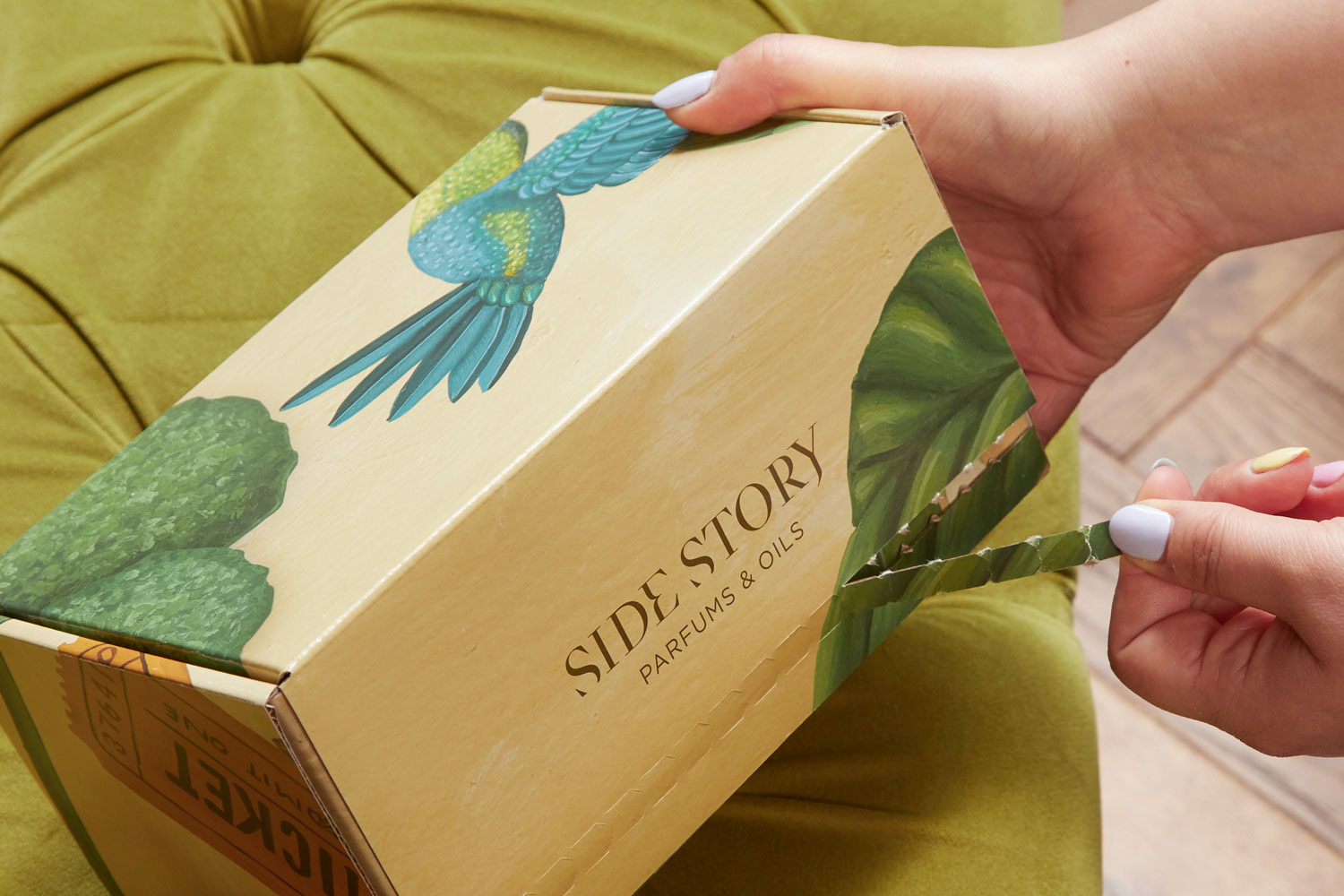
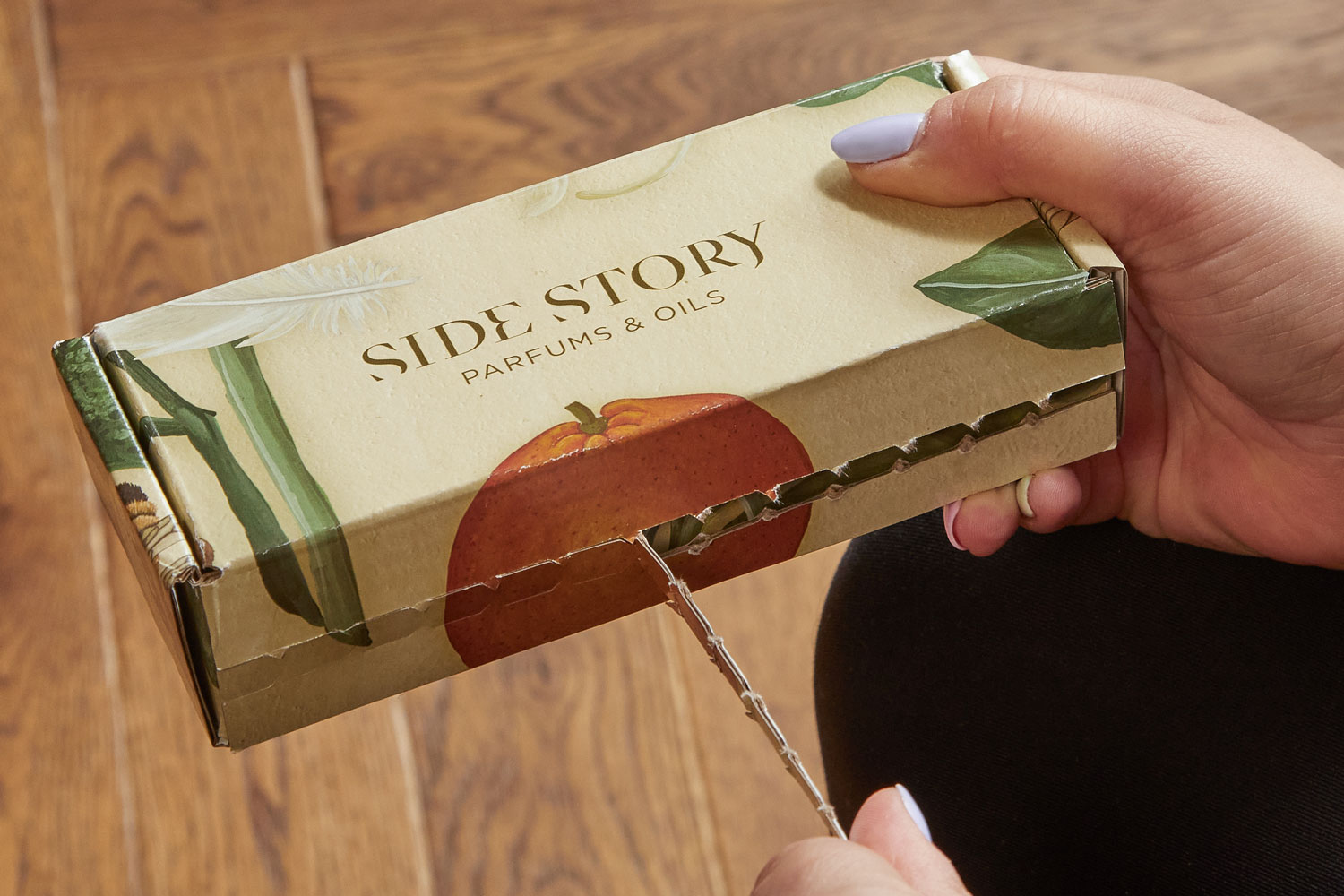
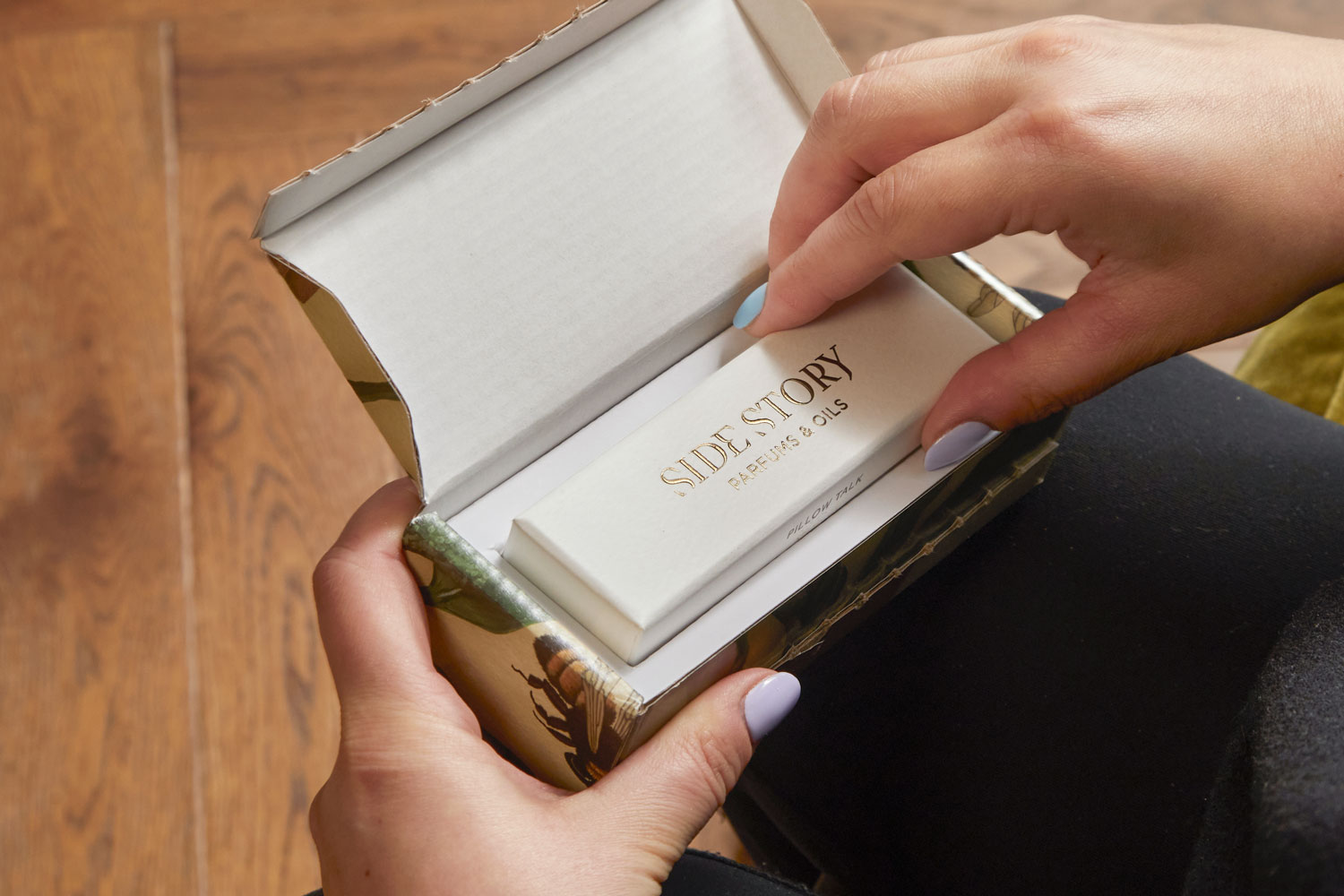
An illustrated Side Story mailer is being opened along a visible tear strip. The image shows the artwork and opening area, without establishing alignment tolerance or continuity on another pack. Third-party reference; not a Bravo Package project.
An illustration needs to work with the actual perfume-box structure, including the parts that fold, overlap or disappear when the pack closes. Start with an approved dieline and separate important subjects and text from backgrounds that can extend across panels. Review the closed pack, opening view and separate components independently. A flat layout or reference photograph can help explain an intention, but a formed sample is needed to check the actual relationship across seams and layers.
Begin with the confirmed dieline and viewing directions
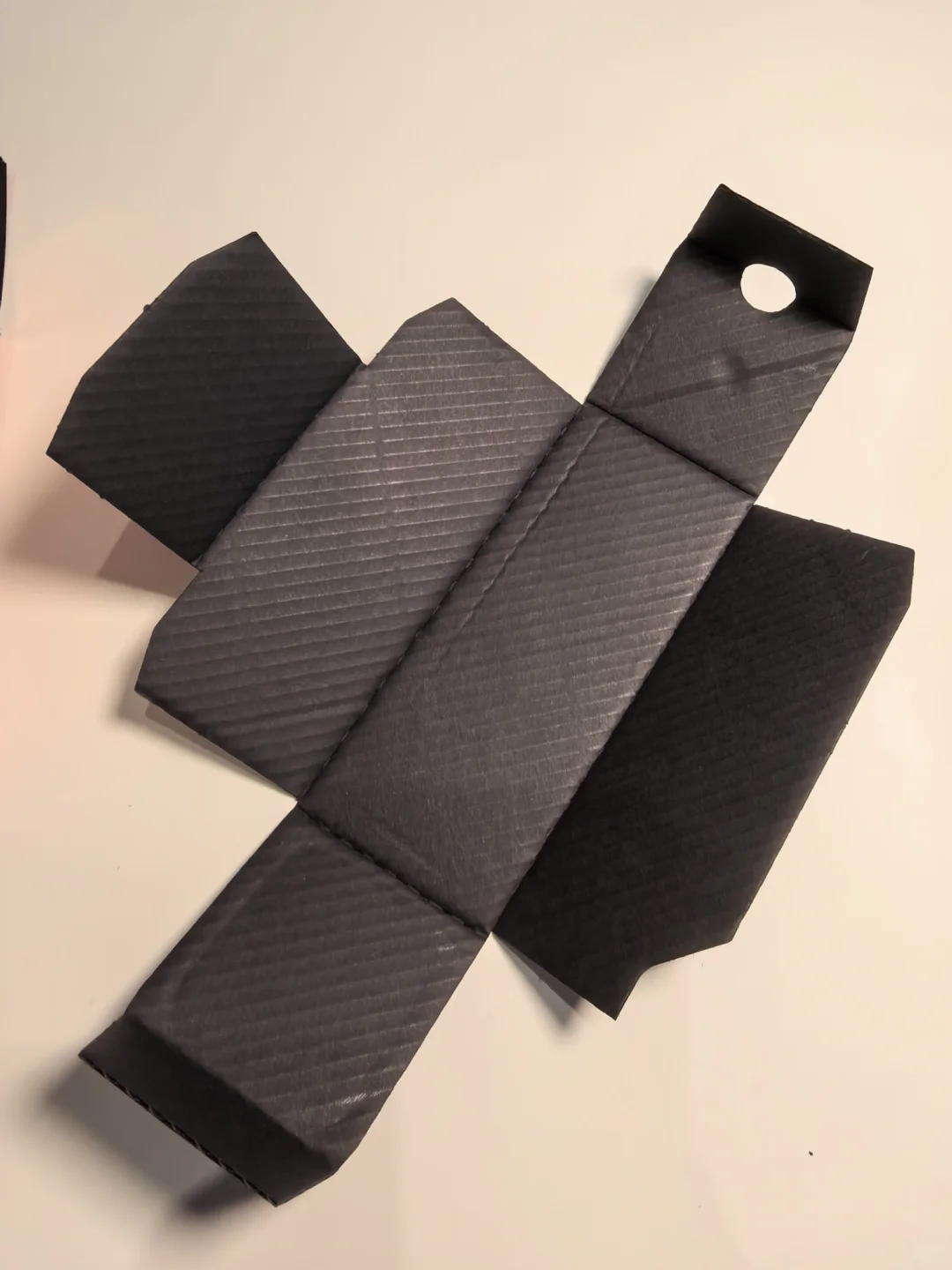
Before refining the illustration, confirm the dieline revision, legend, viewing side and assembly method. Distinguish cutting, folding, glue areas and the final visible surface. Areas next to each other on a flat drawing are not necessarily neighbours on the formed box. Name the lid, base, sleeve, band and internal pieces separately, and record their orientations when closed and opened.
Background extension beyond a cut and keeping important content away from vulnerable edges are different questions. Follow the confirmed requirements for this project rather than copying an example or a universal distance. Ask the structural or production contact to explain unclear line layers. Do not move structural lines to rescue a composition.
Separate subjects, text and extending backgrounds
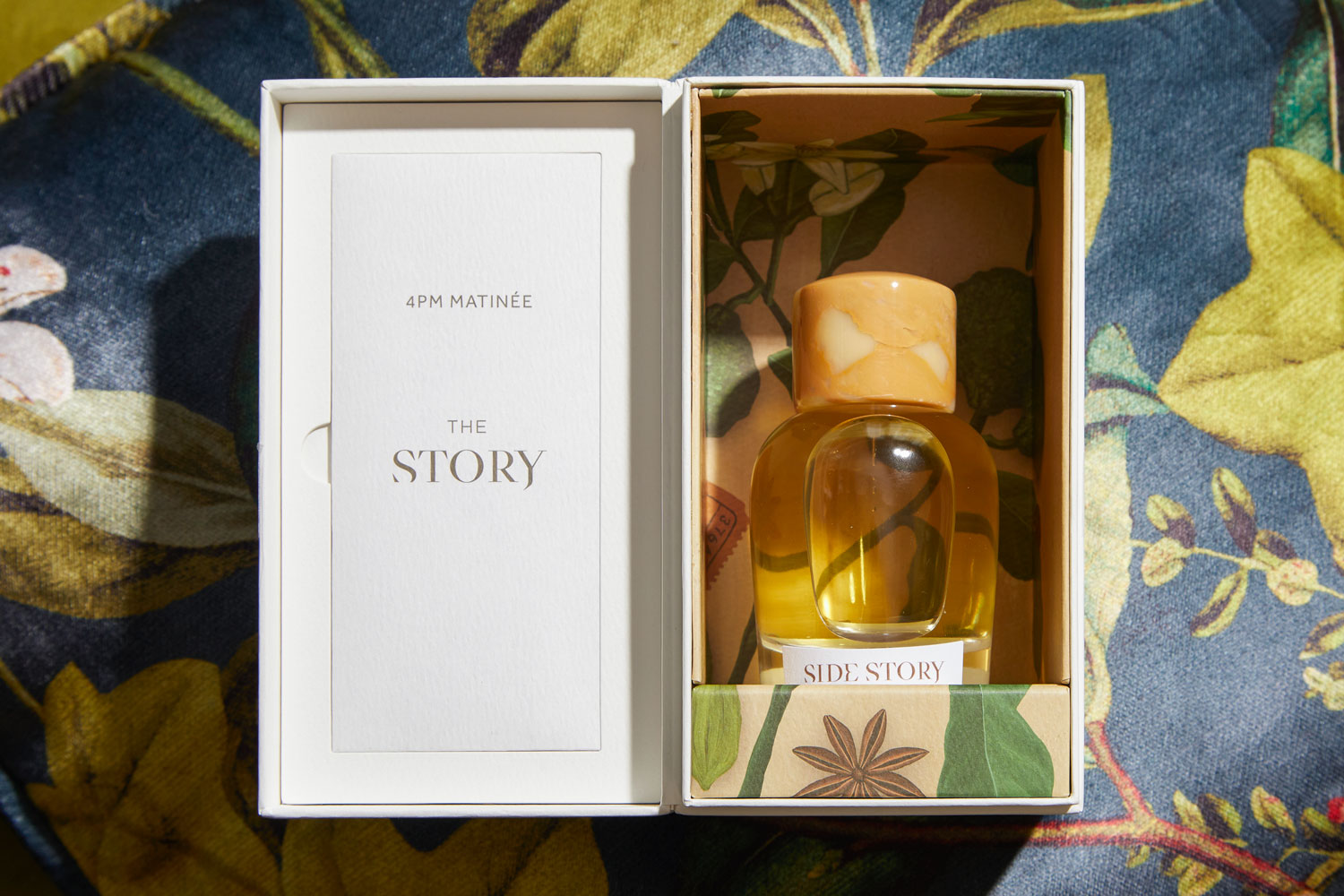
Identify what must remain understandable: the scent and brand names, the main illustrated figure or object and any line essential to the story. Manage these separately from backgrounds that can extend or be trimmed. Compose for the actual panels instead of drawing one complete picture and dividing it arbitrarily afterwards. Treat a subject crossing panels as a deliberate decision.
An extending background does not make every part expendable. A face, distinctive object or essential word near a fold, corner or cut calls for recomposition or a focused sample check. Keep the illustration connected to the product’s own content while retaining a clear place for its name and specification.
Check seams, folds and overlapping components
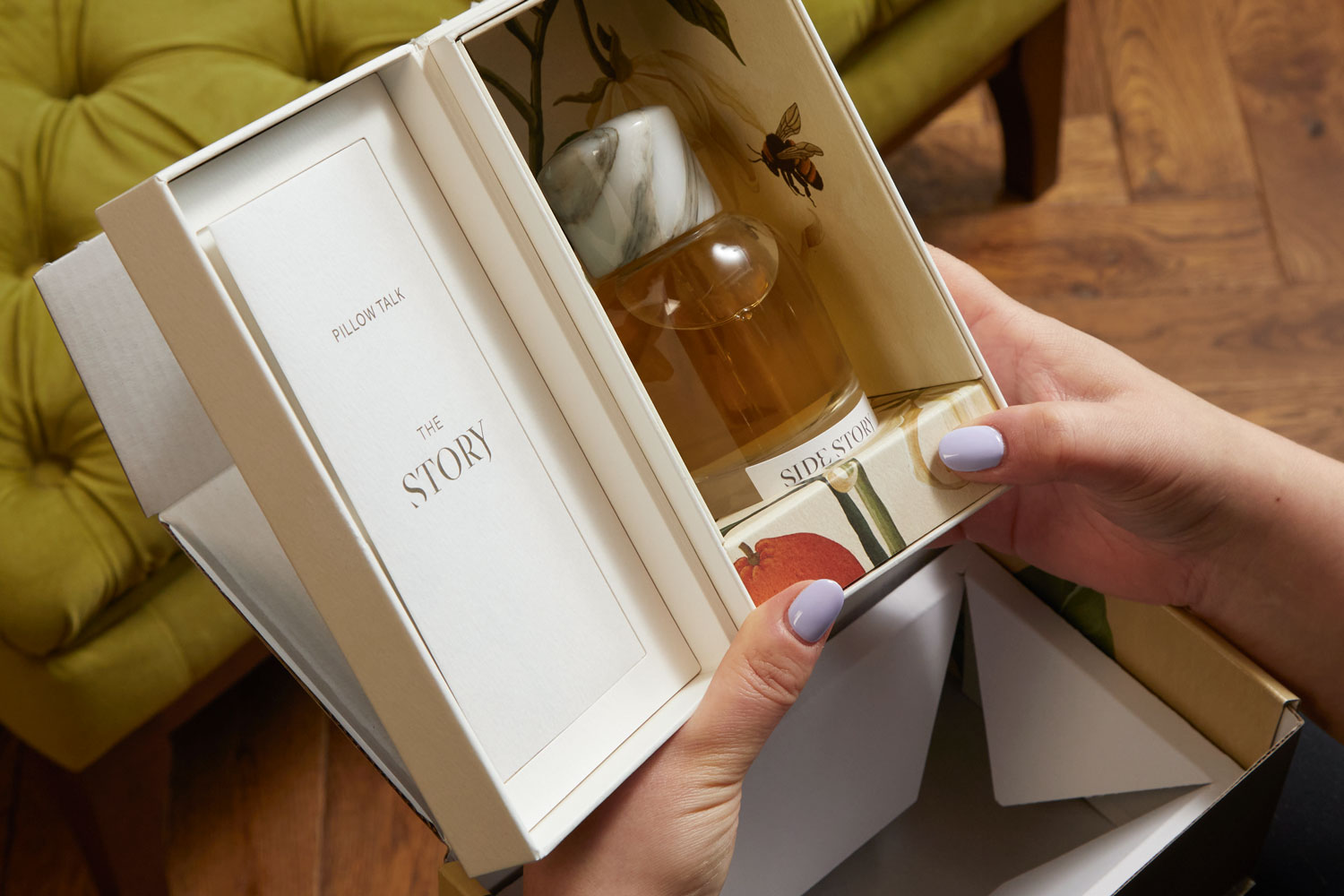
Overlay the artwork and structural layers, then list seams, folded corners, glue areas, lid-and-base overlaps and any area covered by a band. Identify backgrounds that may wrap out of view, lines that change direction at a corner and subjects that are only partially visible when closed. Lines meeting on a flat drawing do not establish continuity after assembly.
One compositional option is to keep important subjects on an uninterrupted visible face and let background or secondary graphics carry the relationship around a corner. This reduces reliance on a seam for the main message, but still needs checking on the actual structure. Do not assume a universal alignment tolerance or promise an invisible join.
Compose the closed, opened and separated states
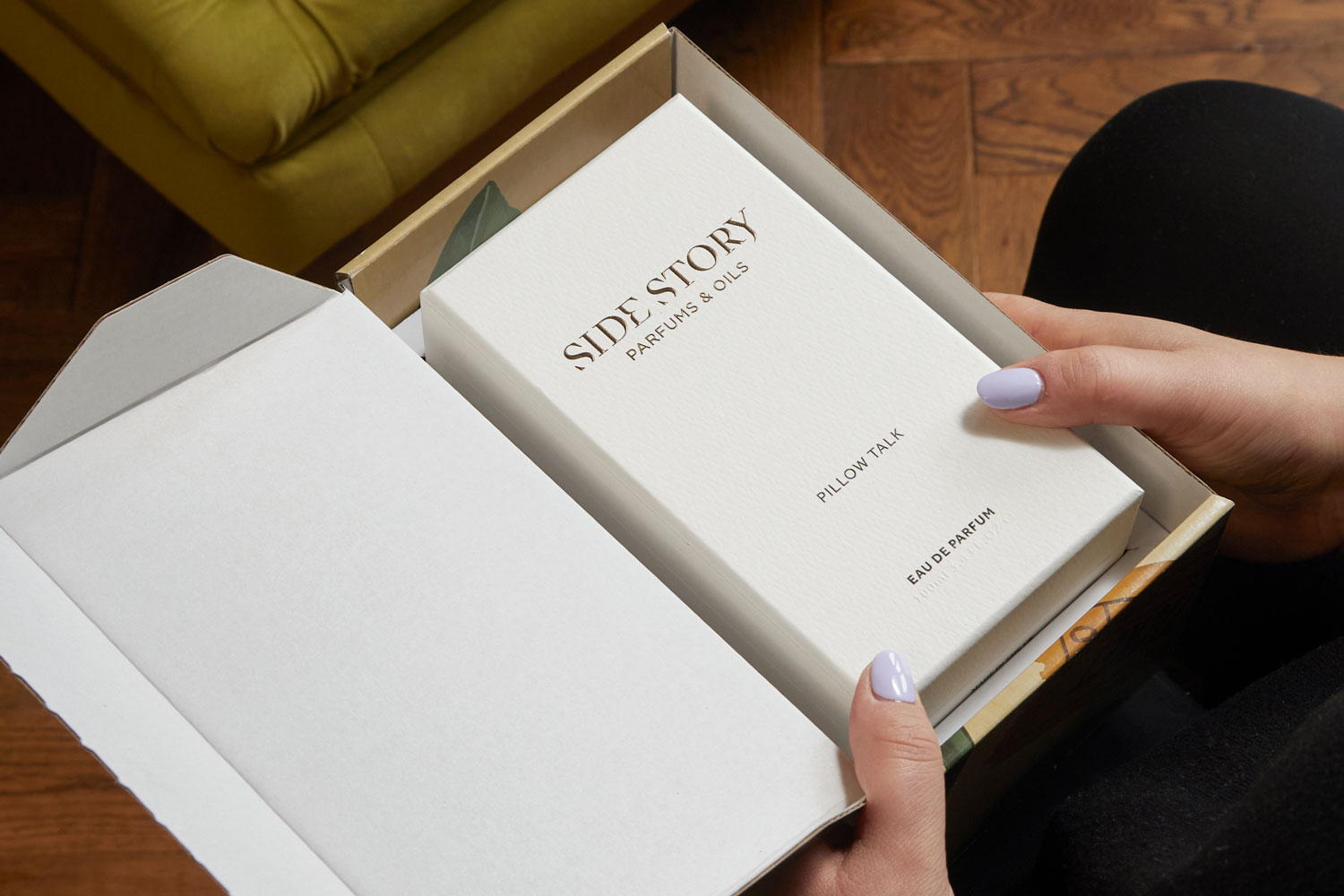
Write down the actual opening sequence: seeing the lid, removing a band, revealing an inner panel or card, and perhaps finding an image beneath the product. Connect every step to a real component rather than inventing a structure from a concept rendering. Exterior and interior illustrations need not form one continuous image. Distinct layers can each carry their own information and narrative.
Review the lid, body and card separately after removal. Check for an unexplained half-figure or interrupted sentence. A pattern working in combination does not automatically work on each piece. Cards and bottles may obscure internal artwork, so inspect the loaded and unloaded states rather than approving the empty box alone.
Verify the composition on a formed sample
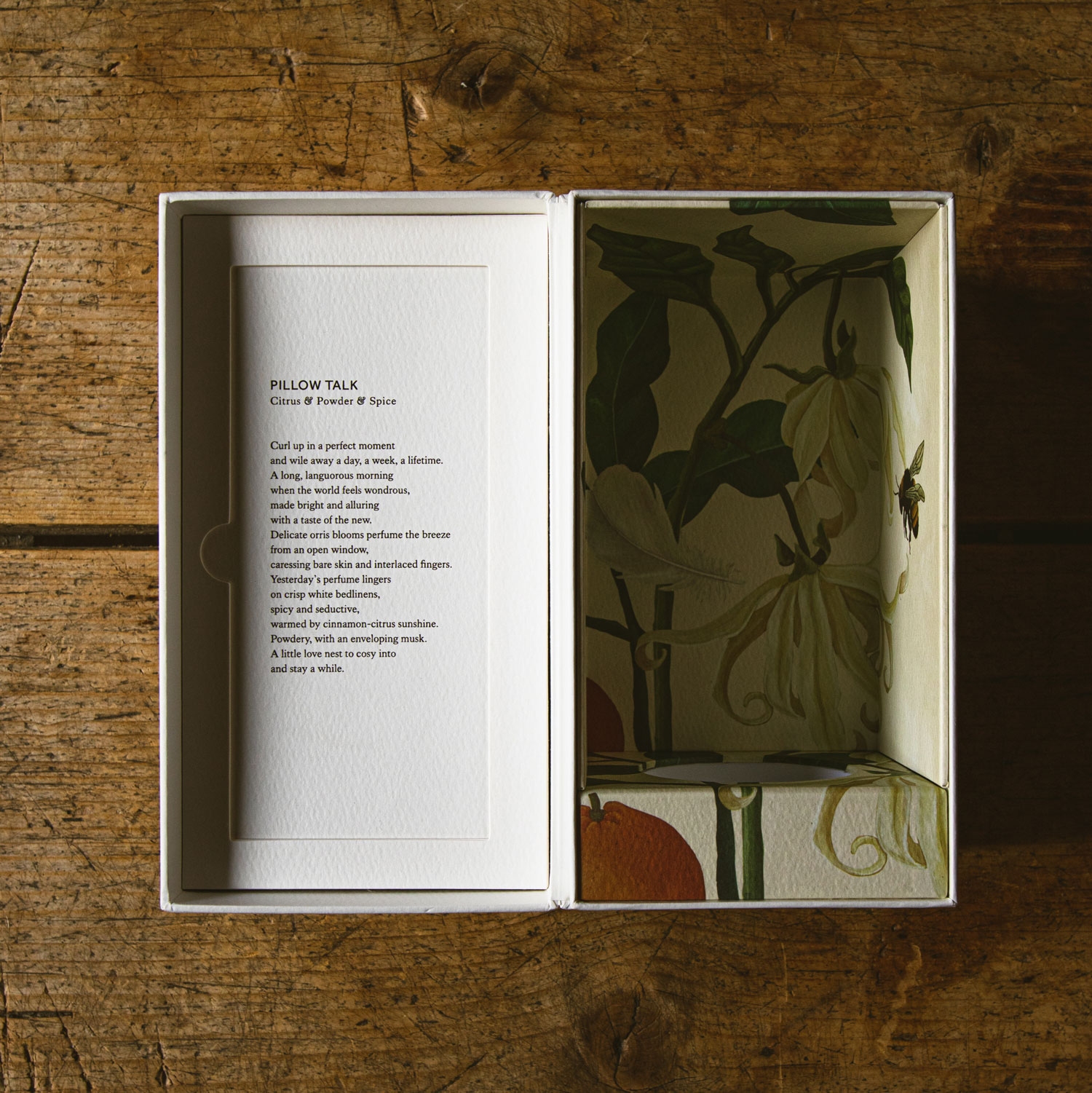
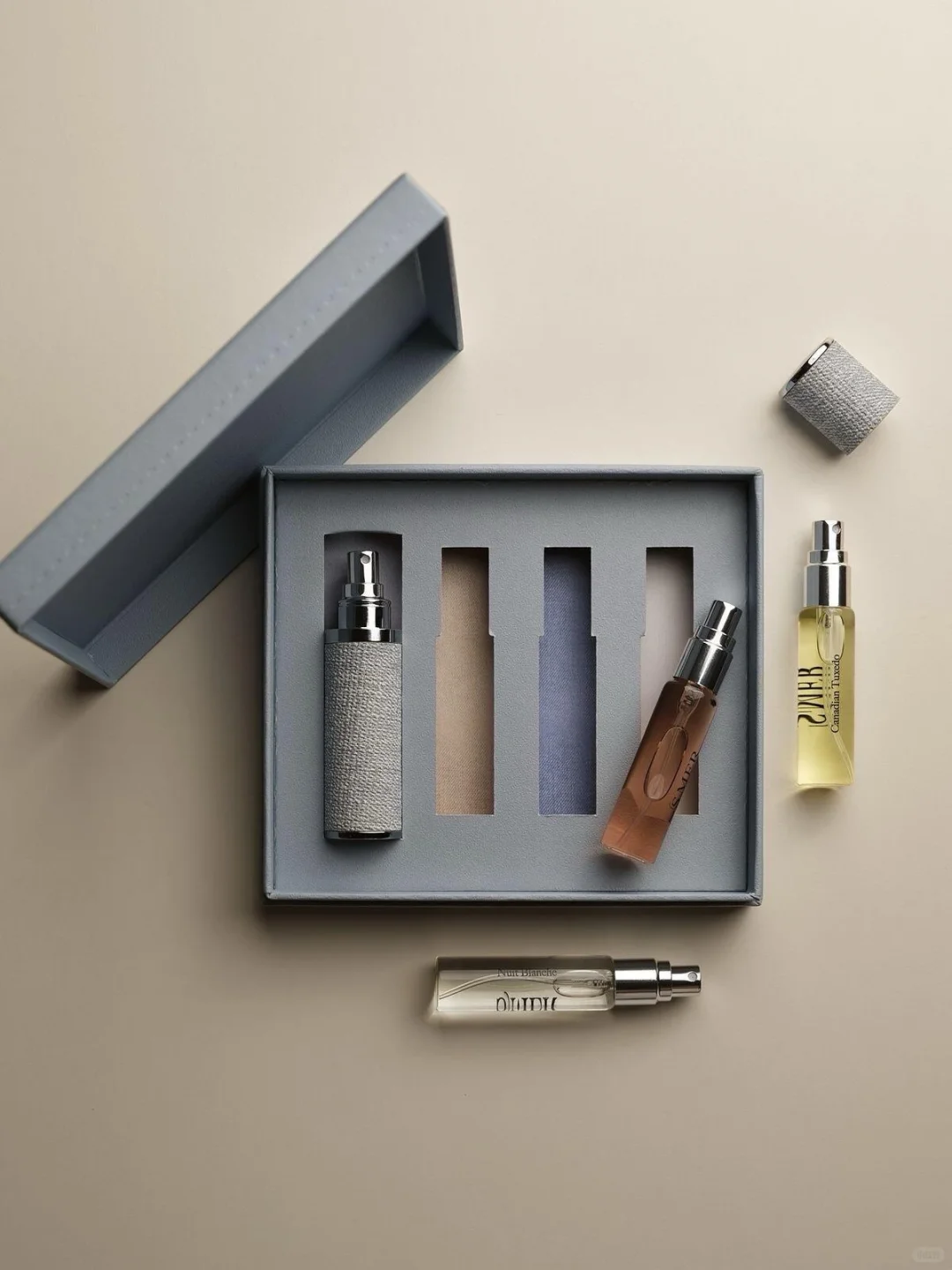
A model can preview direction and broad composition. Use a formed sample to check actual visibility, corners, folded edges and obstruction. Keep the matching dieline and artwork revisions with the sample. Review it closed, turned, opened, separated and loaded with the actual product, recording the panel and action associated with each issue.
Assess fine lines, large colour fields and graphics or text near boundaries using the relevant materials, printing and finishing samples. Lighting and camera angle change apparent surfaces and cannot establish stock, process or precision. The reference photographs here show visible appearance only. They are not paired before-and-after evidence that this project’s cross-panel illustration has passed a continuity check.
Approve artwork and structure revisions together
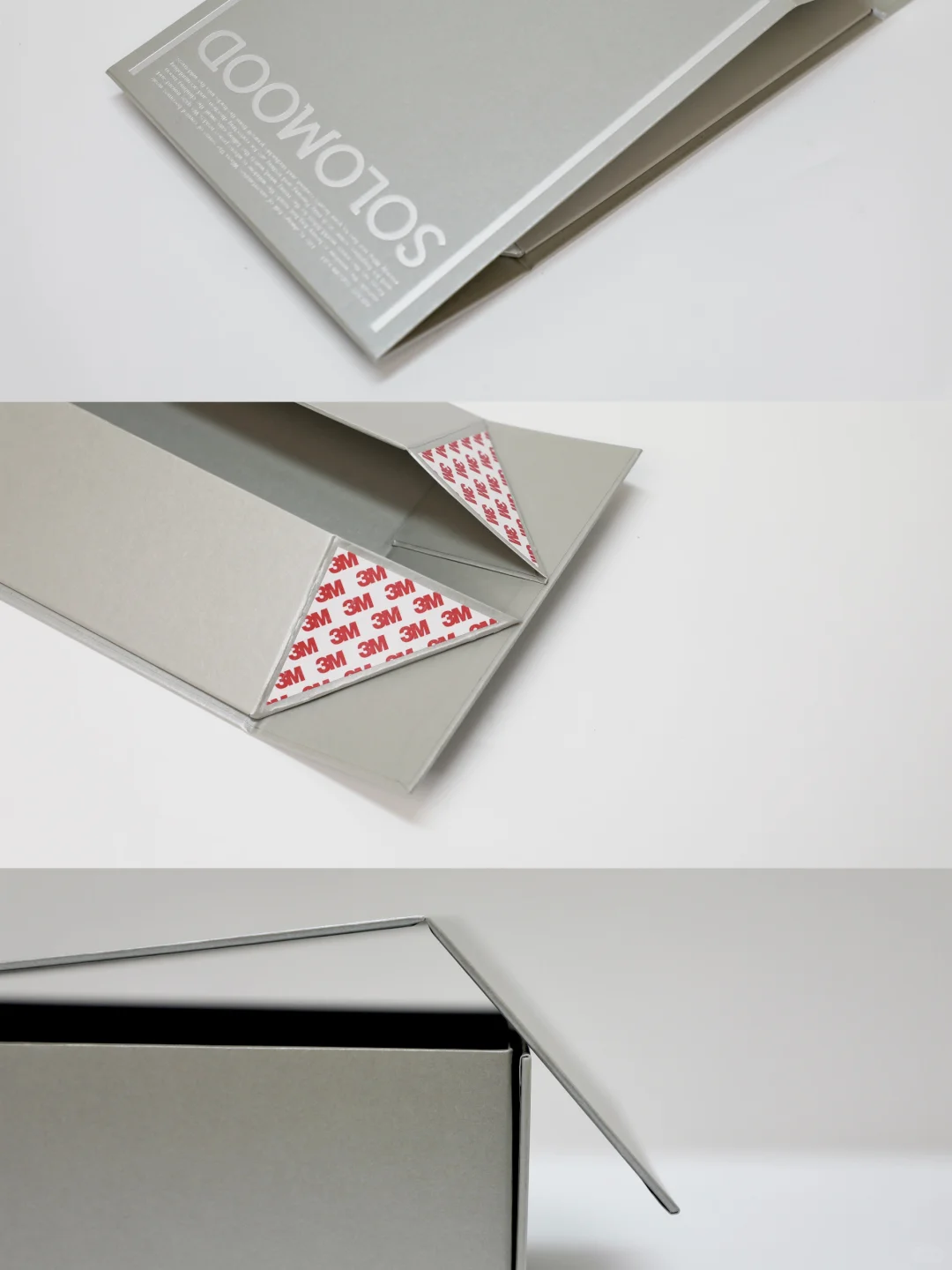
A change to the dieline, lid overlap, sleeve or band position calls for another review of the affected subjects, backgrounds and text. Moving a critical line or changing a figure’s pose also changes what needs checking. Updating a front presentation alone can leave the interior, another component or a sample on an obsolete revision.
Archive the component list, dieline revision, layered artwork, state-by-state previews, sample identifiers, confirmed scope and unresolved items. Distinguish a compositional intention from a relationship confirmed on the relevant sample. Approval applies to a particular version and purpose; a visual review does not establish seamless assembly, continuing production consistency or protective performance.