
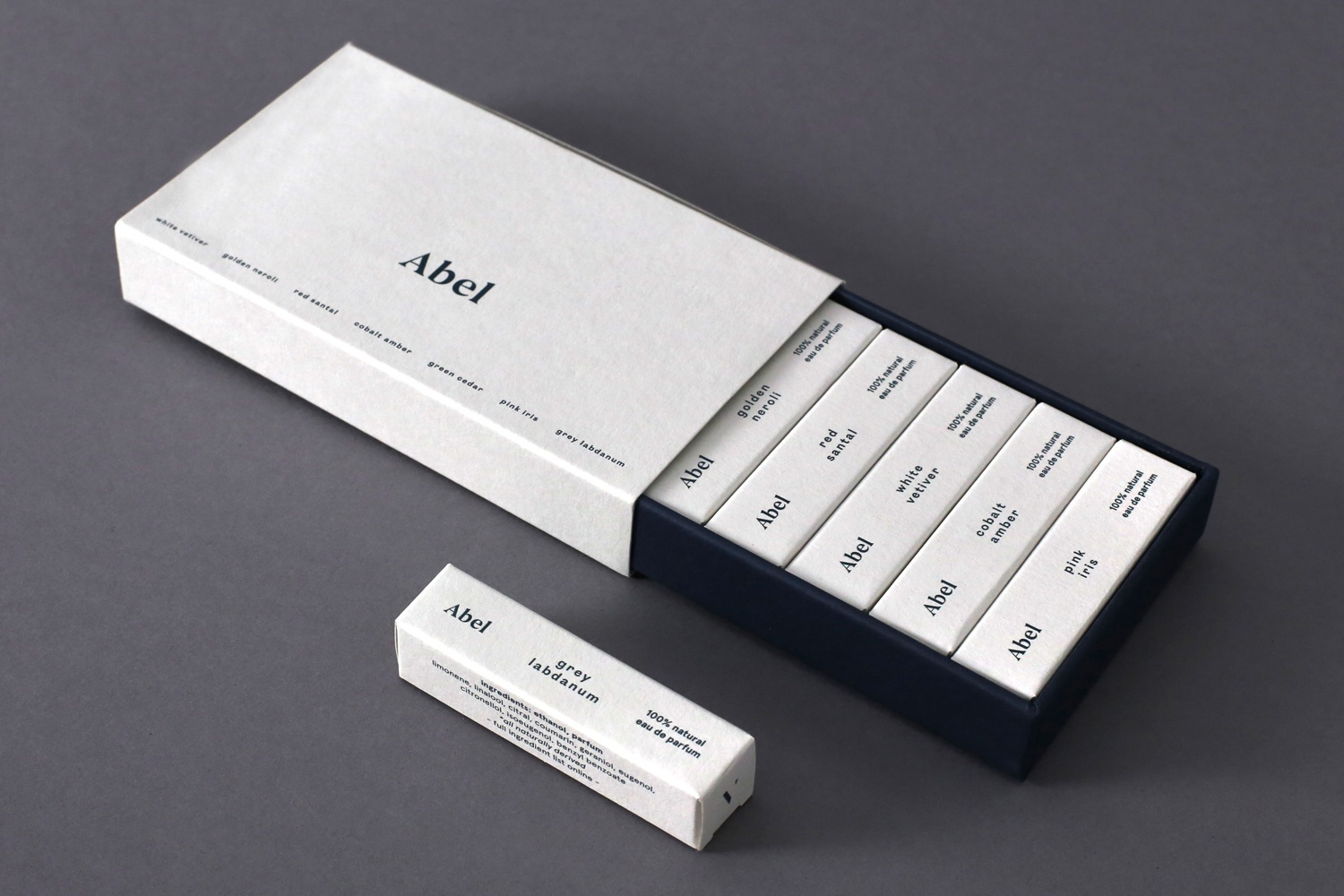
An Abel discovery drawer presents individual cartons with one removed. The visible sleeve and tray illustrate a construction direction without proving hidden material absence or protective performance. Third-party reference; not a Bravo Package project.
Removing magnets, foam or ribbon from a perfume gift box requires more than deleting three lines from a component list. A magnet may contribute to closure, foam may locate a bottle, and ribbon may decorate the pack or help lift something out. Identify those roles in the current construction before sampling alternatives with the complete product. Fewer material types are a design objective, not automatic evidence that a box is all-paper, recyclable or lower-carbon, and not a substitute for checking protection and use.
Identify what each component actually does

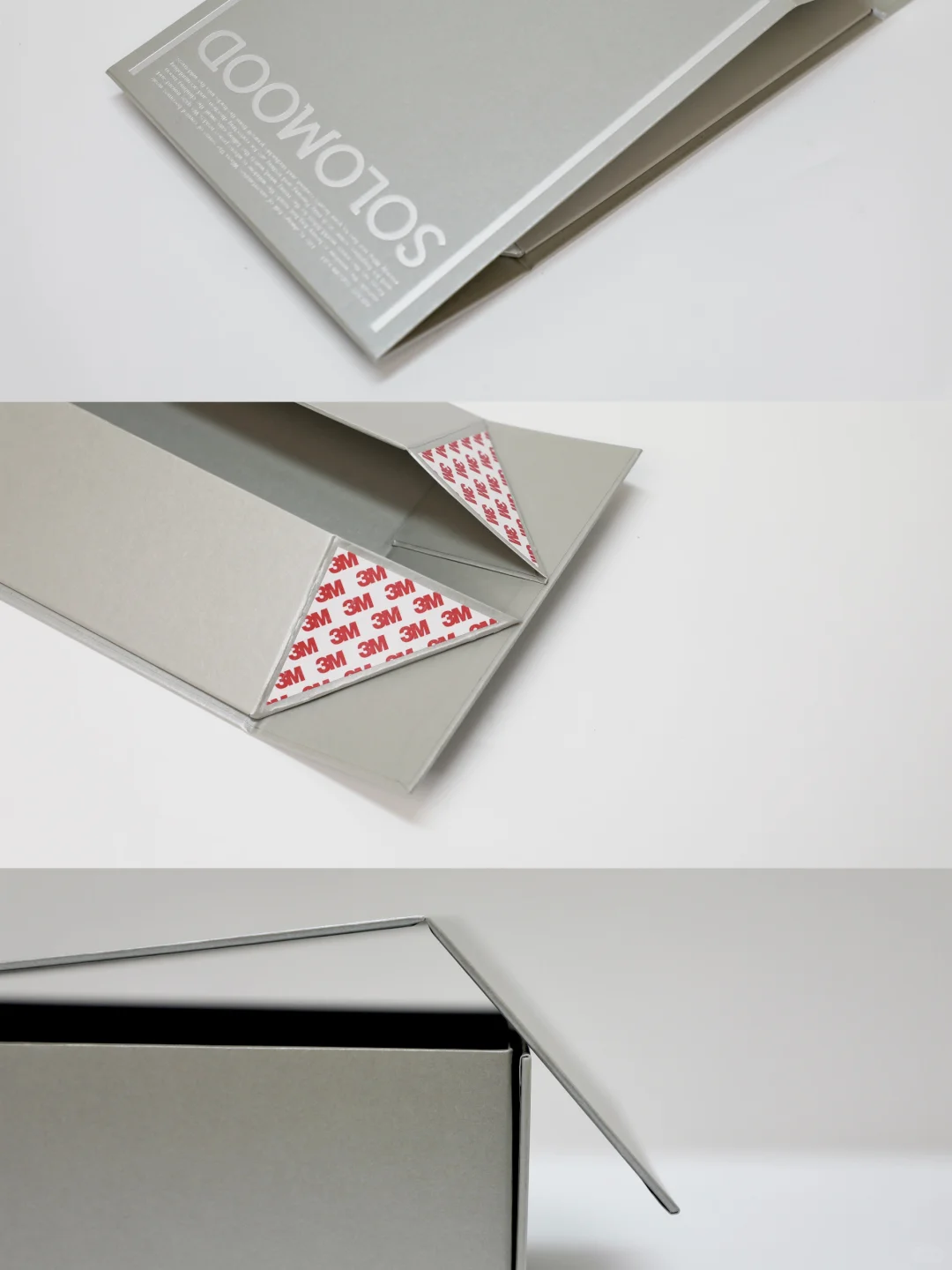
List the body, lid, closure, insert, pull tabs, textiles and decoration, with quantities, locations and connections. Examine whether magnets close the box, ribbon lifts or restrains a component, and foam contacts the bottle body or cap. A photograph shows visible arrangements; it cannot establish that hidden components are absent.
State exactly what will be removed and where its former function will go. Decoration can be reconsidered, but a component should not disappear before its role is understood. Define the objective against specific components and revisions rather than treating “paper box” or “minimal” as a composition statement for the complete set.
Redesign closure when removing magnets

Paper tabs, sleeves and separate lid-and-base constructions are possible directions, each with a defined insertion, closing and opening path. Use an actual sample to observe the closed state, corner interference, finger access and repeated opening. Record where alignment is difficult or fit feels too loose or tight. A box-style name does not guarantee reliable closure.
Record the paper, surface finish and joining method alongside the revised construction. If a box springs open or a tab will not enter, locate the action and position before proposing a change. Do not apply a universal thickness or locking-tab formula. Closure requirements during transport need their own verification scope.
Replace insert functions rather than a material name

Use the final capped product to establish contact areas, outline, removal space and its relationship with the lid before evaluating folded-paper or moulded-paper inserts. These are different constructions and processes, requiring separate descriptions of shape, connections, surfaces and production requirements. Specifying “paper insert” alone does not complete the substitution.
With the complete sample, check insertion and removal through the intended actions, noting interference between components and distinguishing support from grip access. A material name does not establish protective performance, and moulding does not establish the absence of additives. Define the necessary protection checks after substitution; a neatly displayed sample is not transport verification.
Separate decoration, lifting and restraint

If ribbon is purely decorative, consider moving visual identity into printing, a card or an existing surface. If it lifts an insert or helps remove the product, provide a considered grip location or tab and have users try it. Ribbon that restrains components also needs a replacement arrangement rather than removal as decoration.
One less ribbon does not mean all textiles or plastics have disappeared. Keep sleeves, elastic bands, cord, handkerchiefs and labels in the list. The Ffern reference photographs visibly include cord and handkerchief accessories. They help show a complete component arrangement, not an accessory-free or all-paper outcome.
Compare the complete samples and actions

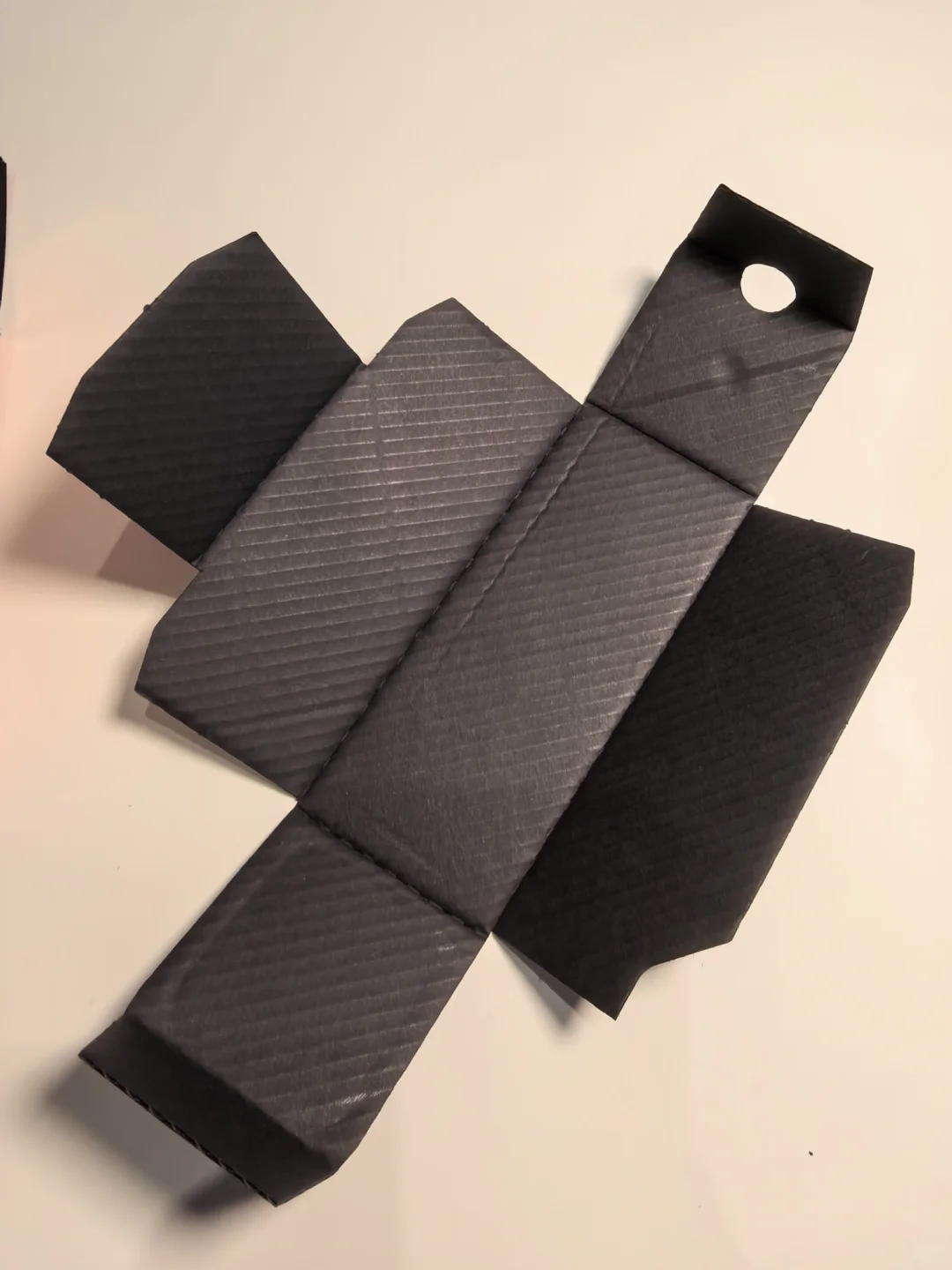
Use the same product configuration, cards and components to assemble, close, open and empty the existing and proposed packs. Record conditions and revisions. Compare changed actions, additional picking and new obstructions or assembly difficulties rather than counting removed materials alone.
Keep protection, use, assembly, display and transport confirmation scopes distinct. If removal creates a problem, revise the candidate construction and repeat the affected checks instead of accepting an unresolved functional gap to meet a reduction target. Fewer parts do not justify a promise of lower cost, shorter lead time or faster assembly.
Approve both construction and material scope


Retain substrates, coatings, adhesive, print and every connecting addition in the final list, identifying confirmed and pending items. Give the sample, component table and artwork the same revision, recording what was removed, what replaced it and which requirements were checked. Keep undocumented hidden materials marked as unknown.
A design with fewer mixed materials can progress without attaching unsupported whole-pack recycling, carbon or other environmental claims. Approval of the current construction does not establish those separate outcomes. Revisit the relevant closure, support, removal and assembly checks when materials or product configurations change.