
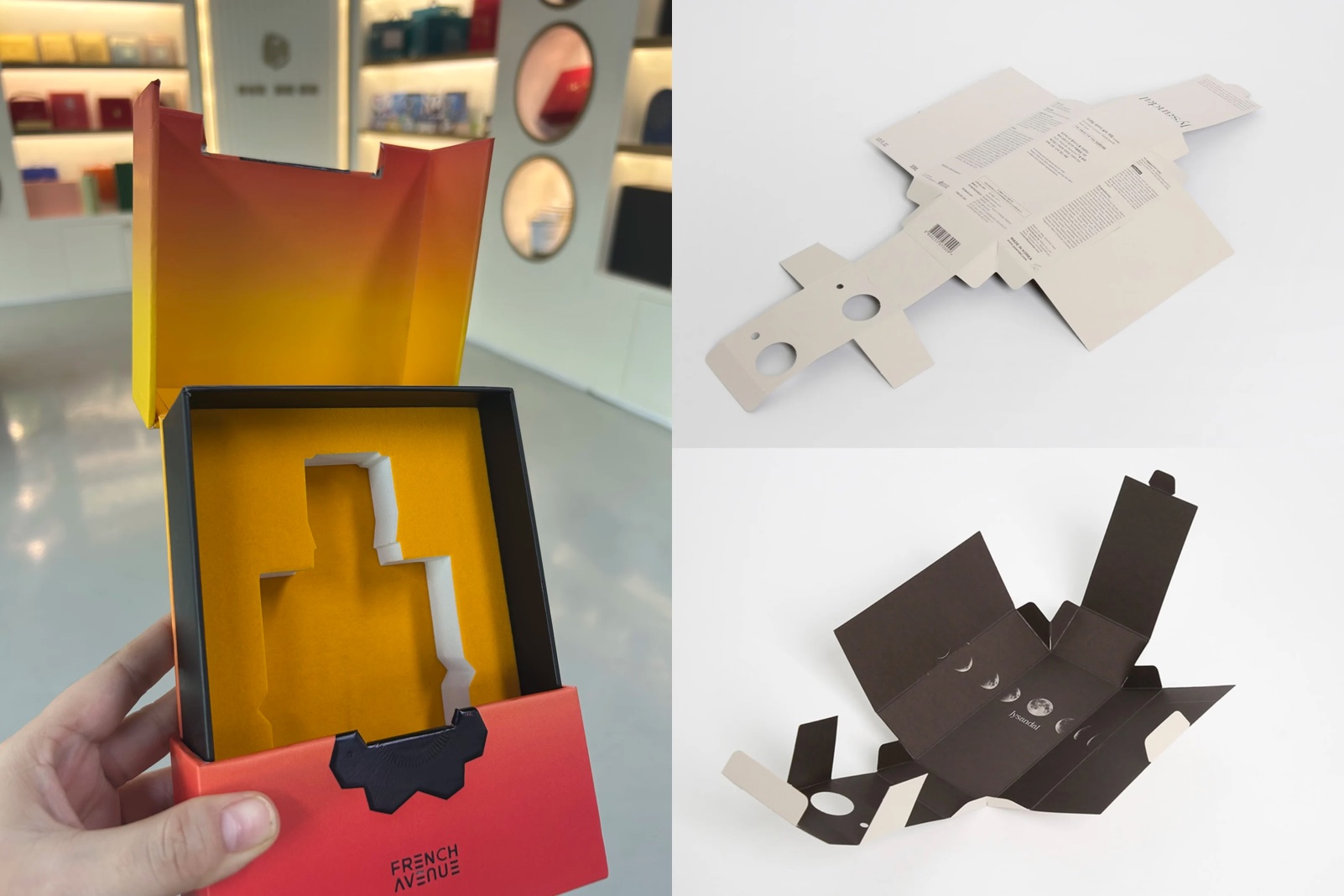
Carton structure determines where panels sit, how the product loads and which surface faces the shopper. Approve an unprinted sample before placing artwork on the converter's released dieline. That gives copy, graphics and barcodes a dependable position through folding and assembly.
Map the product's route in and out
Send the product, accessories and any leaflet. Mark pressure-sensitive and easily scratched surfaces. Measure the assembly envelope and leave clearance for hands, machinery and protrusions. Allow for board and insert thickness when setting the usable cavity and maximum outside dimensions. Have the converter make an unprinted sample. Try the biggest and smallest items if they are meant to share it.
For two sizes of a BravoPackage fragrance bottle, start by trying both capped bottles in individual unprinted samples. Check loading, how much of the bottle is revealed and how it lifts out. Set front, inner lid and scent artwork once the fit and fold positions are confirmed.

Confirm the fold lines and visible panels
Request the released dieline with cuts, creases, glue flaps and keep-clear areas identified. Mark the front, back and top on the sample, then flatten it next to the drawing. A panel that looks upside down on the flat file may be upright once folded. Release one revision for production and recheck artwork after any size, caliper or window change.


Place required information on a readable surface
Position the name, size, instructions, barcode and batch mark where they are usable. Check the coding area for machine access and finish compatibility. Keep small type away from tuck flaps. Fold a mockup to check any wraparound artwork. Put barcodes on clear, flat areas and scan the code on the finished coated or laminated sample. Allow for copy length across languages.

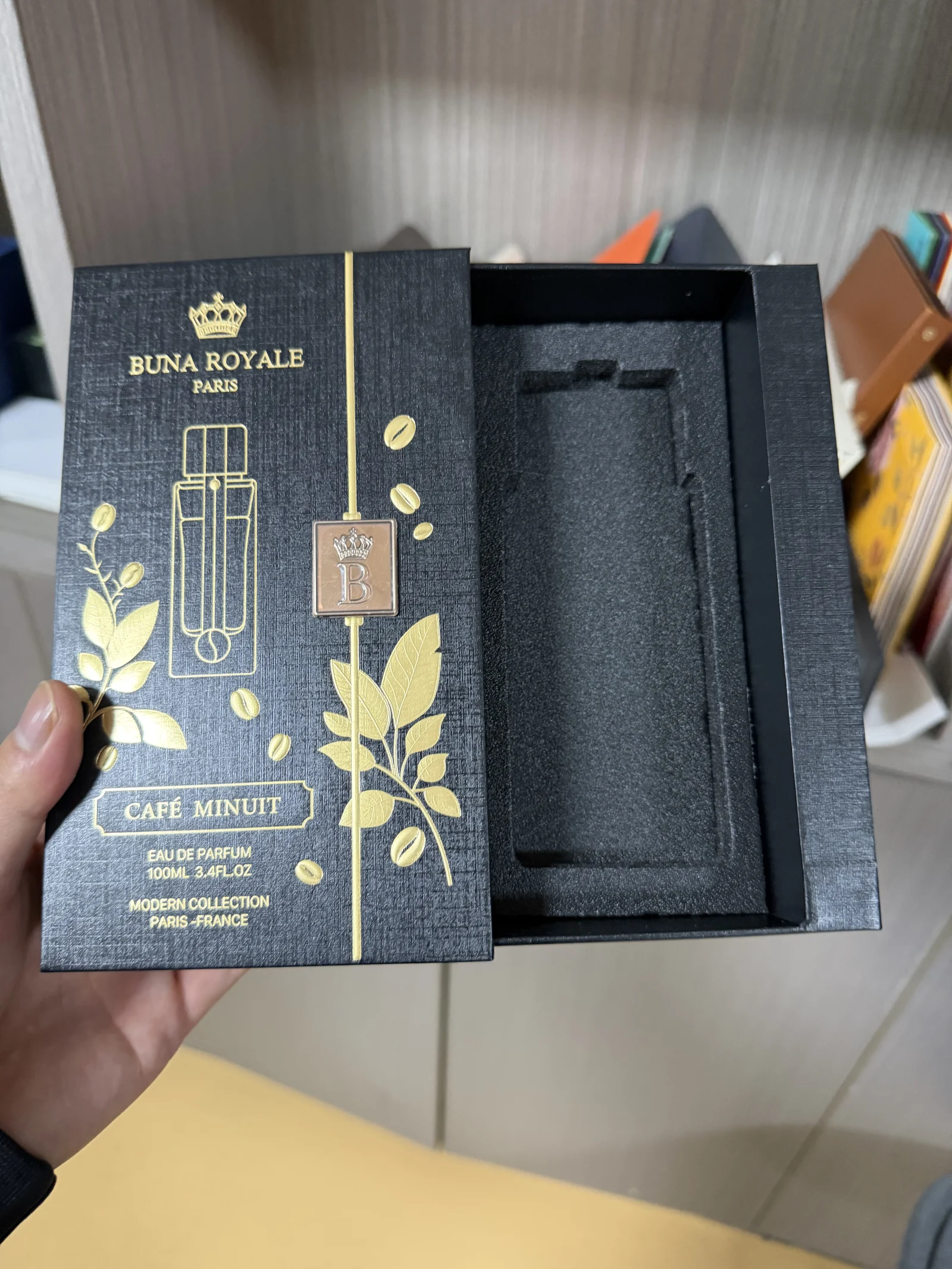
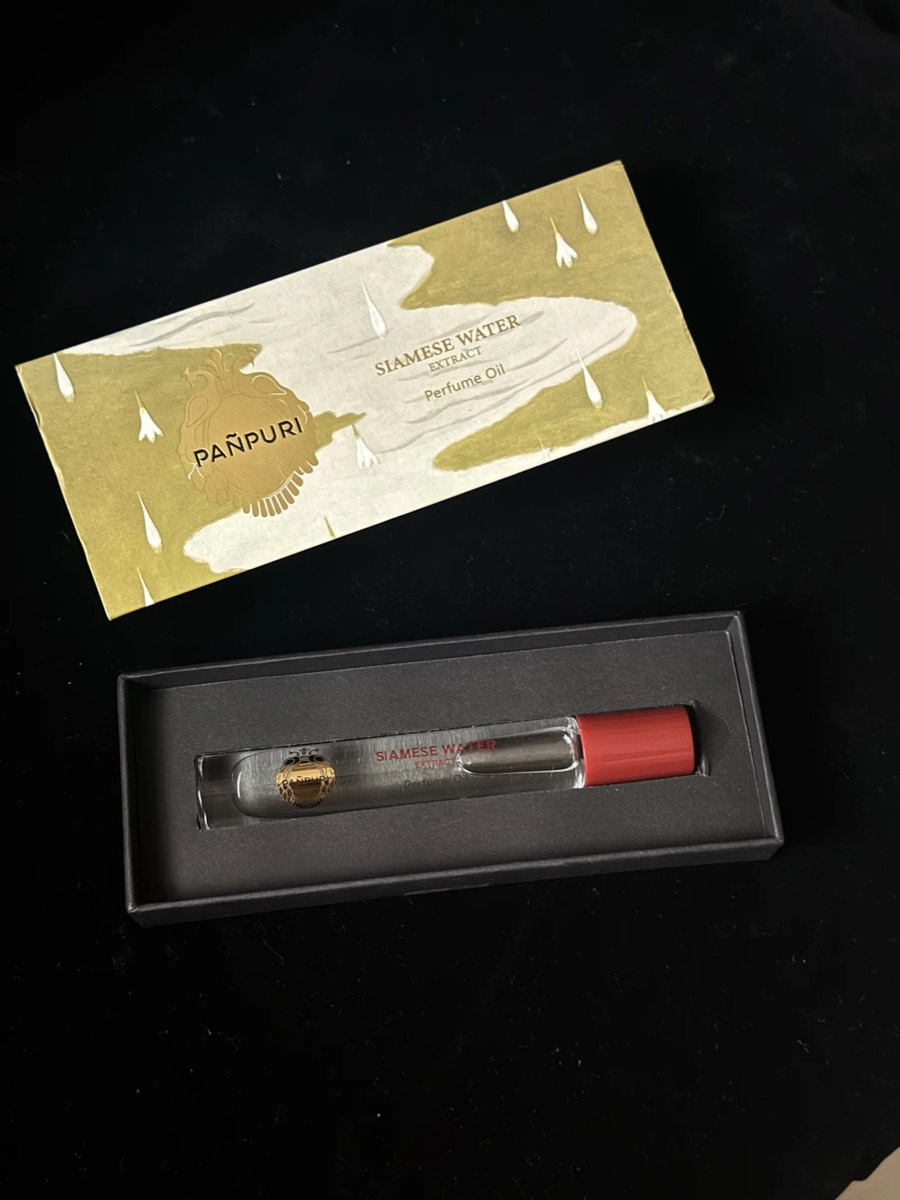
Approve structure and print on appropriate samples
Use the unprinted sample for fit, standing, closure and removal. Confirm production grain direction. A digital model helps with orientation. Use a finished printed sample for color, trim, creasing and foil boundaries, including fold cracking after converting. Run a small machine trial where relevant and document springback, feed direction or jams.

Bring the approvals into inspection
Attach the dieline, final artwork, proof reference, board, opening direction and measurement points to the order. Open, load, close and display production samples. Check that seams and flaps leave the product name readable at the intended distance. If graphics shift repeatedly, record the panel and lot and compare the file with the production cutting lines. Retain approved examples and photographs of unacceptable defects.
