
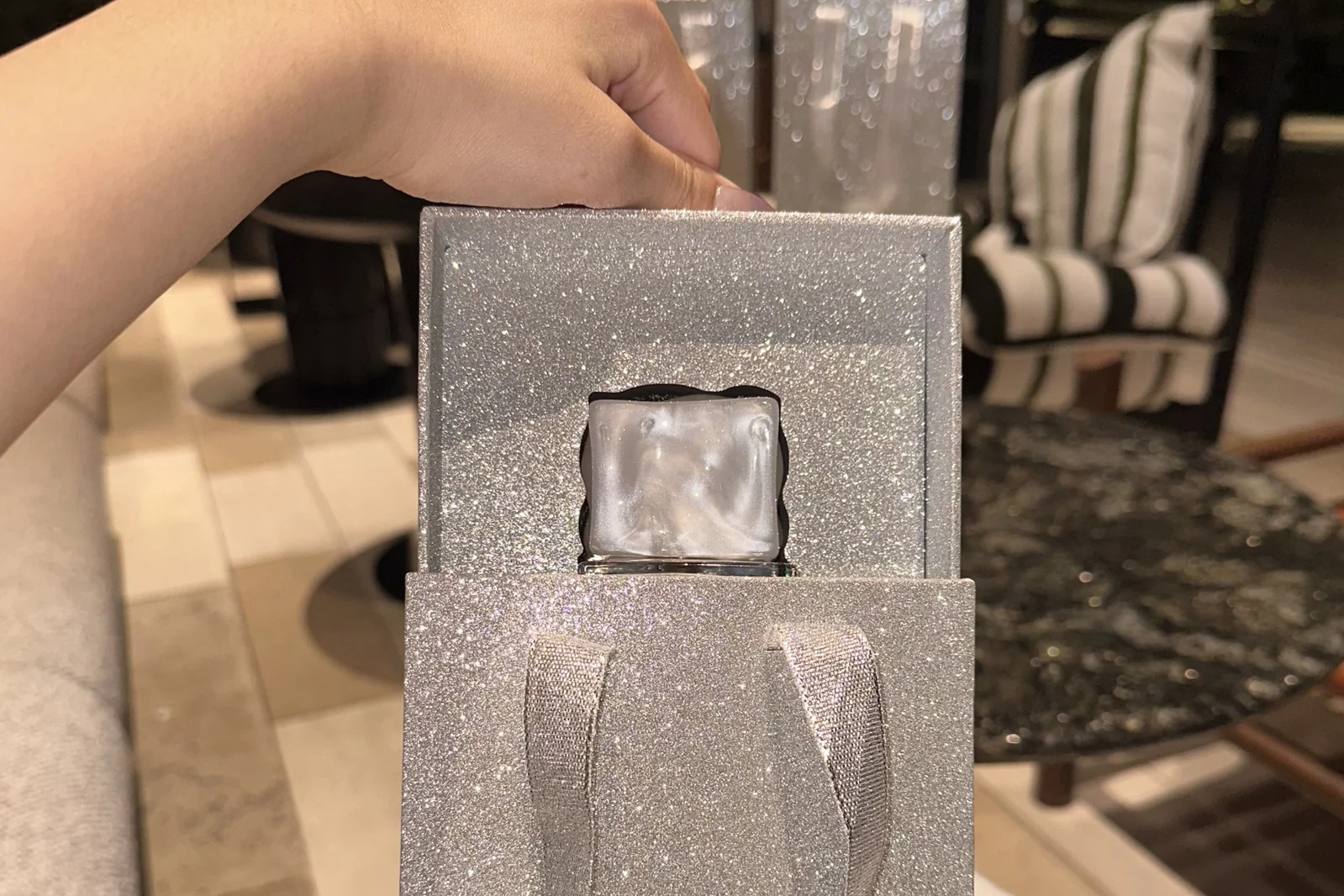
Start with the heaviest, largest and least stable combination the bag will carry. A stack of fragrance blotters and two glass candle jars put pressure on different parts of the bag. Give the supplier the load, typical carrying distance and how staff pack at the counter before deciding where to spend on paper, handles and reinforcement.
Measure the hardest order to pack
Weigh each product with its retail box, protective sleeve and any gifts that go in the bag. Record the maximum outside dimensions and how the goods sit when carried. Test a few mixed orders. A bottle base can concentrate weight in one spot, and a rigid box corner can press into the bottom. Check that the opening clears the box and leaves room to reach inside, and that the base is wide enough to keep the loaded bag upright. Confirm which dimensions on the drawing refer to width, gusset and height.
For a fragrance retailer working with BravoPackage, a heavy lidded candle and a boxed perfume make a practical starting load. Record the area actually supported by the base and how much clearance staff need to straighten the box. Carry the sample from the narrow side if that is how customers tend to hold it. Inspect the back of the handle holes, the base corners and anywhere a box corner presses into the side.

Follow the load from the handle down
Twisted paper handles are compact for short retail trips. Flat paper handles spread the load over more of the hand, so compare the grip with the intended weight inside. Cotton cord is softer, and its eyelets, knots or tips add assembly work and affect material separation. Inspect the reinforcement patch, paper around the holes, top fold and seam. When one handle takes the load first, check the hole positions and reinforcement before specifying heavier paper.


Specify paper for the print and the trip
Natural kraft changes how inks appear. Approve pale inks and small reversed type on an actual sample. Compare white bag stock with kraft when a large graphic needs predictable color. If customers carry bags outdoors in the rain, test the expected duration and degree of dampness. A base pad can spread pressure from bottle bases and sharp corners. Check that it stays flat when staff load the bag. Fold-test foil near creases and rub-test dark matte stocks for pale scuffs and fingerprints.


Test the route customers actually take
Ask for a sample with the production paper, handles, adhesive and reinforcement. Have staff pack it as usual and test the agreed distance, number of lifts and time under load. Note where failure starts, whether a base seam opens, a handle pulls out or the mouth tears. Try a quick lift and an off-center carry. Keep results for balanced and uneven loads for comparison with the next sample.
Make the approved sample part of the order
List finished dimensions, paper, handle type and length, reinforcements, base pad and carton count on the quote. Agree which substitutions require a new sample. Inspect bag shape, handle height, excess adhesive and ink rub as well as the carrying performance. Retain one unfolded bag and one tested sample with the load and test conditions recorded.
