
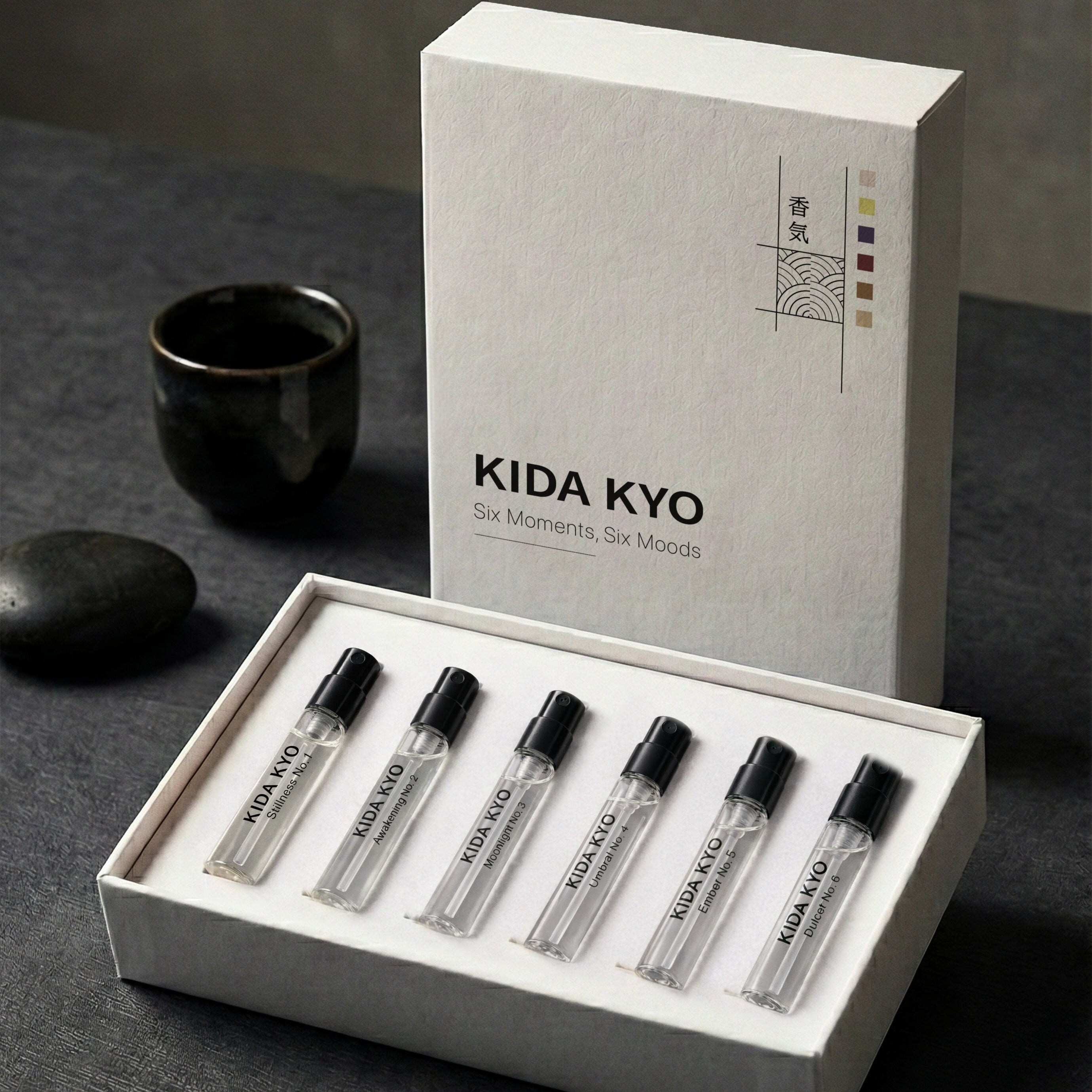
Stable numbers connect each vial with its place and information. The photographed set uses one row of six. Third-party reference; not a Bravo Package project.
PERFUME PACKAGING · DISCOVERY SET LAYOUTS
A discovery set needs more than the right number of holes. As the vial count increases, the proportions of the box, access for fingers, the order of the names and the way samples return to their places all need attention. Ten slim spray vials and ten capped travel bottles also call for different dimensions.
Separate three questions before choosing a layout: what goes inside, how someone will use it and how the packer will check it. Three vials do not automatically belong in one row, and ten vials have no universally correct arrangement. The options below are starting points for samples, rather than production dimensions or claims of shipping performance.
List every component before choosing the rows

Record the number of fragrances, units of each fragrance, nominal fill volume, maximum bottle dimensions, overall height with the closure and label orientation. Fill volume is not a substitute for external dimensions. Shoulders, pumps, bases and label seams can affect where the packaging touches the vial. Compare actual samples when bottles come from different suppliers or batches.
Include blotters, fragrance cards, instructions, vouchers and other accessories in the packing list. Give each a defined location, such as a separate pocket or an area inside the lid. Check that the complete stack does not press on a pump when the box closes. A card laid across the vials needs to be assessed in the assembled pack, too.
The posts reviewed for this article describe several purposes, including travel sets and sets with extensive paper accessories. They are useful reminders that the contents vary. They do not establish a standard bottle or box for a particular vial count. Send a supplier the complete component list and measured samples, rather than simply requesting a six-vial box.
Three vials: compare readability with compactness
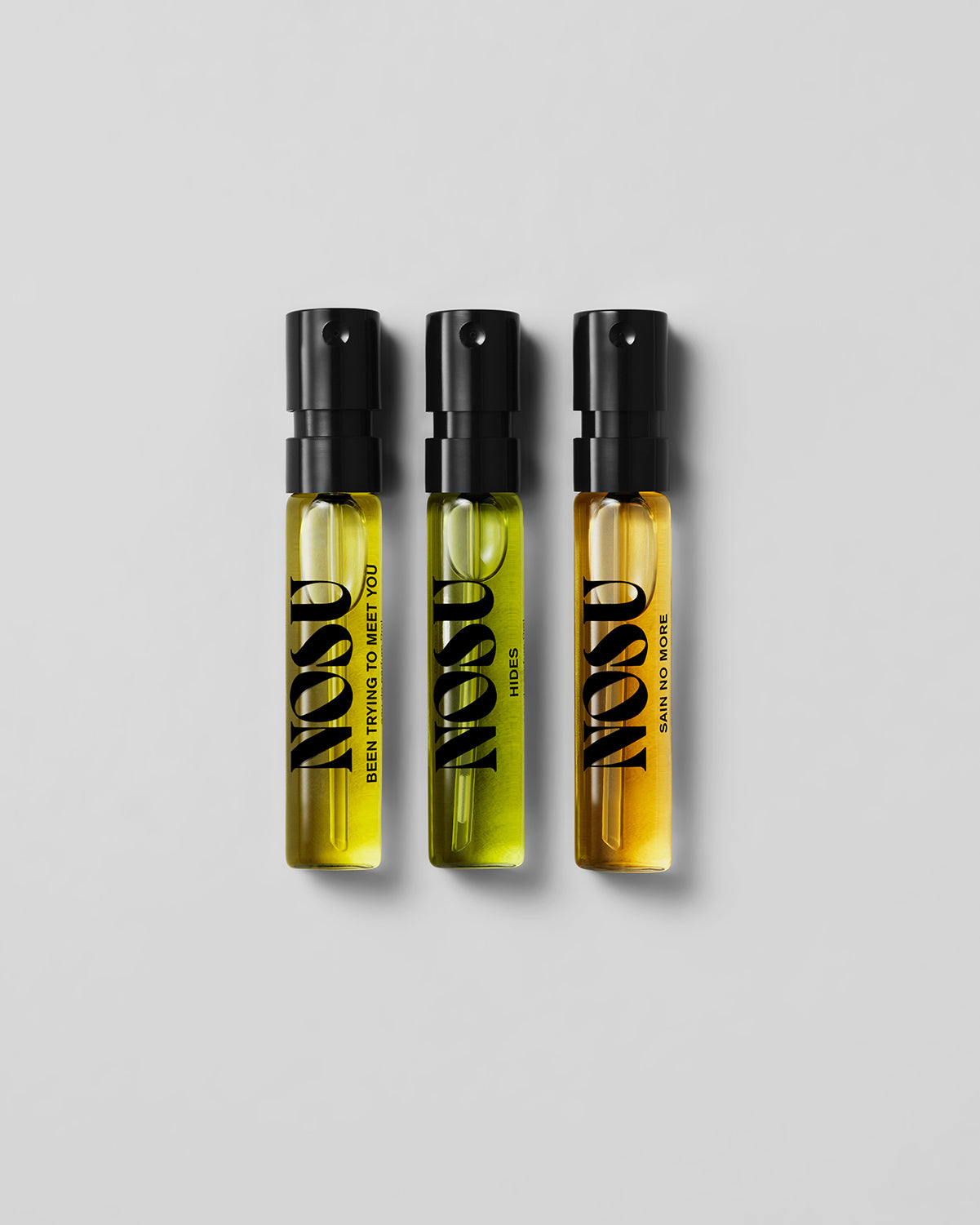
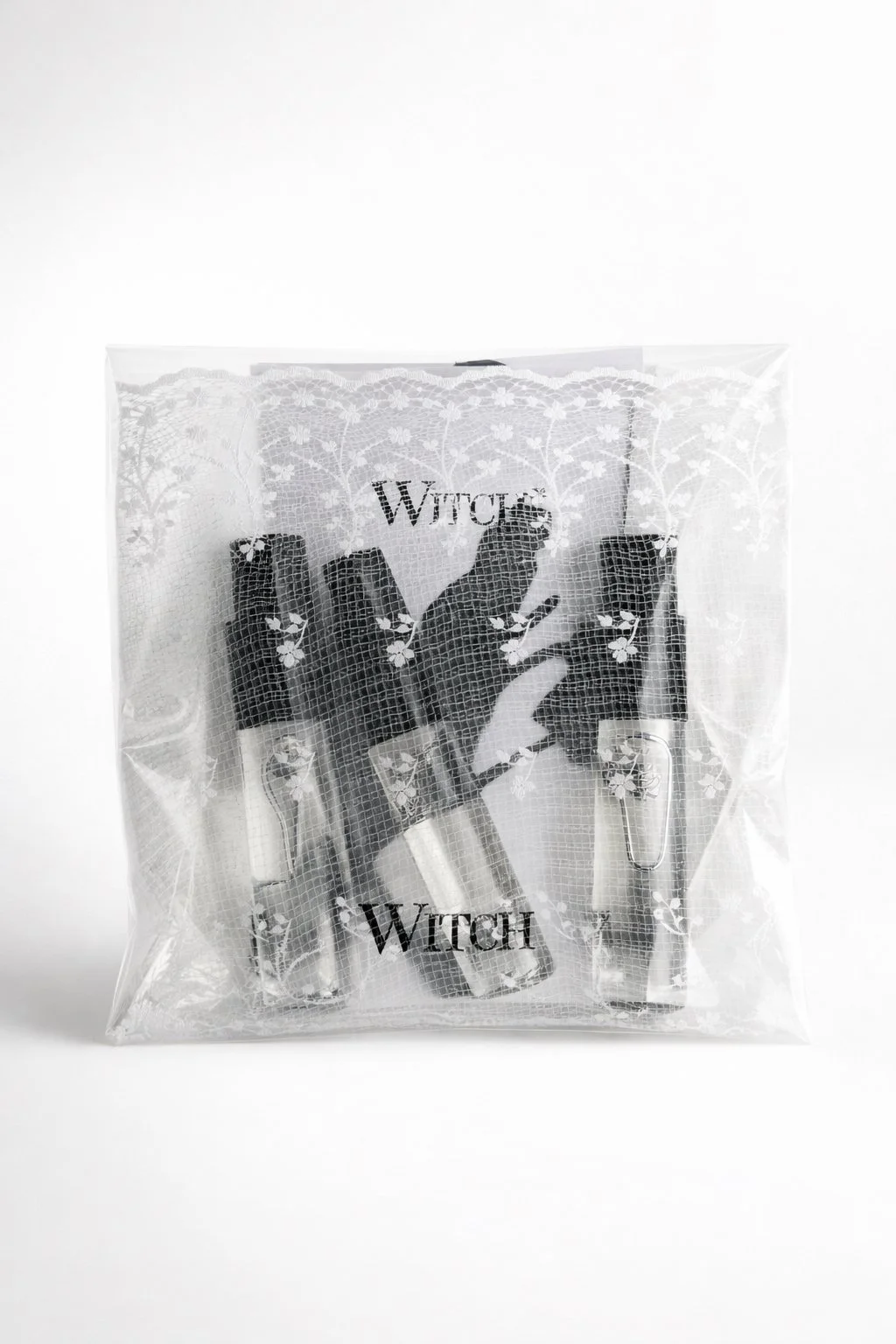
One row of three is a useful first paper sample. The contents are easy to count, and the names can follow a straightforward left-to-right order. It does not guarantee the smallest package. Long bottles, long fragrance names or an adjacent information card can change the proportions considerably.
Compare that row with another compact arrangement at actual size. Keep the bottle dimensions, readable text and access space unchanged. A layout should not become square on screen by shrinking the real label or removing the space a hand needs.
Test the middle vial while both neighbours remain in place. The user should have a workable removal point rather than needing to pull on the pump or paper label. If a ribbon is proposed, check what it lifts: one vial, several vials or the whole insert. Also check where the loose end goes when the pack closes. Removing one vial should leave the others in their intended positions.
Six vials: compare one row with two rows of three
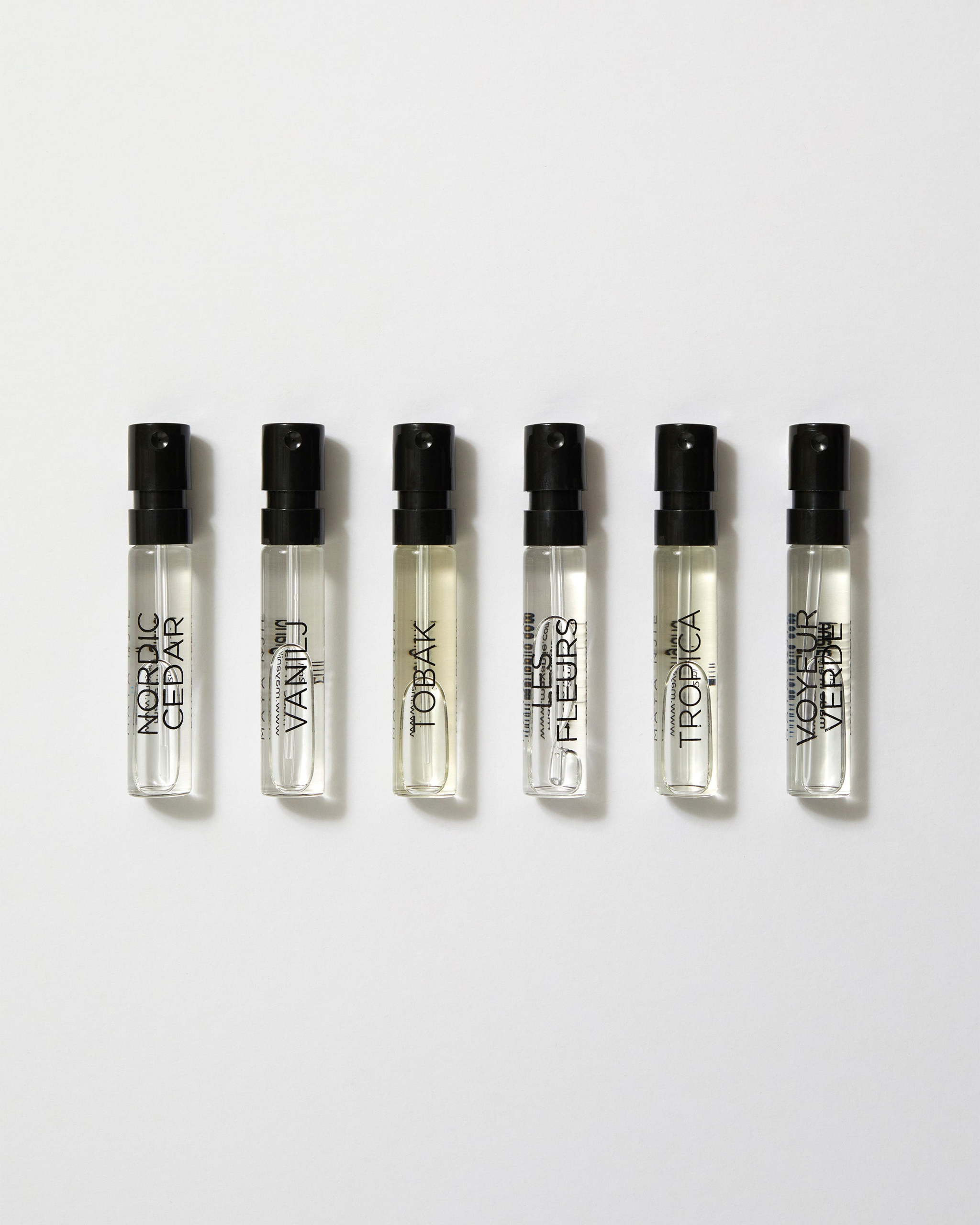
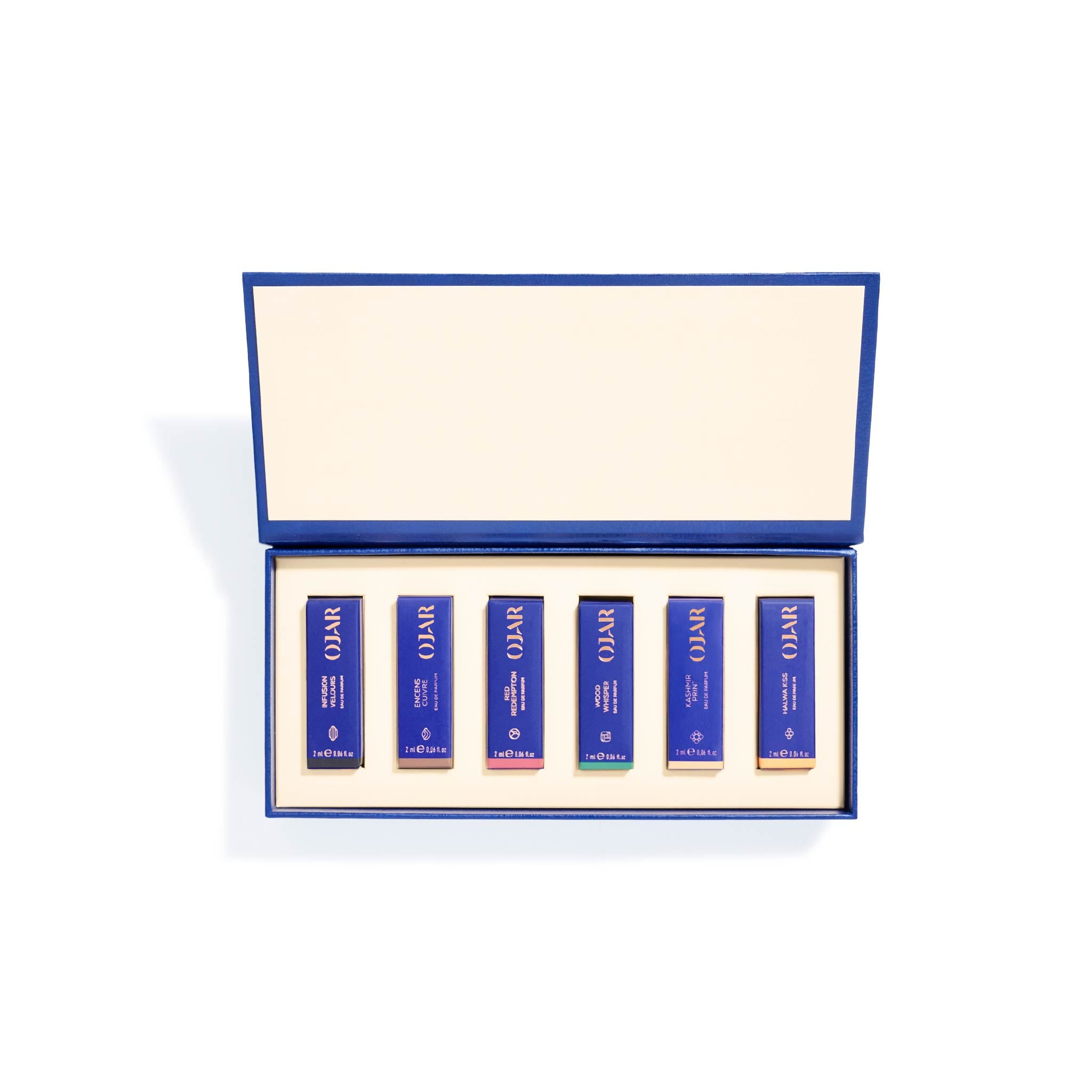
A single row of six creates a continuous reading order but also increases the horizontal length. Two rows of three offer different box proportions and introduce a reading decision: across the top row and then the bottom, or down each column? The printed guide needs to follow the chosen arrangement.
Assign stable position numbers before laying out the card. Numbers can work alongside the fragrance names, especially where names are long. Use colour as an additional cue rather than the only identifier. Different fragrances can have similar colours, and printed colours do not appear identical in every light or production batch.
Leave a practical removal path between rows. Taking a vial from the back while the front row stays in place is a different experience from emptying the front first. With actual samples, try the middle, corner and back positions individually. Watch for movement in neighbouring vials. Holding performance and possible label damage need suitable samples and checks; an orderly drawing cannot establish either.
Ten vials: plan grouping, return positions and counting together
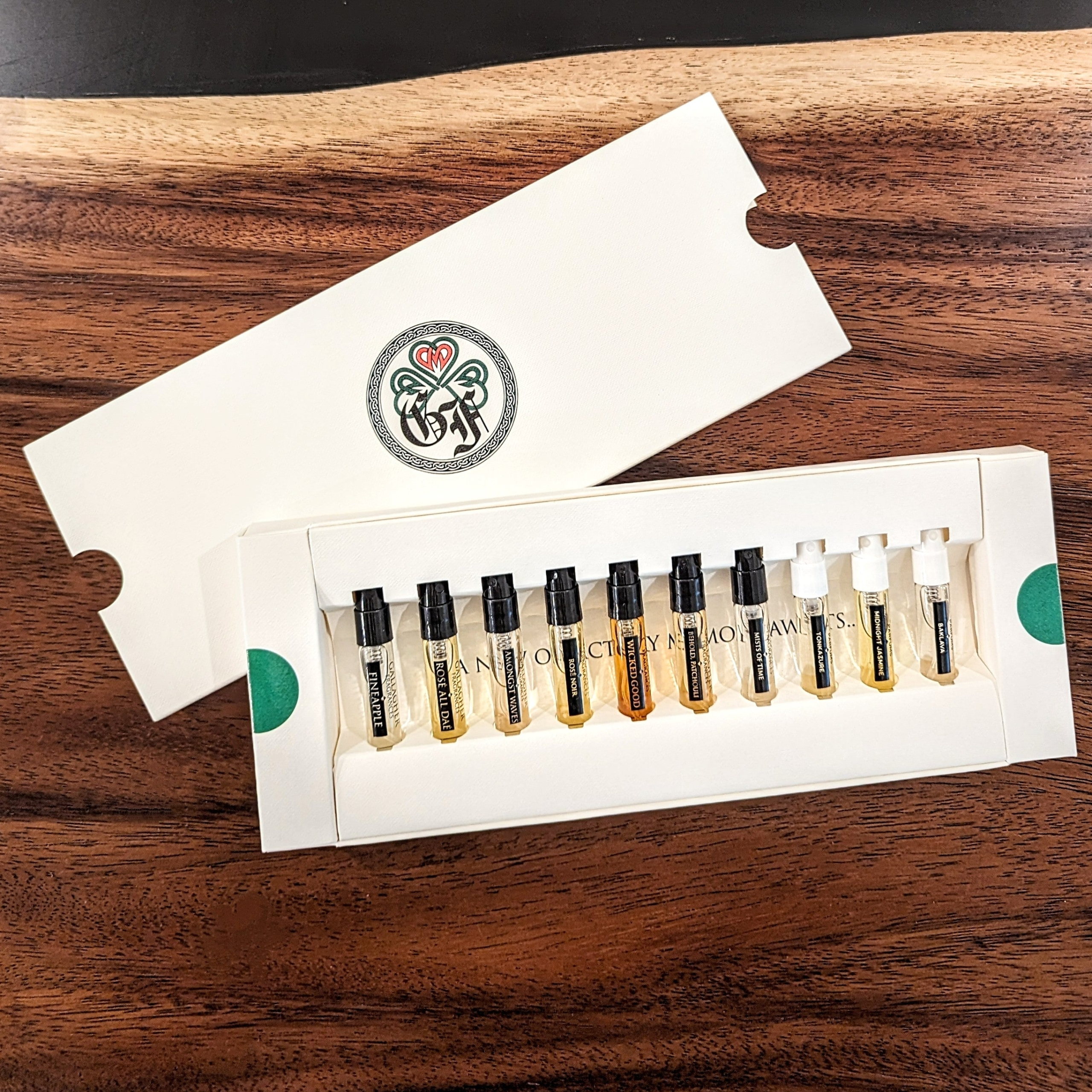
Two rows of five provide one starting point for ten vials. Other arrangements may suit the bottle height, opening style or accessories better. This is a proposed comparison layout, not a claim about the physical inserts used by the brands discussed in the research. Choose it because it works for reading, removal and packing, rather than because ten divides neatly into two groups.
Ten full fragrance names on a small card can become a size constraint before the vials do. A clear numbered index can connect positions to a separate guide with full names and space for notes. Each vial should still be identifiable on its own. Once all the samples are on a table, their former positions in the box cannot be their only identity.
Sampling may take several days. Some users follow a fixed order and score each fragrance; others remove a favourite first or try only part of the set. The layout can support these behaviours without assuming that every vial comes out at once. Check the full pack, a half-empty pack and the pack with only one vial remaining. Look at support, name-to-position mapping and the ability to return each sample correctly.
Compare shared platforms before forcing every count into one box
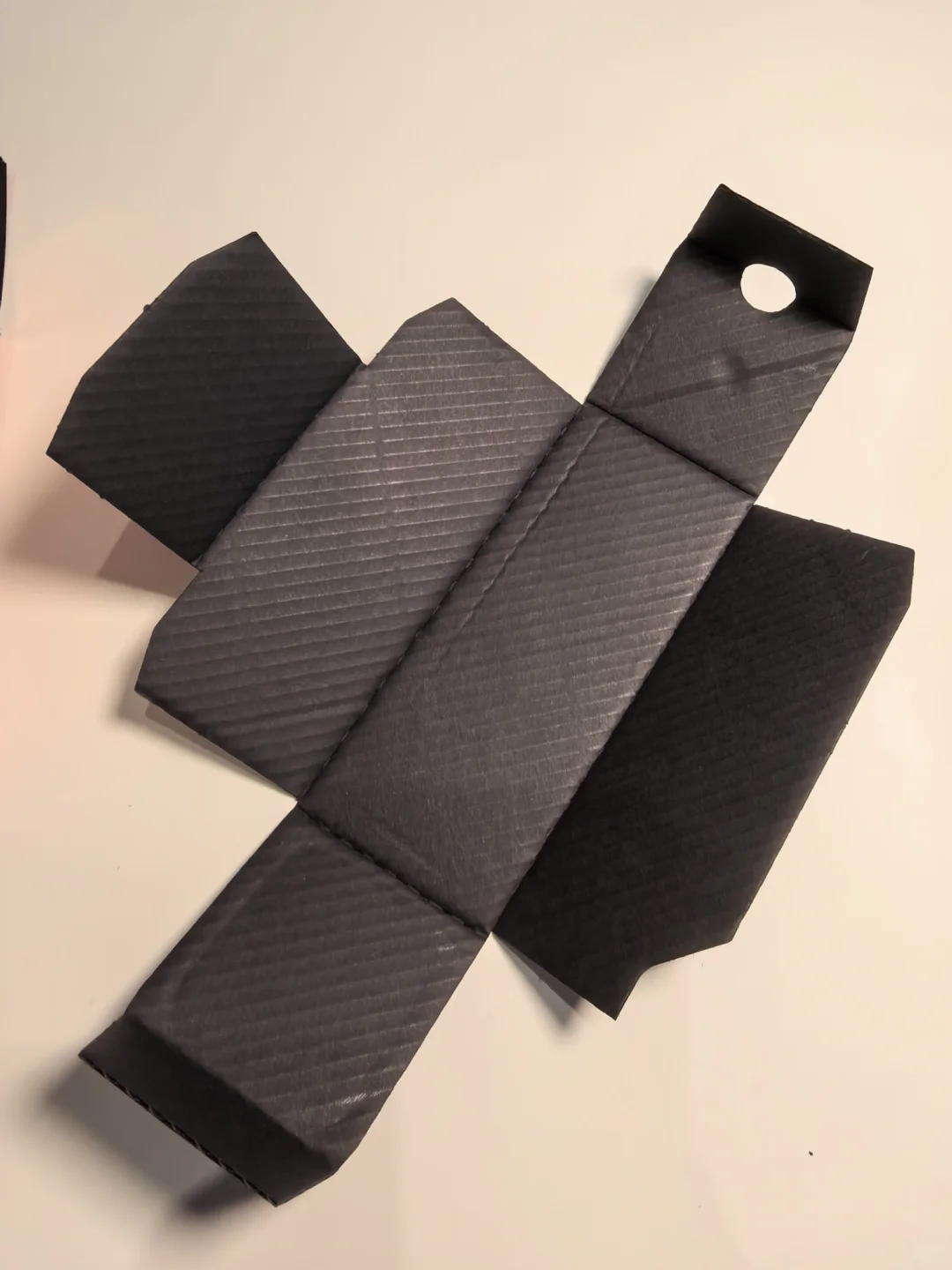
A range with three-, six- and ten-vial sets can share a visual system, an information hierarchy or potentially an outer-box platform. Sharing an outer box still leaves different inserts and unused space to resolve. Putting three vials into a ten-vial box creates a separate configuration to assess. Fewer contents do not automatically make it a validated substitute.
Ask for the components, insert version, packing steps and quotation scope for each configuration, then compare those with separate box formats. Use early paper samples to assess dimensions, reading and access. Suitable structural and production-material samples can then address closure, contact and assembly. Arrange shipping validation for the actual complete package; a desktop opening demonstration does not replace it.
Version control matters here as well. Similar-looking six- and ten-position inserts need clear identification, as do old and new cards. When a fragrance changes, update the bottle identification, position map, information card and packing list together. Changing a name in one document leaves the rest of the pack unresolved.
Write acceptance checks as actions
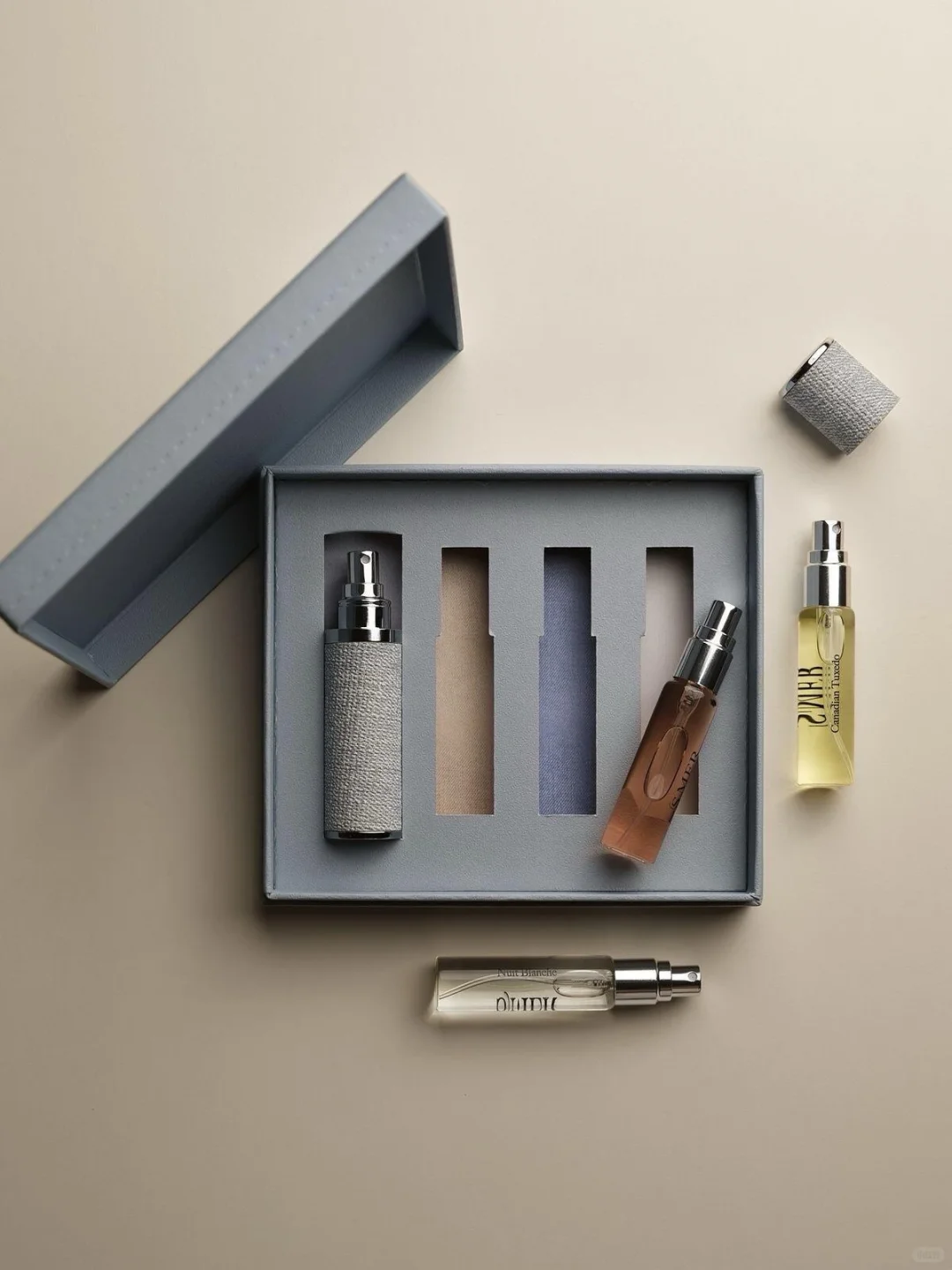
Build a check sequence around actual use: count and identify the contents; read the names against their positions; remove each vial independently; close the partially emptied pack; return the samples; add every paper accessory; and close it again to look for interference. Record the affected position, sample version and photographs so that any revision has a specific target.
Have the packing team complete a full check too. A missing vial, two similar names or an information card placed the wrong way up may be less obvious in artwork than during assembly. Check the final packing list against actual components and include the confirmed arrangement in the production information.
For a Bravo Package enquiry, provide the complete contents for each count, bottle dimensions, preferred arrangements, accessories, quantities and intended sales and shipping use. Request a comparison of feasible layouts and the samples needed to assess them. The final choice should follow the samples, an agreed scope and relevant verification, rather than the vial count alone.