
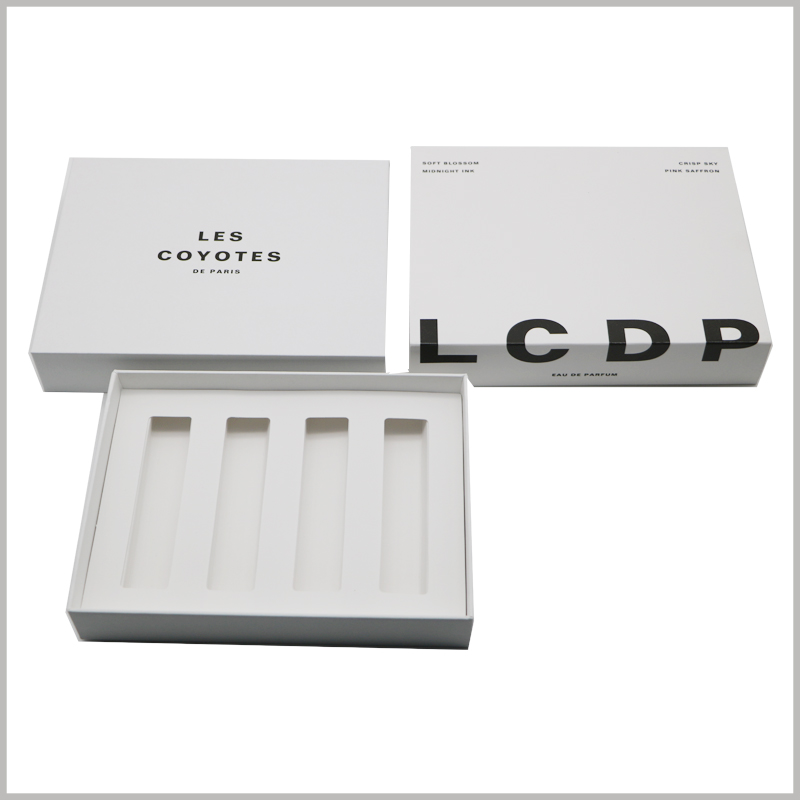
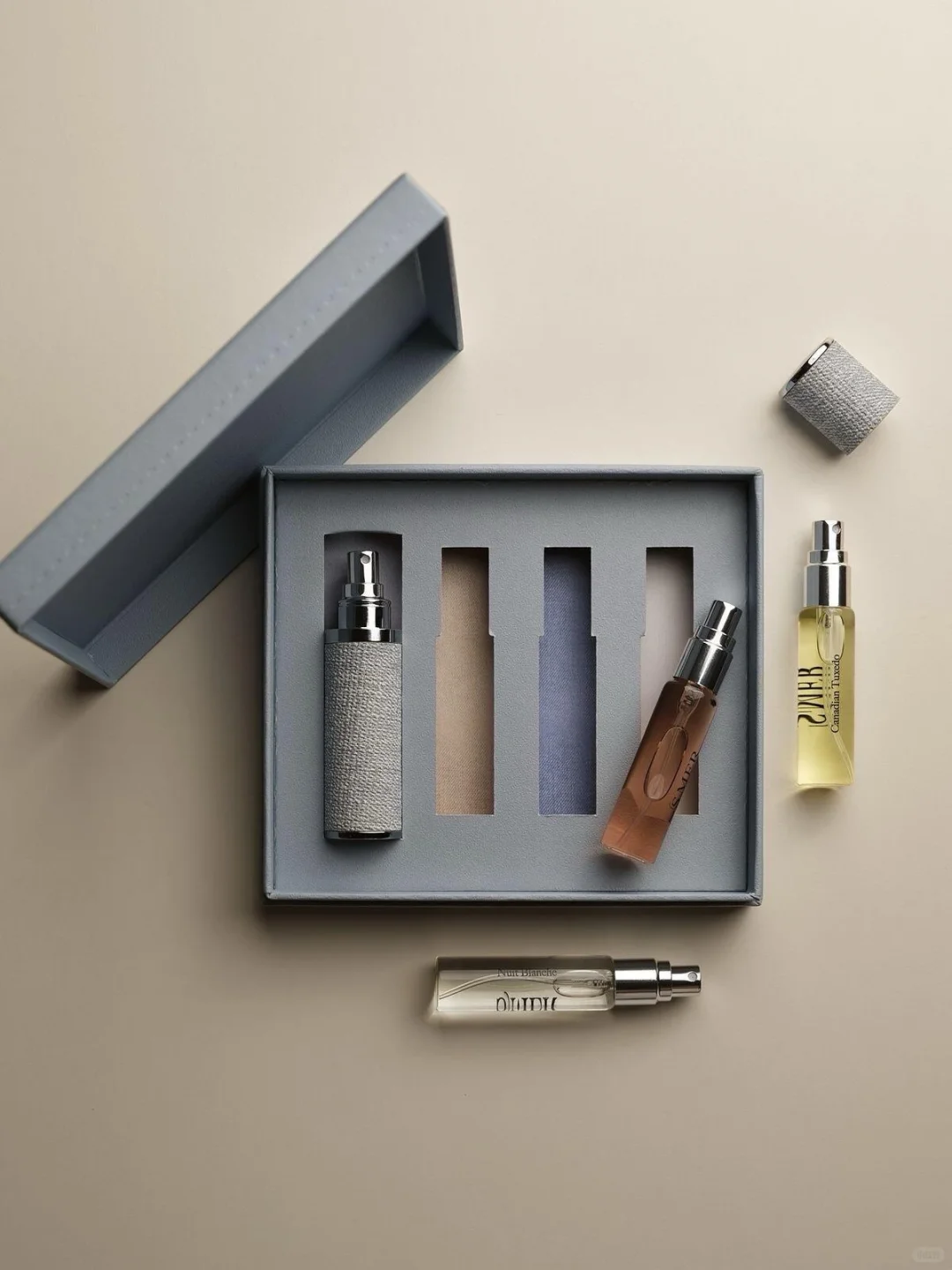
An empty four-position insert shows a layout to evaluate with the actual products. It does not establish bottle fit or transport protection. Third-party reference; not a Bravo Package project.
PERFUME PACKAGING · INSERTS AND DIMENSIONS
A perfume insert must do more than arrange a bottle neatly inside an open gift box. It needs to work with the complete product, outer box and accessories. Packing staff need a workable loading sequence, customers need a clear way to grasp the bottle, and later transport checks need a defined packaging configuration.
Start with the bottle version, intended contact areas and opening sequence. Develop material and cavity proposals around those inputs. An empty insert that looks convincing cannot establish the fit of a finished, capped and labelled fragrance.
Define the complete product sample
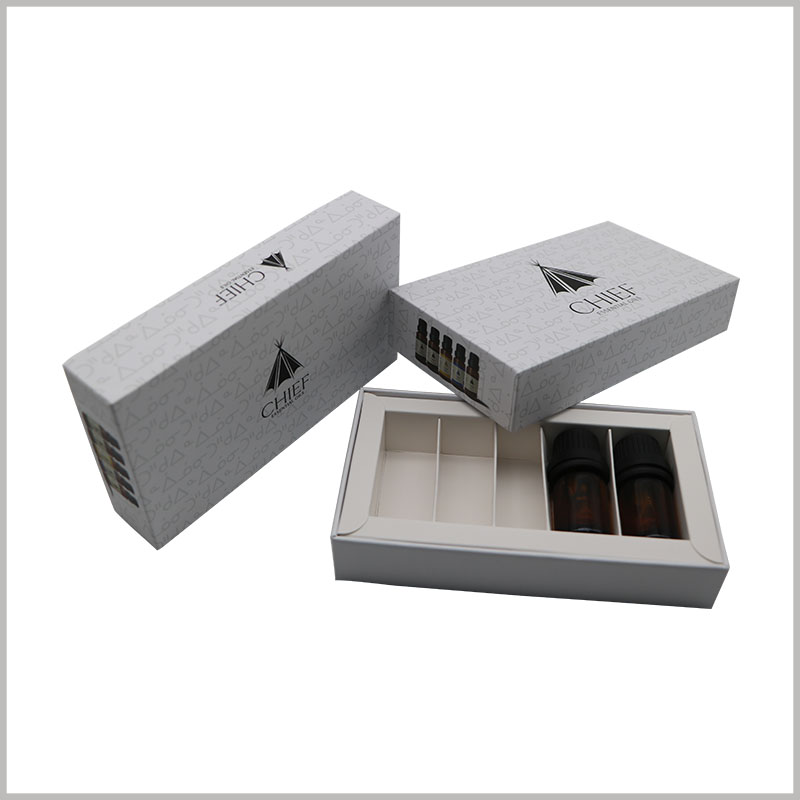
Supply a sample with the intended contents, or an agreed substitute, and identify its weight and state. Include the cap, spray assembly, label, decoration and other projecting parts. An empty or uncapped bottle can support an early discussion, but record how it differs from the final product.
Provide enough information to identify maximum length, width and height, or maximum diameter, along with the shoulder, base, cap projections and label area. A nominal capacity such as 50 ml does not describe the product outline. Unusual shapes need clear views; drawings and three-dimensional files should show their units, version and relationship to the physical sample.
For a multi-fragrance range, list which components are shared and which differ. Agree who provides the product dimensional tolerances and who confirms insert manufacturing tolerances. Keep unresolved values open rather than filling them with an assumed standard allowance.
Identify contact areas and areas to avoid
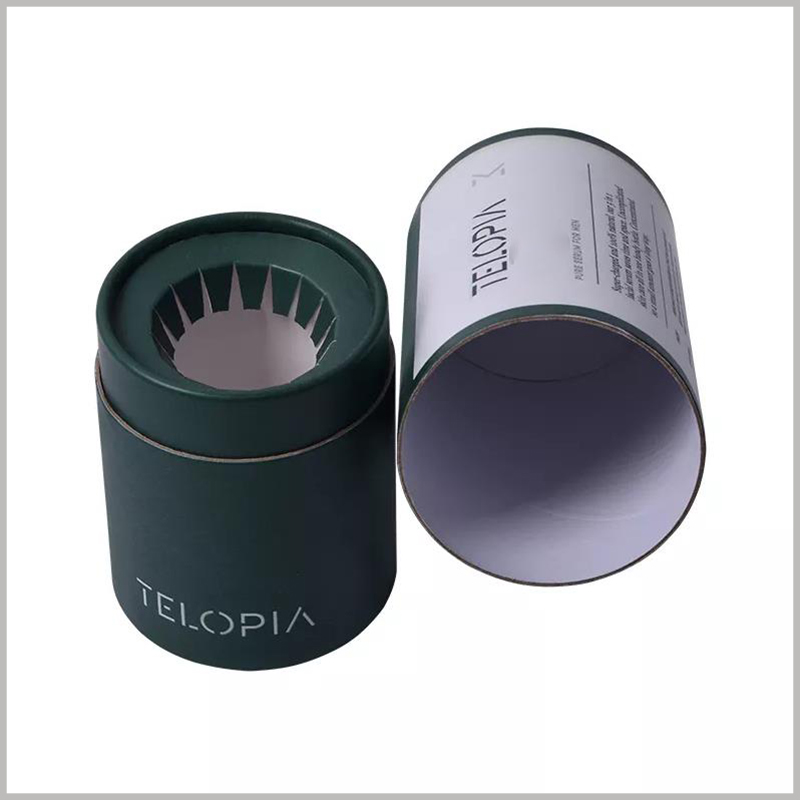
Mark the intended support areas on a product photograph or structural drawing. Also identify surfaces that should not be pressed, rubbed or obscured, including labels, decoration and dispensing components where relevant. A shoulder or base is not automatically a suitable support point for every bottle. The proposed structure and product need to be assessed together.
Ask how the insert limits product movement and how the insert itself remains in the outer box. A bottle may appear secure while the whole insert lifts out, shifts with a drawer or separates during opening. Accessories need their own positions, with checks for contact between items and obstruction of the intended hand access.
Do not approve a proposal simply because it feels tight. Forced loading, a creased label or removal that requires pulling on the cap are observations to report to the developer. If a revision changes the overall pack dimensions, update the complete drawing set.
Keep product, insert and box dimensions separate
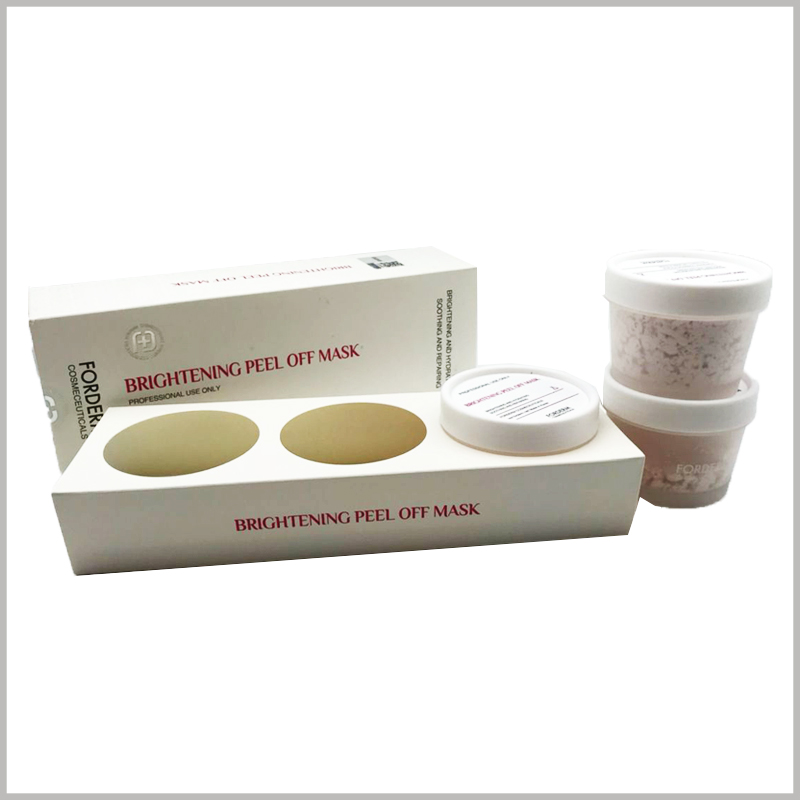
Retain three sets of information: the product outline; the insert cavity and overall outside outline; and the outer box's usable inside dimensions and closed outside dimensions. Flanges, folded edges, base structures and accessory areas also occupy space. A bottle width alone is not a complete fit specification.
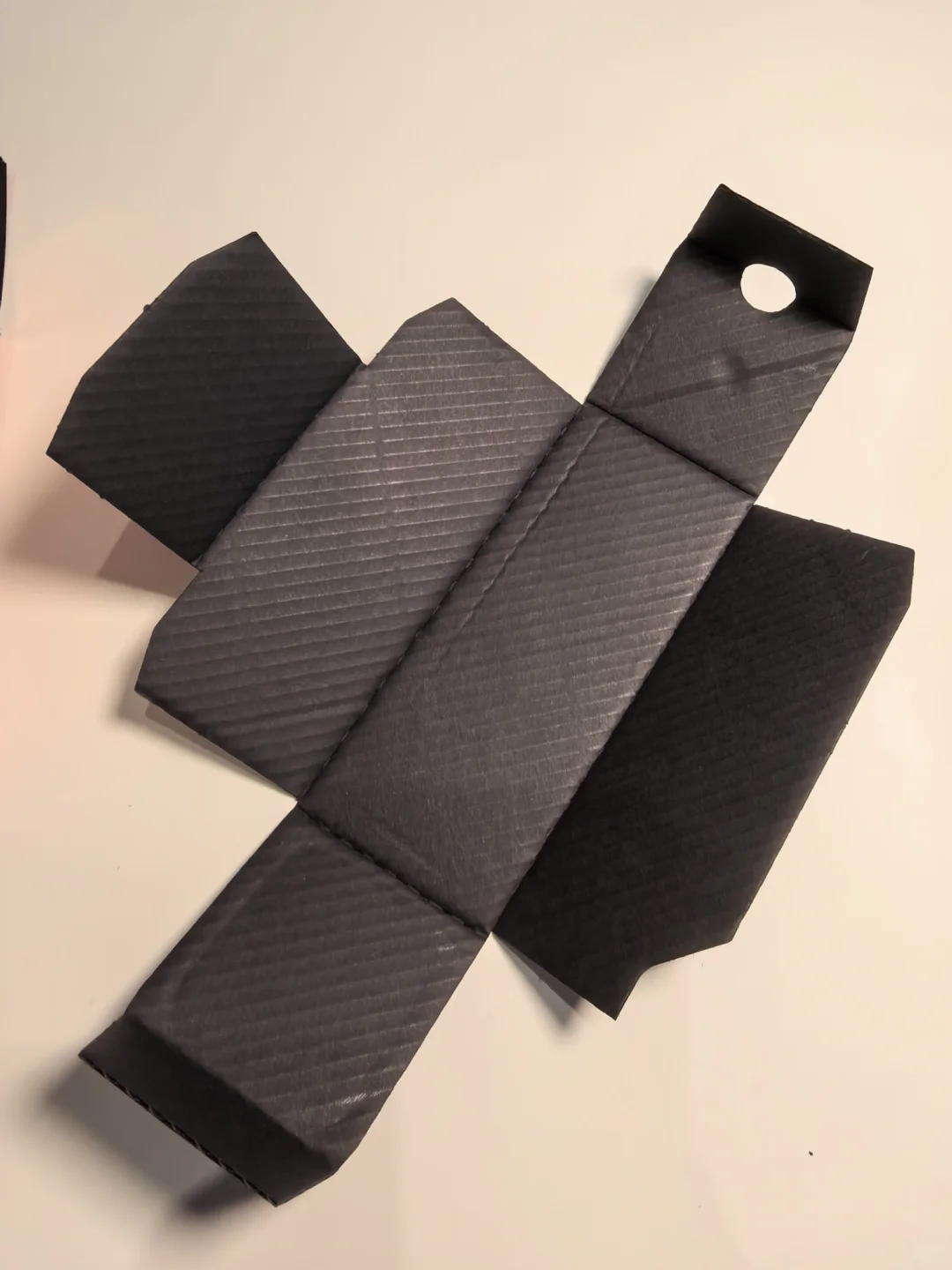
Identify where each measurement is taken and whether it describes a flat component or a formed assembly. An unfolded paperboard drawing is not the finished insert size. An empty tray is not the same as that tray installed in the box.
If the insert includes a facing layer, flocking, fabric or another contact surface, check the final proposed combination. There is no single clearance suitable for every perfume bottle. Cavity shape, depth and allowance need to reflect the product variation, chosen structure, manufacturing proposal and verification results. Record the agreed dimensions and tolerances when they are confirmed.
Compare specified material proposals
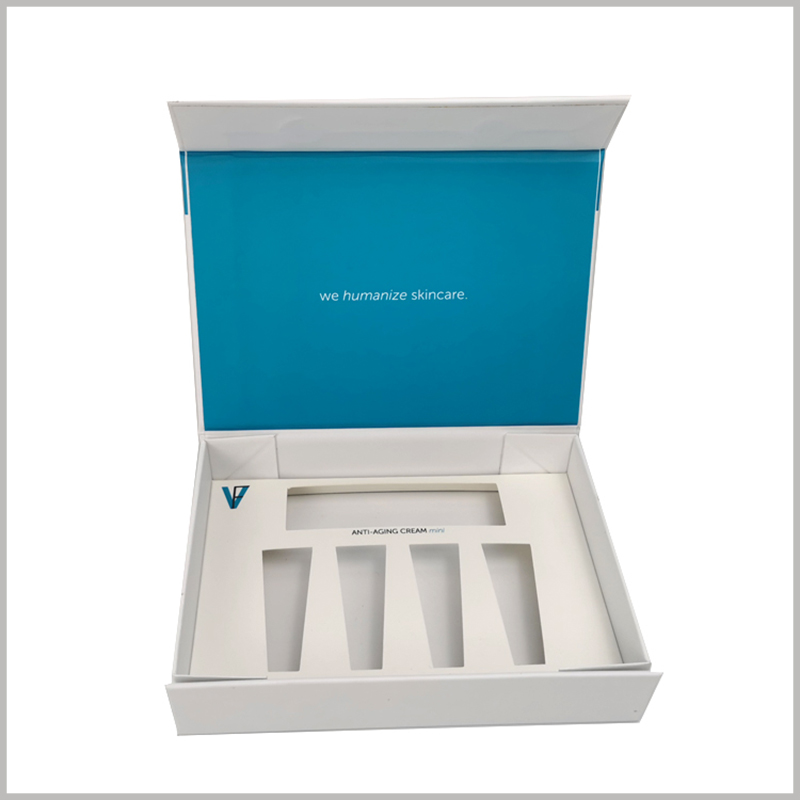
Paperboard, moulded pulp, foam and other proposals need a defined structure and contact surface. The same material name can cover different specifications and processes. It cannot establish the finished pack's retention, scuffing, odour or transport performance by itself.
List material, forming method, contact layer and outer-box configuration separately in the quotation. If the brand needs recycling, degradation, certification or other material claims, request evidence relevant to the actual finished pack and intended conditions. A natural-looking texture or kraft colour does not establish those claims. Apply the same scrutiny to unfamiliar materials as to established options.
Keep quantity, bottle sample, accessories, outer box and delivery state consistent when comparing prices. Separate development, samples, tooling, unit prices and the scope of revisions. Agree dates for the actual order rather than borrowing a lead-time promise from a reference project.
Observe loading, removal and closure separately
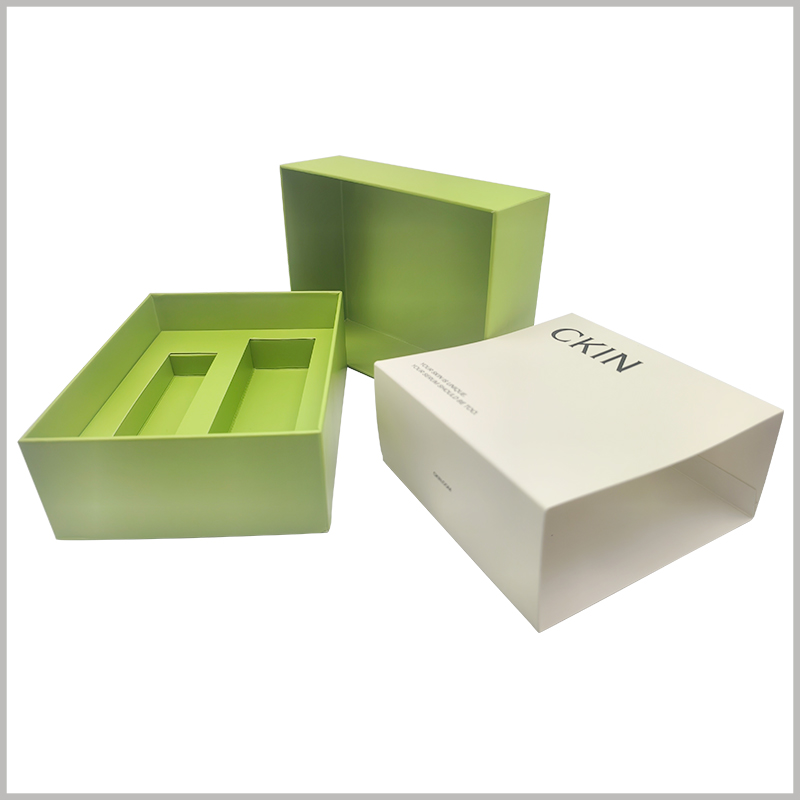
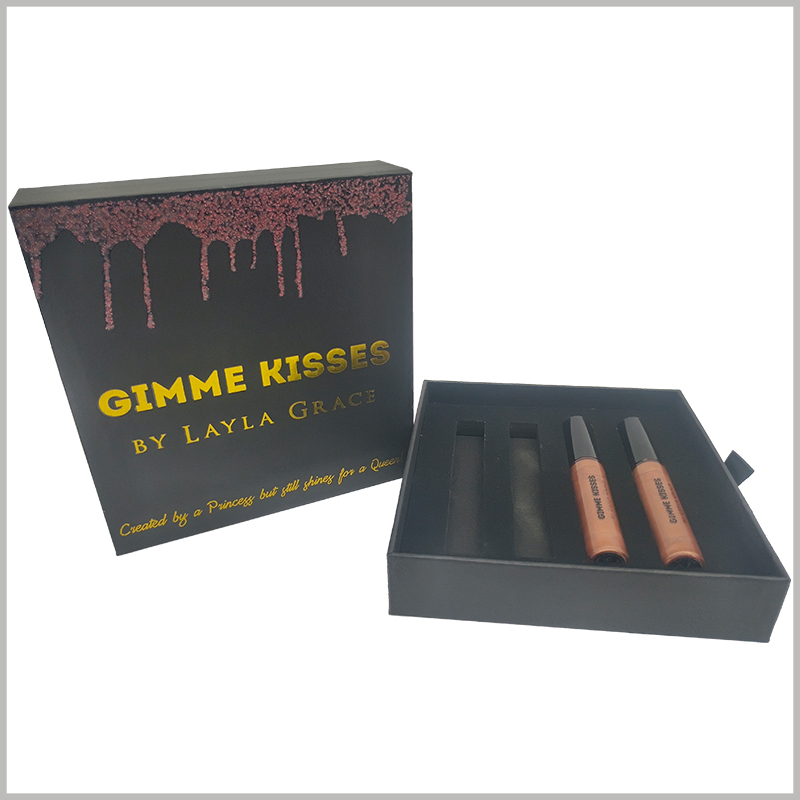
Load the product using the planned packing sequence. Note any forced pressure and any contact with the label, cap or decoration. Record what the operator has to do and what happens, rather than writing only that the fit is acceptable.
Next, ask someone unfamiliar with the structure to open it and remove the bottle. Is the access point apparent? Can fingers grip the bottle body, or do they reach the spray assembly first? Check replacement, closure and reopening as well. If a pull ribbon or finger cut-out is proposed, include its attachment and use in the review.
Finally, add the leaflet, cards and every accessory, install the insert in the final box and repeat the actions. Observe pressure during closure, insert movement and contact between items. Recheck the relevant configuration after a change instead of approving the insert in isolation.
Separate fit approval from transport verification
Successful loading, removal and closure document fit observations for a particular configuration. They do not establish transport protection. Agree the later verification conditions, method and acceptance criteria with the relevant parties, using the proposed bottle, insert, outer box, dividers, cushioning and shipping carton.
Connect results to a version record: product sample and weight, material and contact layers, insert and box drawings, accessories, carton arrangement, observed problems, revisions and approver. If a check fails, preserve the samples and configuration before assigning a cause. A photograph alone cannot establish that the insert was too soft or the clearance too large.
A usable approval record states what was accepted and what remains unresolved. Carry it into production and reorders, and review changes to the bottle, label, cap or materials. Clear sample inputs and observable checks turn an insert dimension into an actionable requirement.