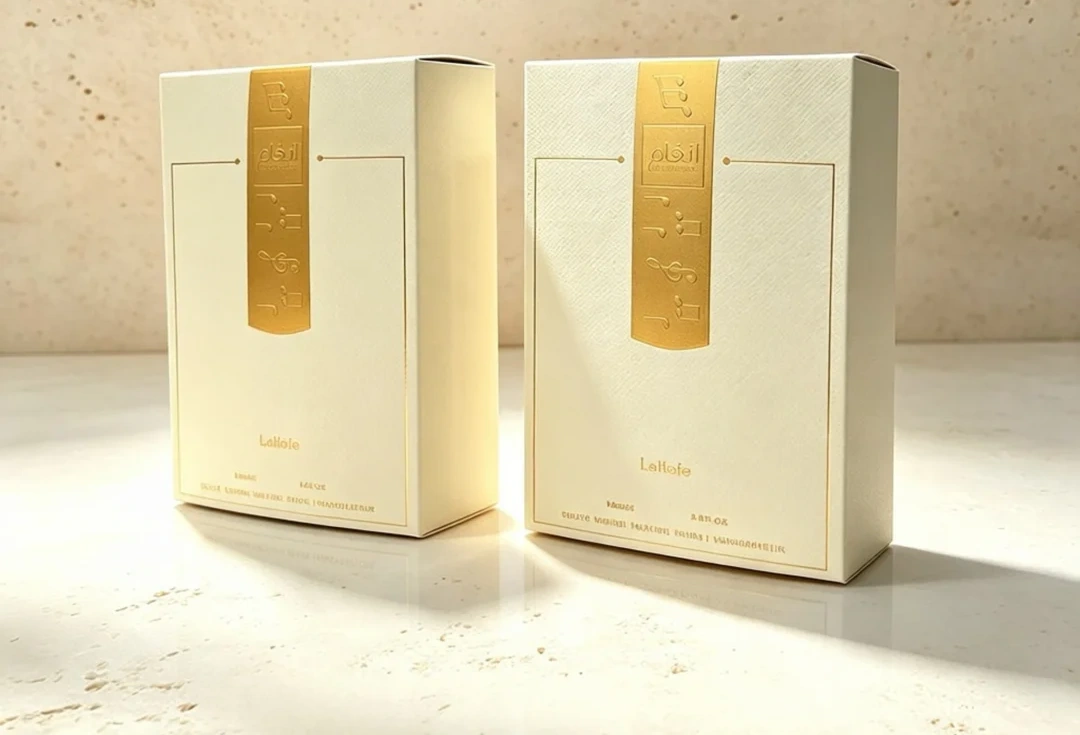

A matte laminate, metallic mark and raised pattern interact on the finished gift box. The laminate affects foil adhesion, and embossing can stretch transferred foil. Ask the converter to price and sample the materials, locations and sequence together. Check the result after the carton is folded and glued.
Map each operation on the dieline
Locate laminate, foil, raised areas, glue flaps, creases and cuts. Ask for a proof showing overlaps, gaps and proximity to corners. Foil on the perimeter of an emboss can show a doubled edge when registration shifts. Enlarge the critical join on the process map. If the goal is flat shine, evaluate foil or spot coating before pricing the emboss die.


Specify the laminate, foil and board together
Ask which grades are compatible and whether surface treatment is required. Soft-touch film can develop glossy marks from heat or rubbing. Board caliper, stiffness and texture affect emboss depth. Request the proposed order of operations and separate charges for tools and processes. Flag artwork that crosses a fold for its own test.

Put the hardest details on one proof
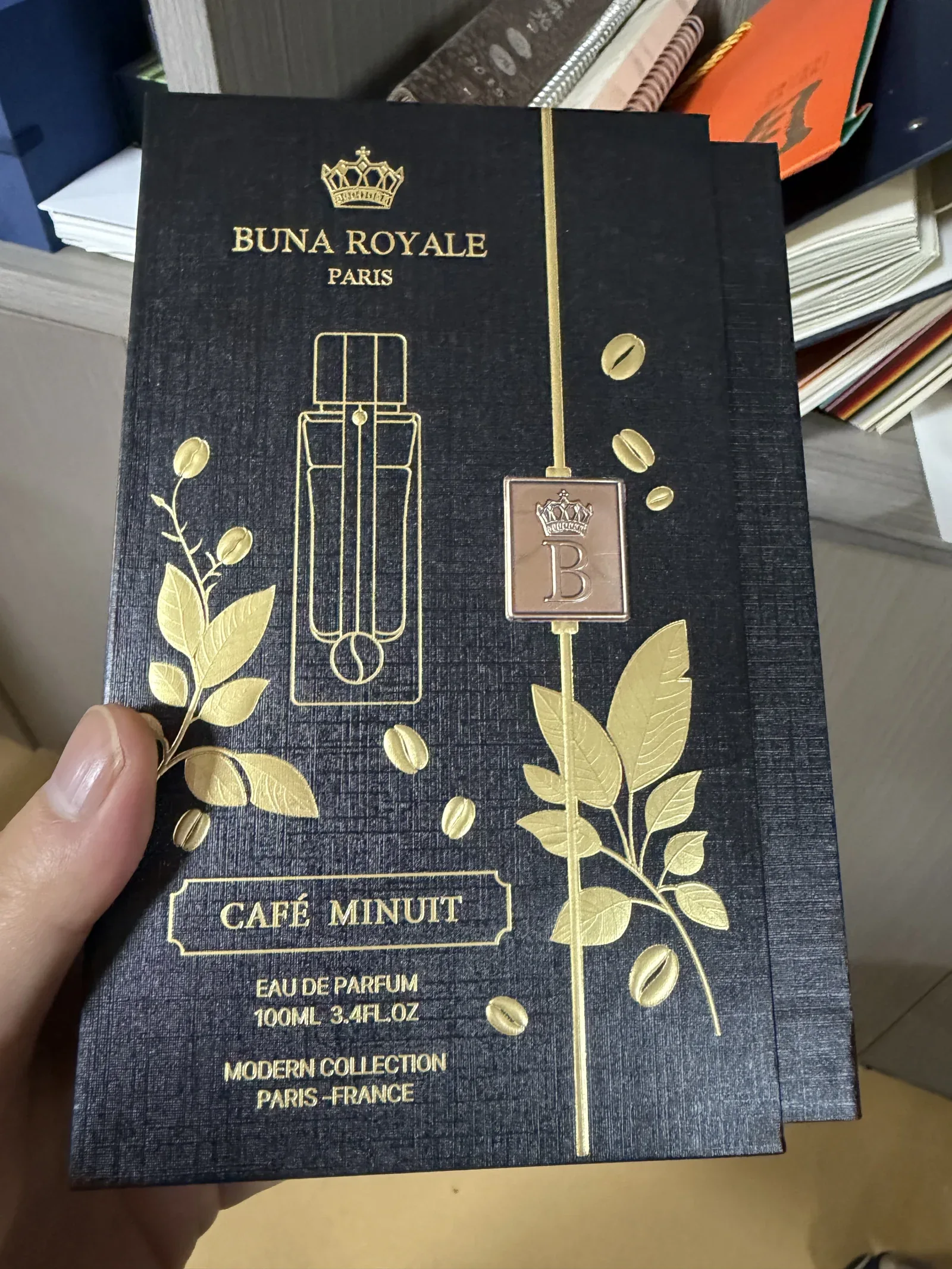
Include the finest type, largest foil solid and densest emboss pattern. Compare foil options on the same paper and film, or compare films with the same foil. Under angled light, check pinholes, missed transfer, emboss registration, gloss shifts and impressions on the reverse. Agree any rub, tape or fold checks and sample age.
On a BravoPackage perfume box, try foil alone, emboss alone and both together on the same wrap paper. Rotate the assembled lid and look for whitening on the raised edge or foil outside the relief. Inspect the open and closed states before signing the first run.


Approve a folded, loaded carton
Inspect foil from several angles. Open folds and check for whitening, cracks or lift at corners. Load the product and operate the closure. Check stacking, lid fit and rubbing inside the planned sleeve or shipper. Use samples to document acceptable gloss, emboss depth, register and wear.


Record the combination for repeat orders
Record board, film, foil, coating and tool identifiers, decoration areas and sequence. Recheck adhesion and fold behavior after any material or line substitution. Keep a flat sheet and a finished reference. Record tooling ownership and reuse terms if applicable.