
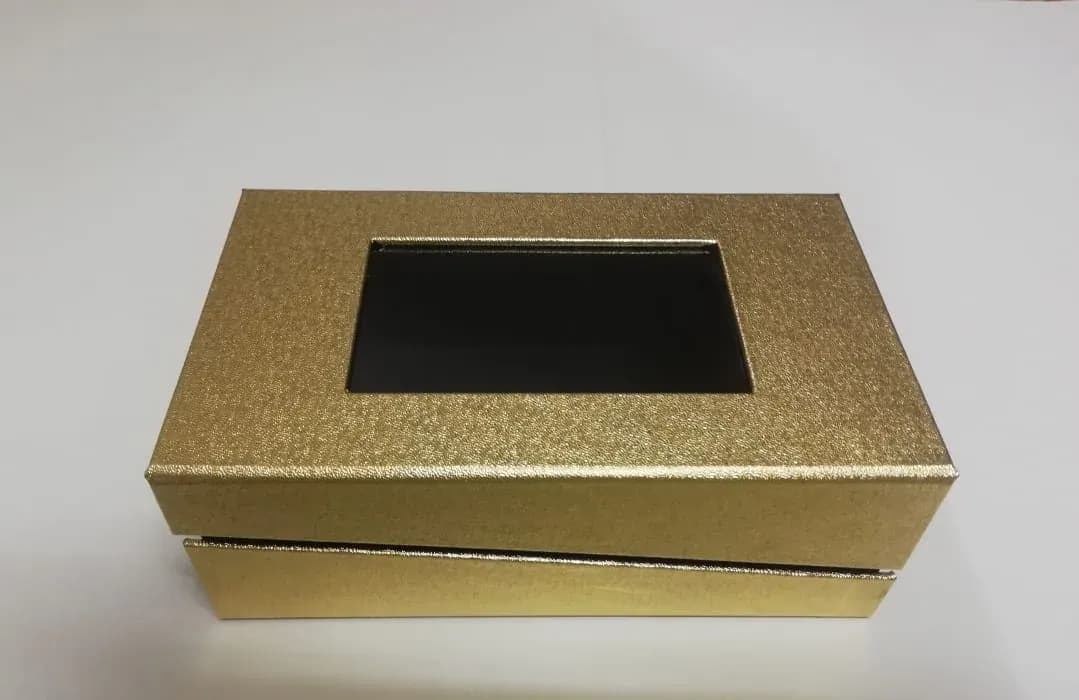
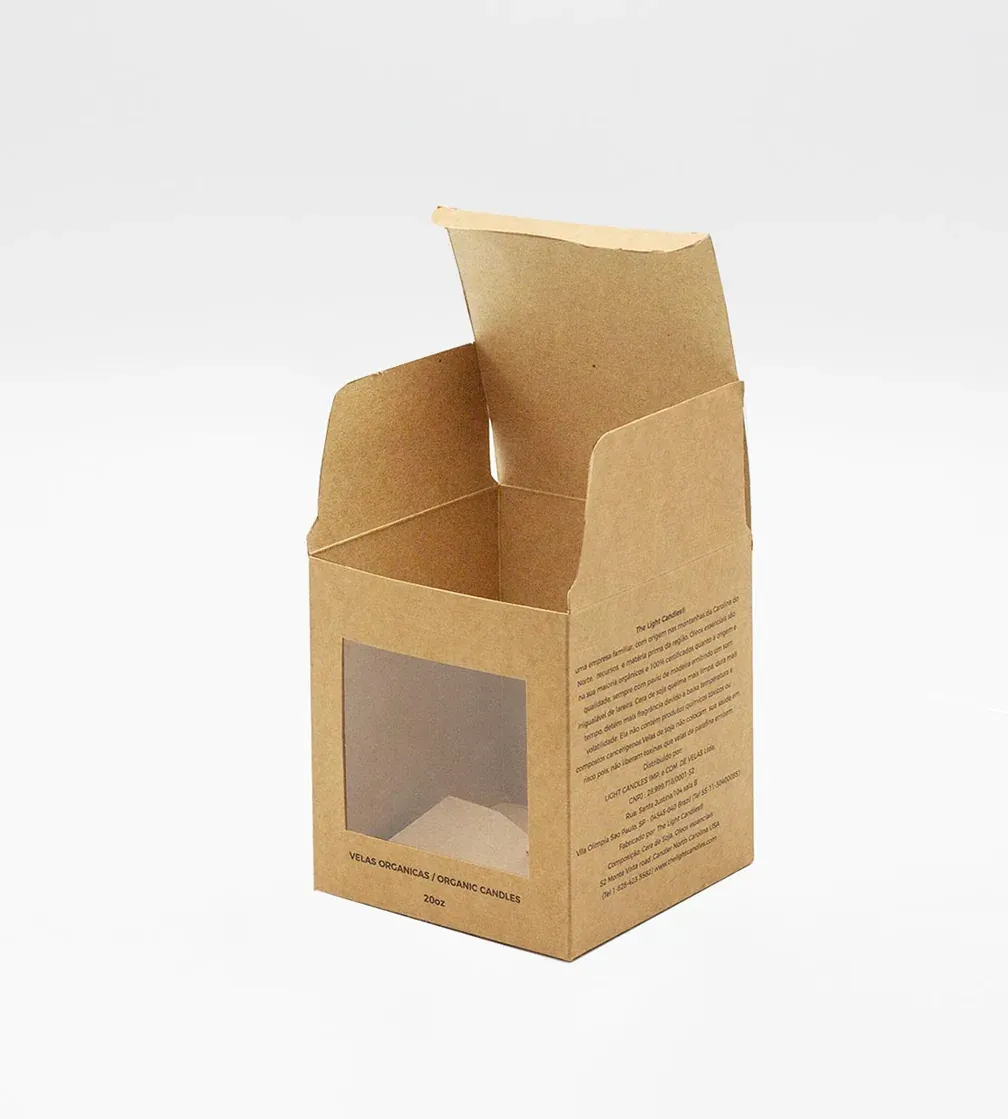
A window can be part of a separate lid. This empty presentation reference does not establish perfume support or window material. Third-party reference; not a Bravo Package project.
PERFUME PACKAGING · WINDOW BOXES
Start a window perfume box by deciding what the customer should see. Then review how the opening, bottle, insert and carton work together in the finished pack. Seeing the bottle does not establish that it is properly supported. Adding a transparent patch does not establish a sealed, moisture-resistant or transport-approved package. Specify the display objective, opening, window material and attachment, product configuration and validation separately. Approve the physical arrangement alongside the artwork.
Define what the window should reveal
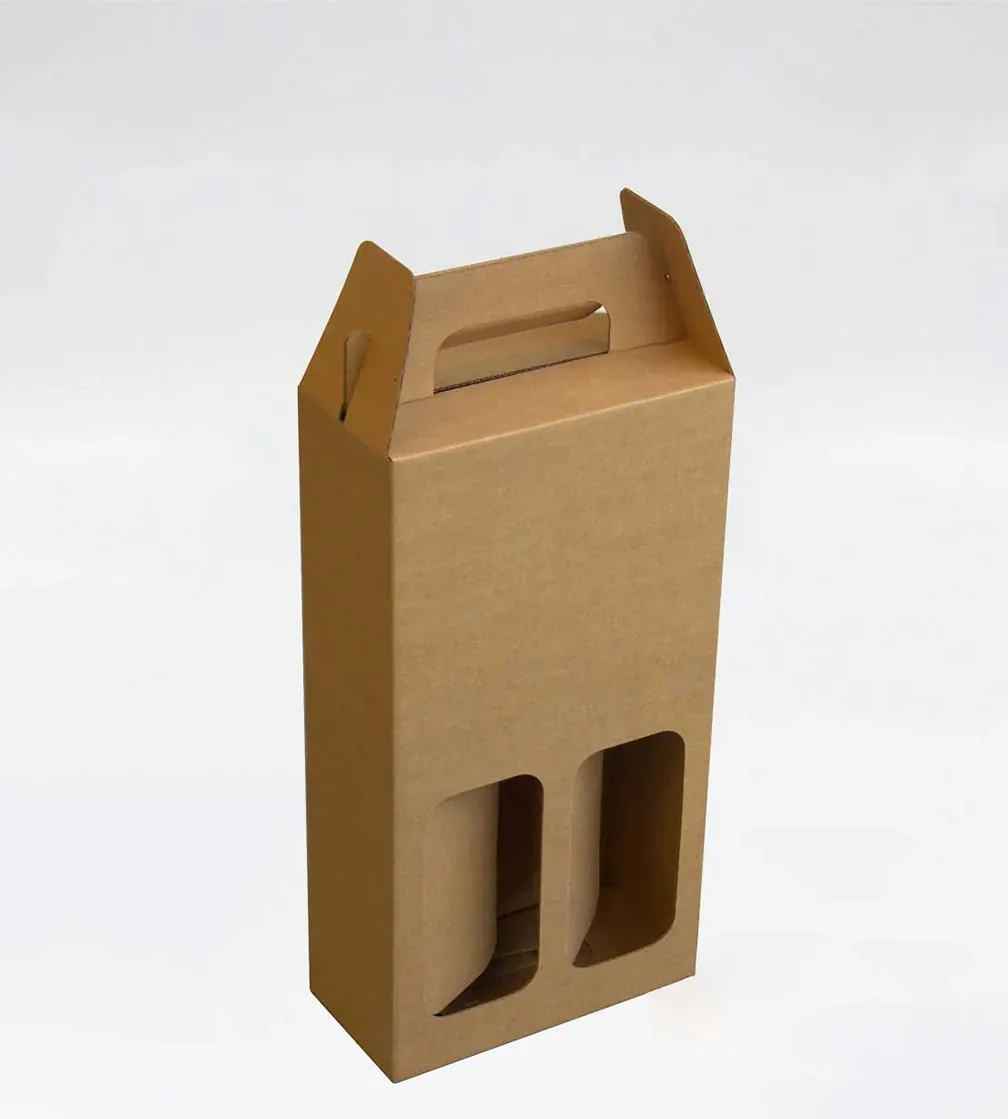
Choose a specific display target: the bottle, label, cap or an information card. Identify the viewing face and orientation, and check what the frame, insert or other components conceal once the product is installed. A window does not have to expose the whole bottle. Its purpose should follow the intended product identification and display.
Check alignment with the final bottle and label. A centred opening in an empty carton may not align with the packed label. Review each size in a range rather than applying one window to different shoulders, caps and label heights. Assess printed carton information together with the visible product information so important details are not cut off or difficult to identify.
Distinguish an uncovered cutout, a film-patched opening, a separate transparent inner container and a fully transparent box. Their construction and processing differ. Ask the supplier to identify the component containing the opening and the state in which it will be supplied.
Review the frame alongside the opening sequence
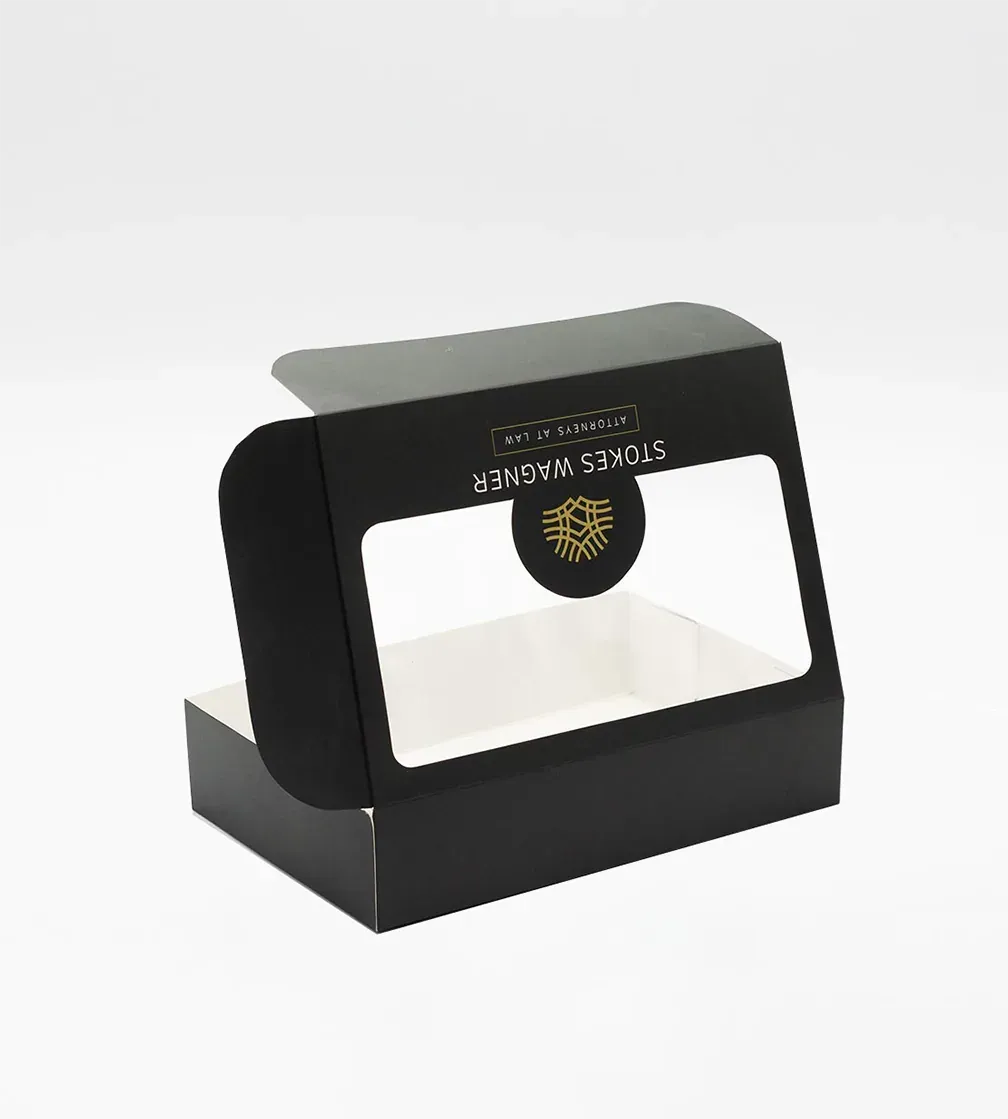
Mark the window outline, creases, side seam, top closure and bottom construction on the drawing. Include handles, hanging holes and other openings. Identify where users hold the pack while forming, opening, emptying and reclosing it. A window shape name cannot communicate those relationships.
Inspect the formed frame for flatness, unwanted rough edges, cracking or lifting. If the window approaches a folding or opening area, operate the matching sample and record any interference. Reviewing a flat sheet alone is insufficient. A rounded outline also cannot guarantee freedom from tearing during distribution.
Do not apply a universal window percentage, corner radius or frame width to every carton. Online recommendations may describe different styles, materials and test conditions. Have the supplier confirm a manufacturable construction for the final configuration, then validate it for the agreed loading and use conditions.
Specify the transparent patch and its attachment
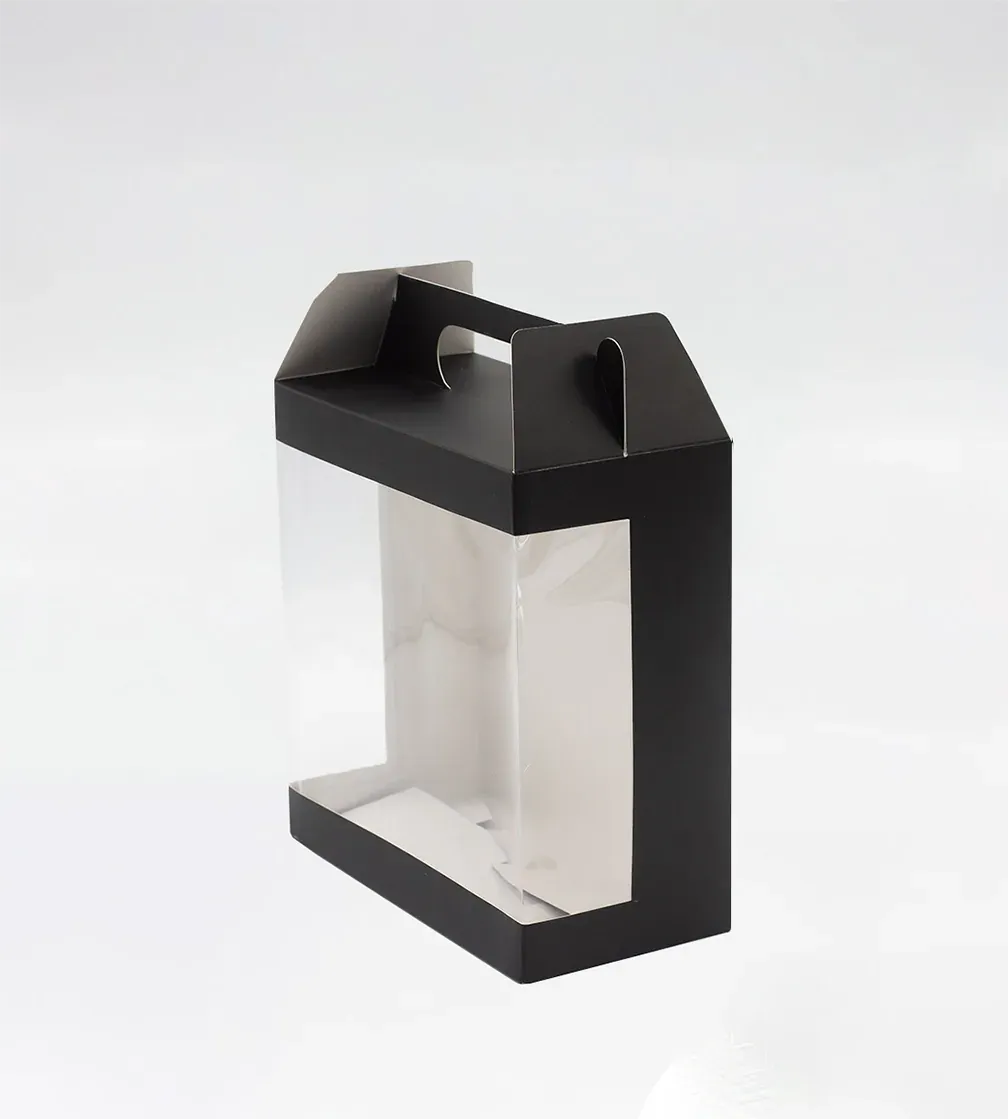
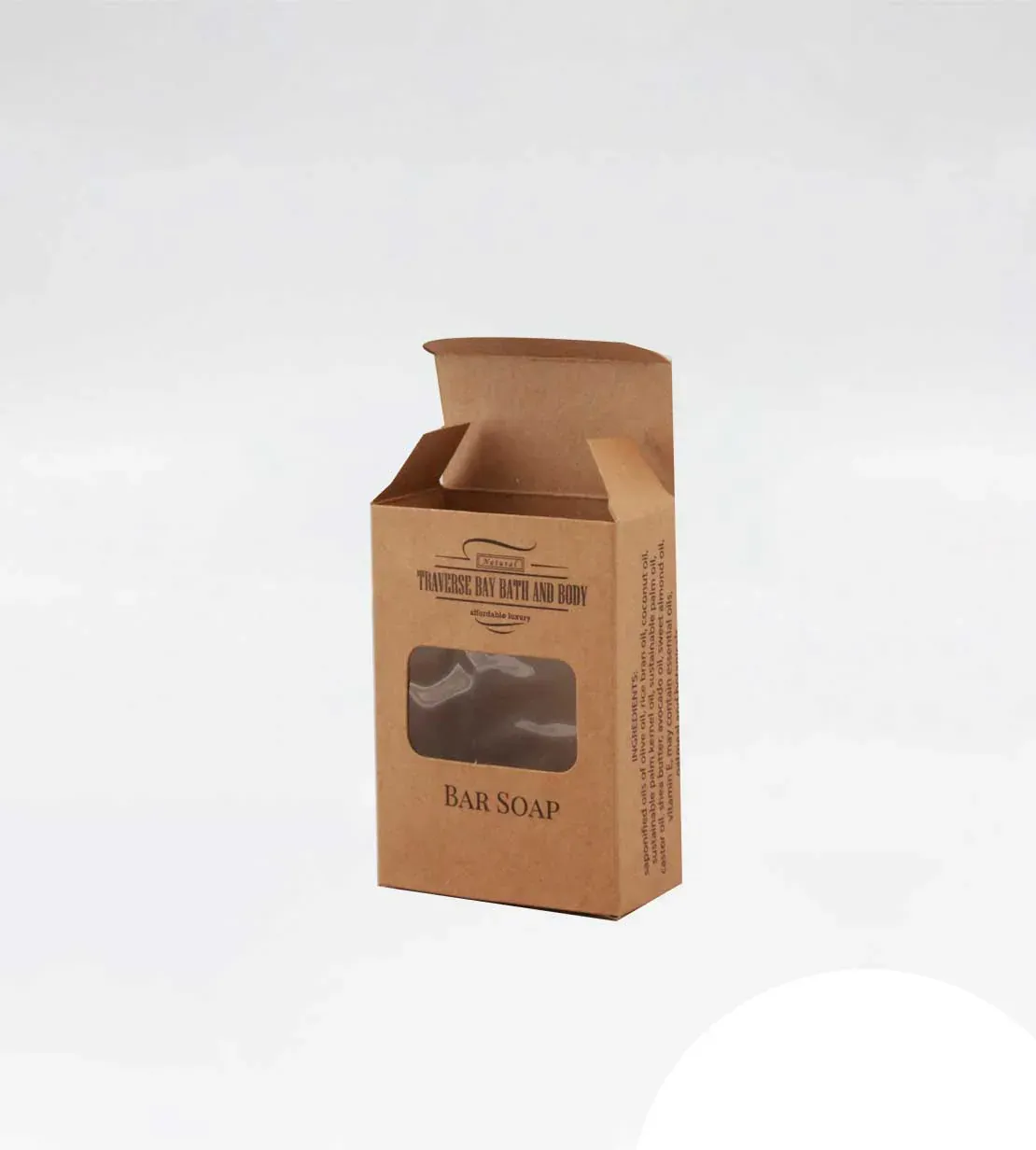
List the carton material, window material, surface treatment and attachment separately. Transparency does not identify the material or establish scratch resistance, anti-fog performance or lasting adhesion. Where a material statement or performance requirement matters, obtain evidence for the specific configuration rather than inferring it from a photograph or abbreviation.
Use a complete process sample to inspect coverage, visible adhesive marks, wrinkles, bubbles, lifting and cleanliness. Identify which areas remain visible, whether a protective film is present and when that film is removed. Record whether a mark is on the inside, outside or protective layer before treating different observations as the same defect.
Confirm the attachment against the actual board, patch and process. A generic overlap dimension, adhesive temperature or glue type is not an approved correction. If a patch lifts or bubbles, preserve the sample number, material batch, handling and environmental information. Ask the supplier to investigate and review the revised sample.
Let the support locate the product
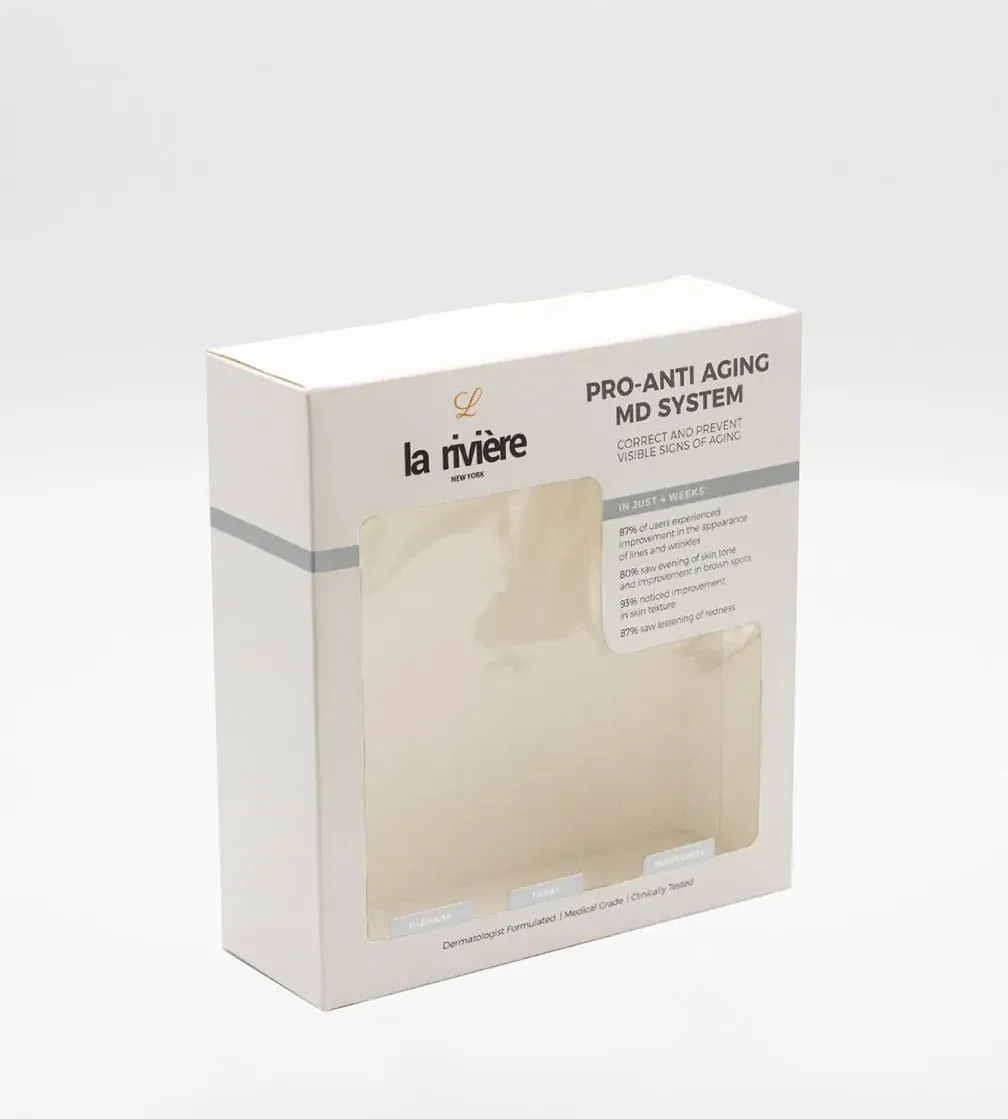
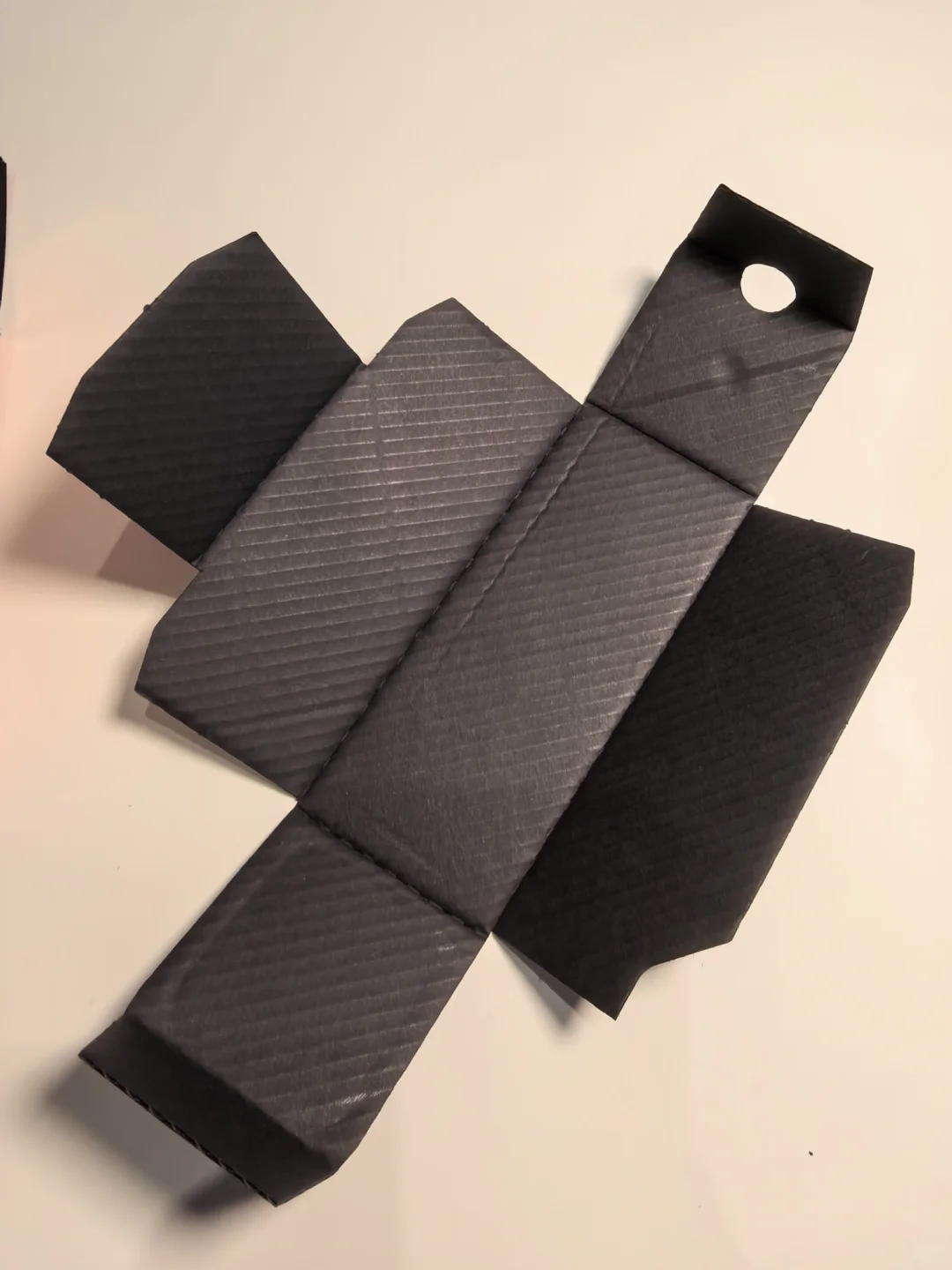
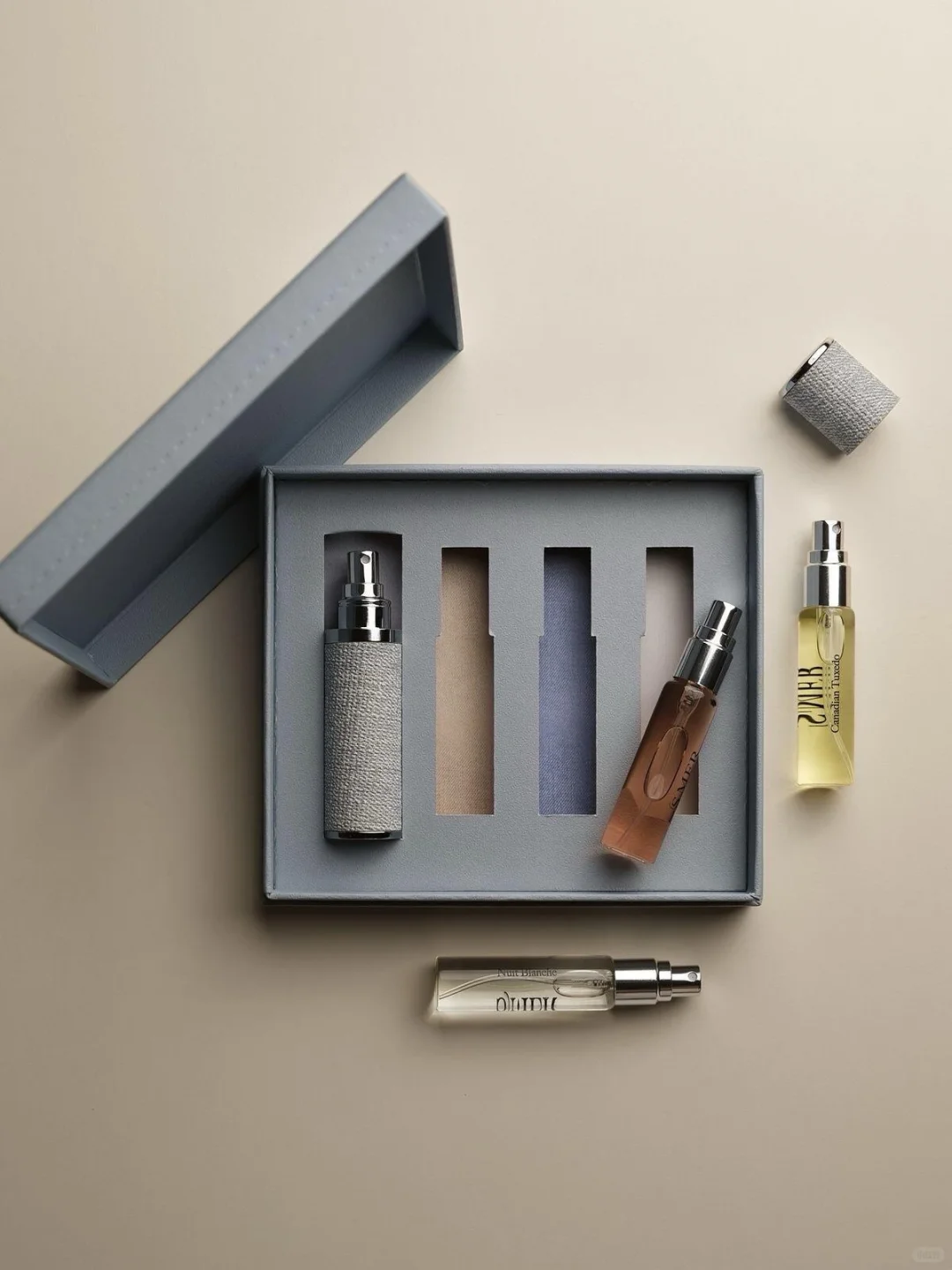
Pack the actual bottle, cap, pump, label, insert and accompanying items. Check that the intended position reveals the correct area. During removal, replacement and closing, observe whether the bottle contacts the window patch or paper edge. The transparent patch should not silently take over a support task intended for the insert or another component.
Review every item in a set. Removing one product may change another item's position or what the window reveals. If the insert raises the bottle, reassess access, the lid and the bottom too. Moving a label into the centre of the opening does not complete the approval.
A window provides visual information. It does not prove that the pack remains unopened, blocks moisture or meets a distribution requirement. Specify first-opening evidence, sales-pack positioning and shipping validation separately. Where load, stacking, drop or other testing is needed, agree the applicable method, conditions and acceptance criteria, and retain the results for that configuration.
Compare quotes on the same scope
Include the window artwork and drawing, materials, patch specification, attachment work, insert, quantity and delivery state in the enquiry. State which samples are needed and what they should establish. Similar opening sizes do not mean that two quotes include equivalent materials or assembly.
Consider print-to-window alignment, protection, carton forming, product loading, inspection and rework in the project scope. Without records for the project, do not assign a fixed cost increase to window patching or rank price and durability by paper colour. Compare the same task list and preserve the differences between alternatives.
When the opening, carton or insert changes, identify the artwork, tooling and samples that need updating. Reference the approved version on reorders. Ordering only by the term window perfume box can overlook a different opening position or attachment arrangement.
Approve the actual display and handling configuration
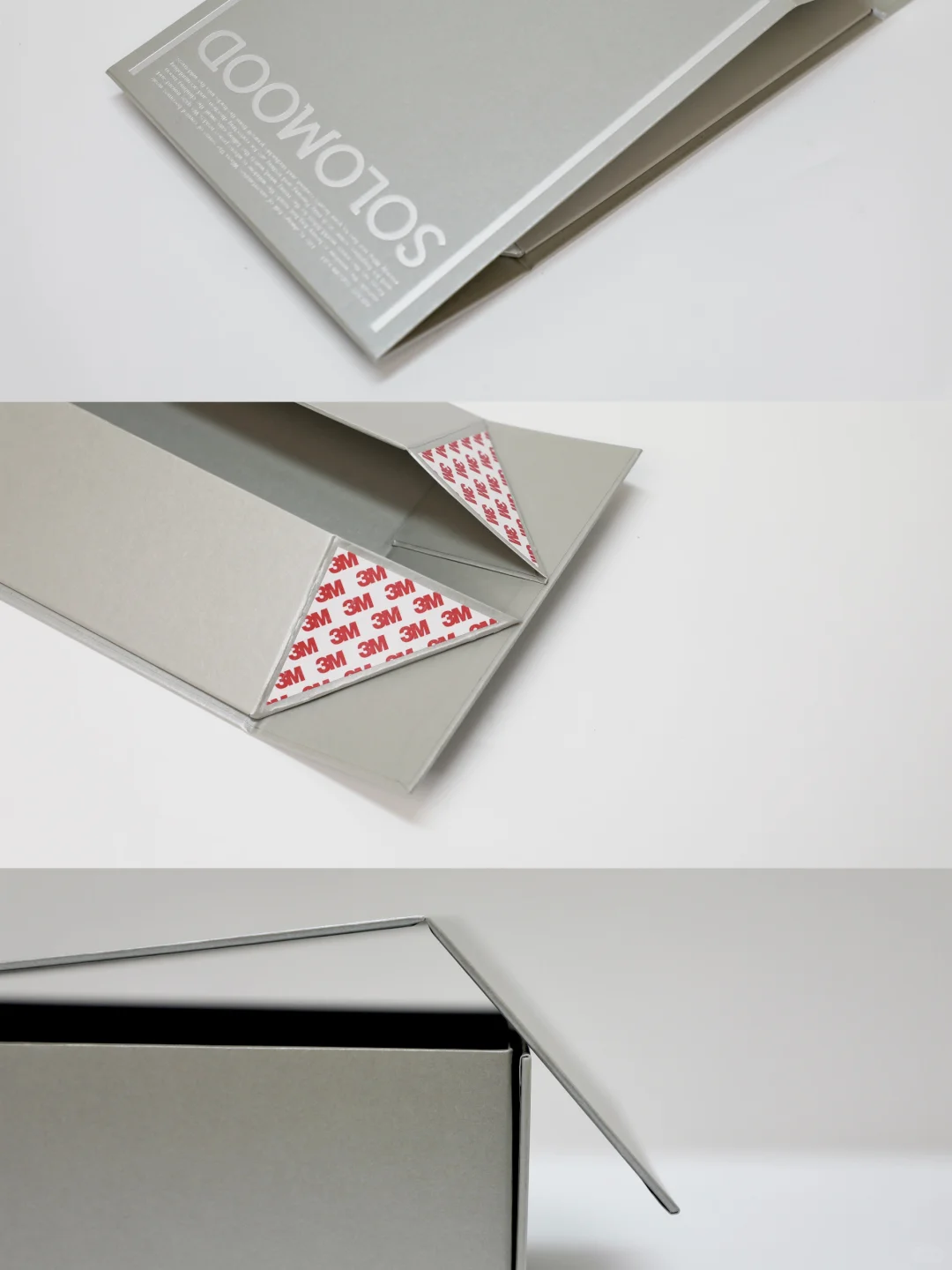
Keep the drawing, carton artwork, bottle and insert list, patch and attachment specification linked to matching sample numbers. Review photographs should cover the front display, side view, internal attachment, loaded carton, opening and removal sequence, and intended shipping configuration. Record any items that remain unverified.
Compare appearance under agreed viewing conditions. Photographs taken under different lighting and angles cannot by themselves establish transparency or print differences. Keep appearance approval and structural validation distinct. After changes to the patch, board, attachment, opening or support, identify and repeat the relevant checks.
A suitable window should reveal the intended information with the real product installed. The team should also know what the window comprises, how it is checked and which approved version applies. Establish those relationships before enlarging the opening or making its shape more elaborate.
Photographs are third-party packaging references, not Bravo Package manufacturing projects or test evidence. Confirm materials, construction, dimensions and validation requirements for the specific project.