
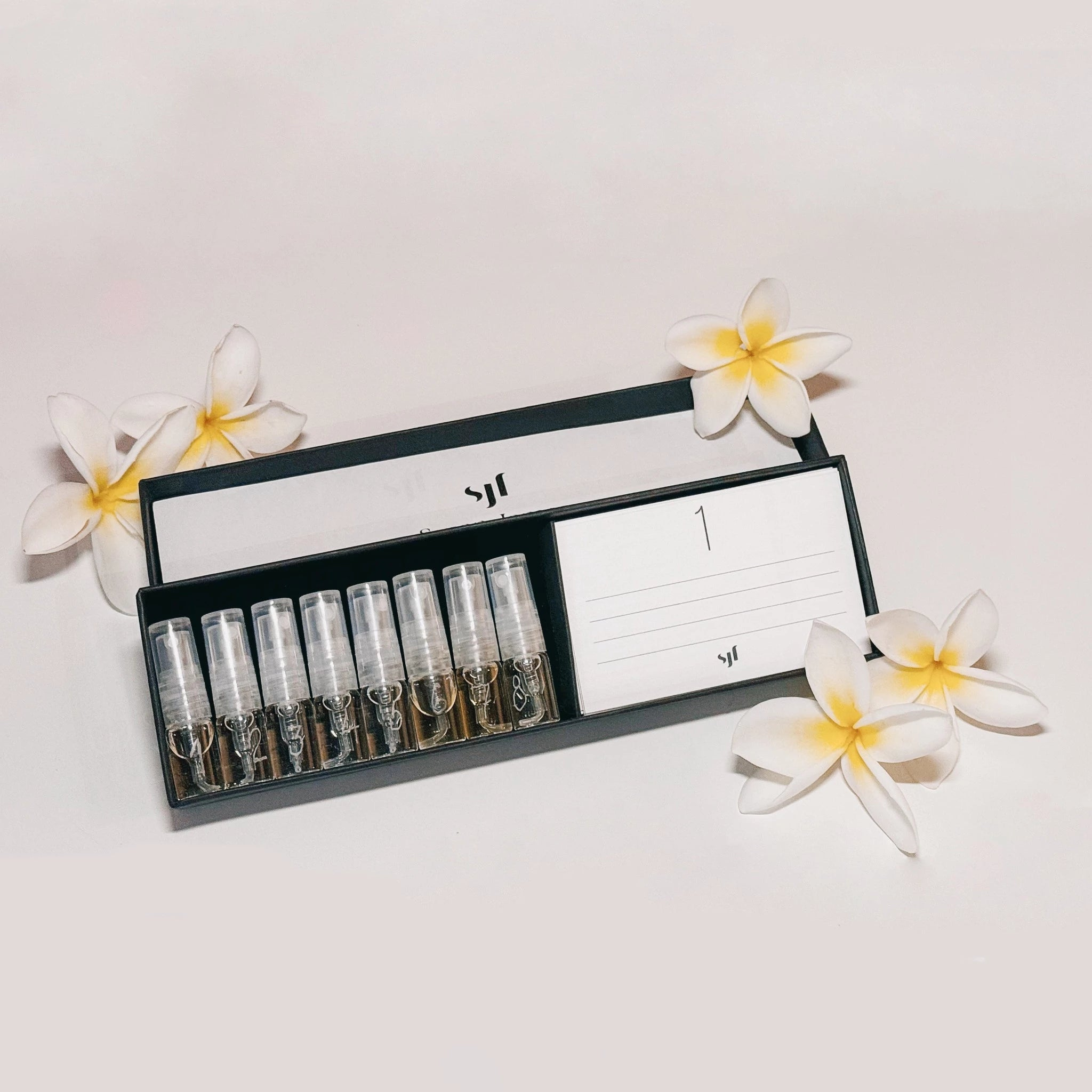
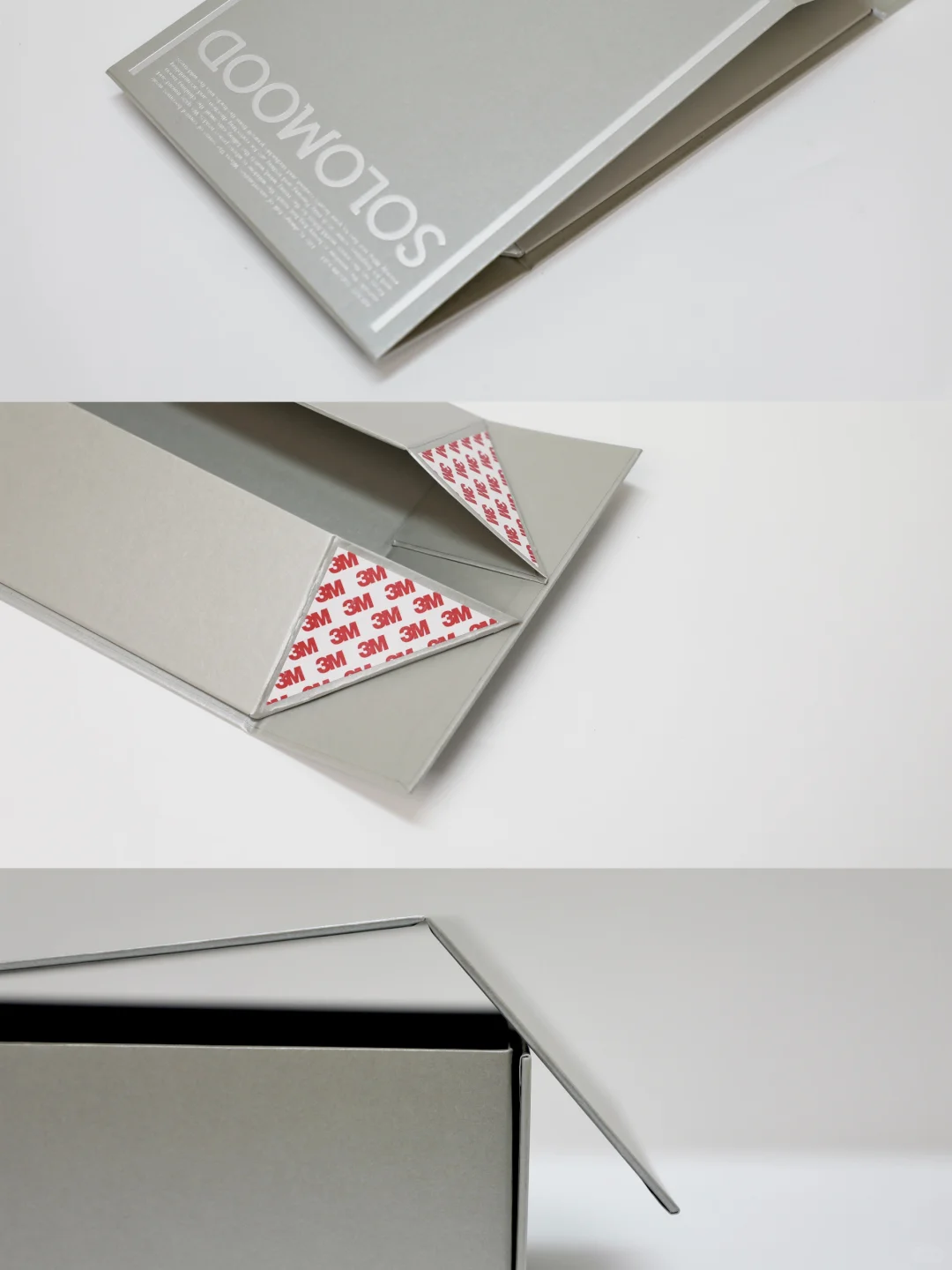
A separate card stack sits beside the samples. Confirm the purpose and content of each paper component before allocating space. Third-party reference; not a Bravo Package project.
PERFUME PACKAGING · SAMPLES AND DISCOVERY SETS
A discovery set needs more than a row of samples. After opening it, a customer should be able to identify each fragrance, keep personal notes and understand any included benefit. Plan those tasks before allocating space for paper components. A scent guide, a tasting-style record and a redemption voucher require different information, even when they share one sheet.
Define the paper components before fixing their positions
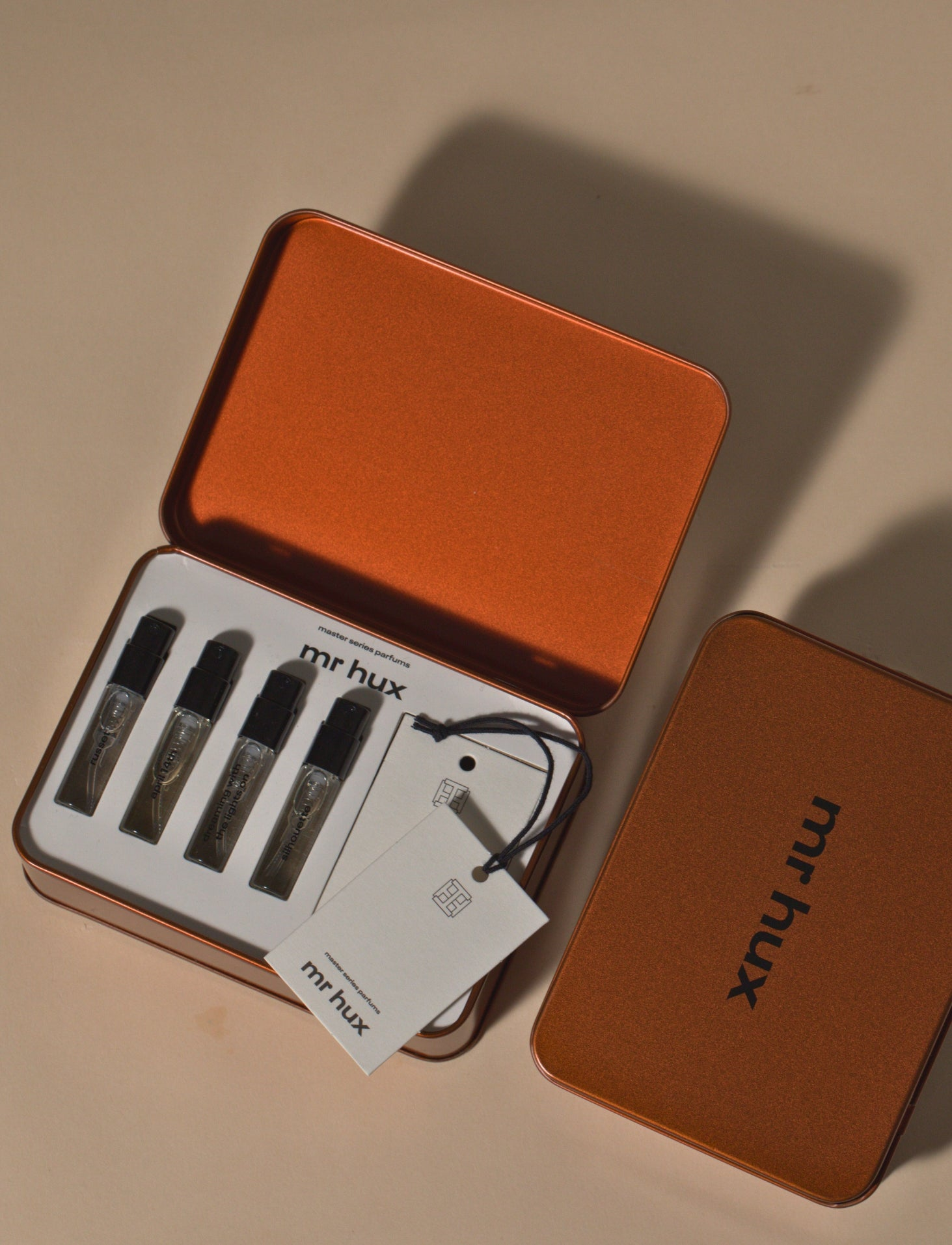
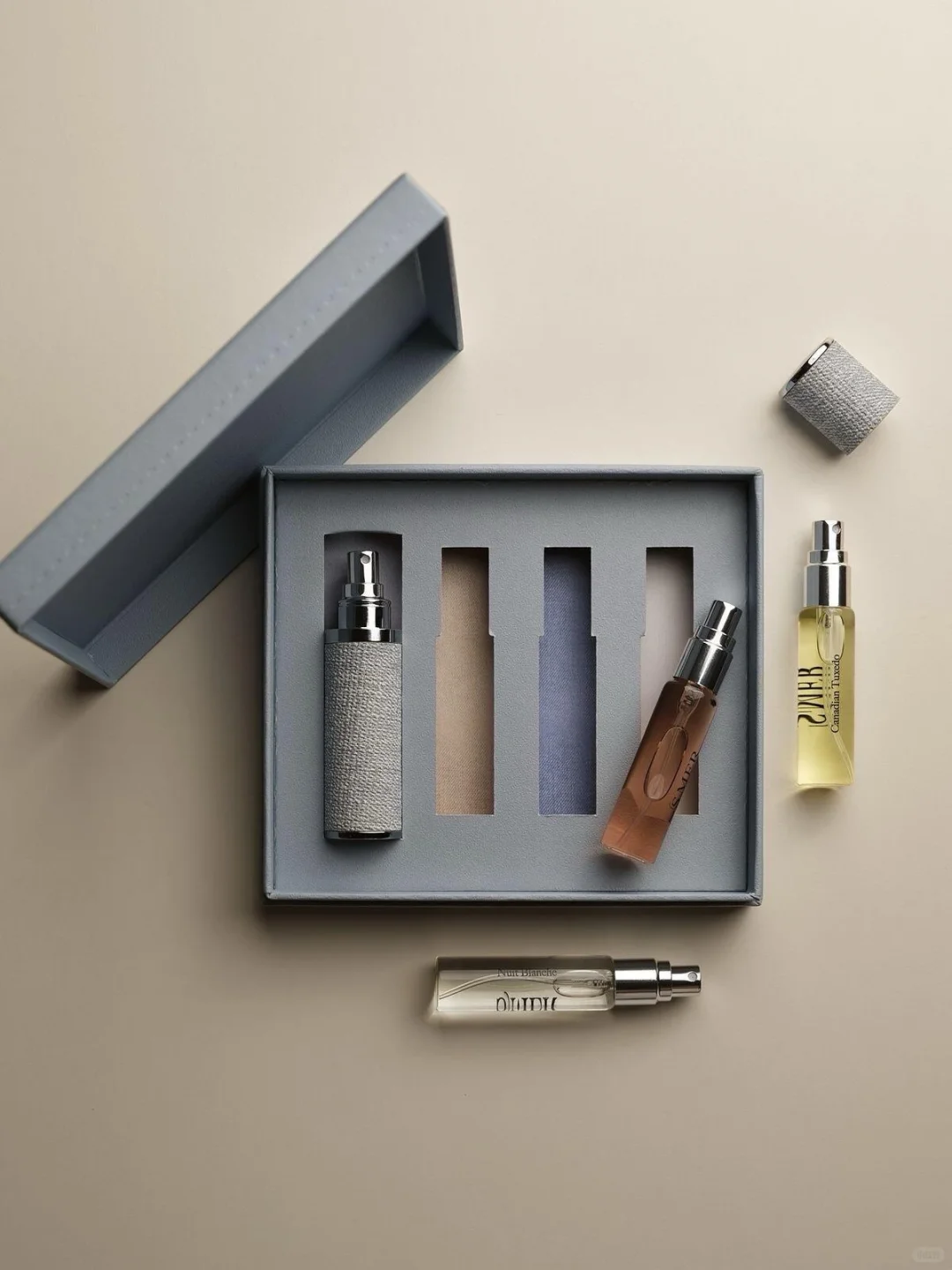
Start with a component list. A scent guide carries approved product information. A personal record provides writing space. A voucher explains an actual benefit and its conditions. Not every set offers a credit, and not every credit arrives on a physical card. If one component serves several purposes, separate them clearly with headings.
For each item, specify quantity, finished dimensions, folded condition, language, artwork version, packing sequence and supplier. Use consistent names or identifiers across the vials, tray positions and cards. Position alone is a weak identifier once samples have been removed or rearranged. Treat the paper components as part of the complete set specification.
Make scent information identifiable outside the box
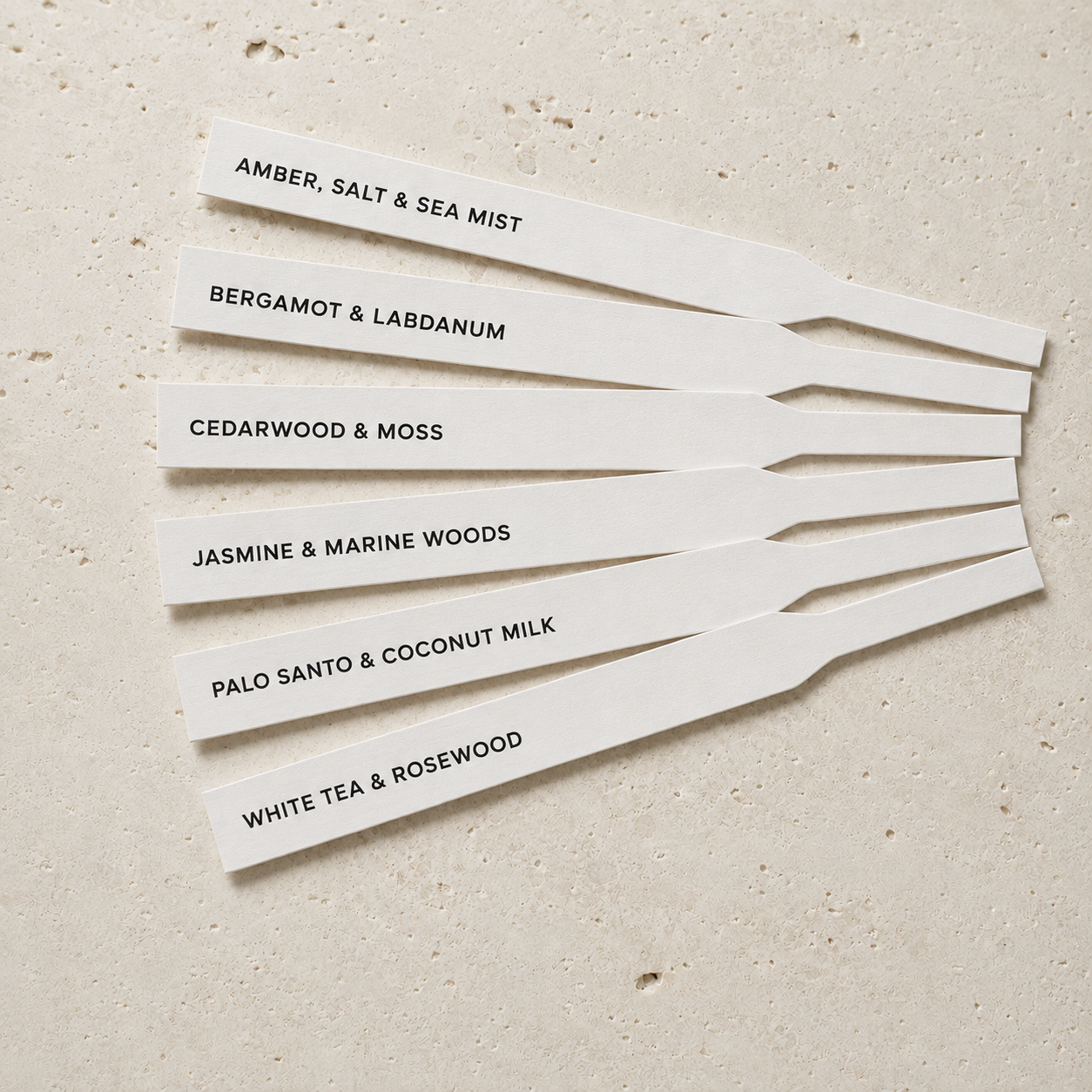
Keep the brand and exact fragrance name on a card that may be retained separately. Add a concise description approved by the brand. Check translated names against vial labels. Colour and illustration can help navigation, but a printed name should remain available. Scent notes describe an olfactory idea; they are not automatically an ingredient declaration.
If the copy needs a folded guide, review type size, contrast, folds and reading order on a finished sample. Check writing areas with the specified paper and finish rather than assuming that a material name guarantees usability. Also distinguish a printed information card from a blotter intended for fragrance application. Confirm each component’s intended use instead of assuming every printed sheet is suitable for spraying.
Leave usable space for personal observations
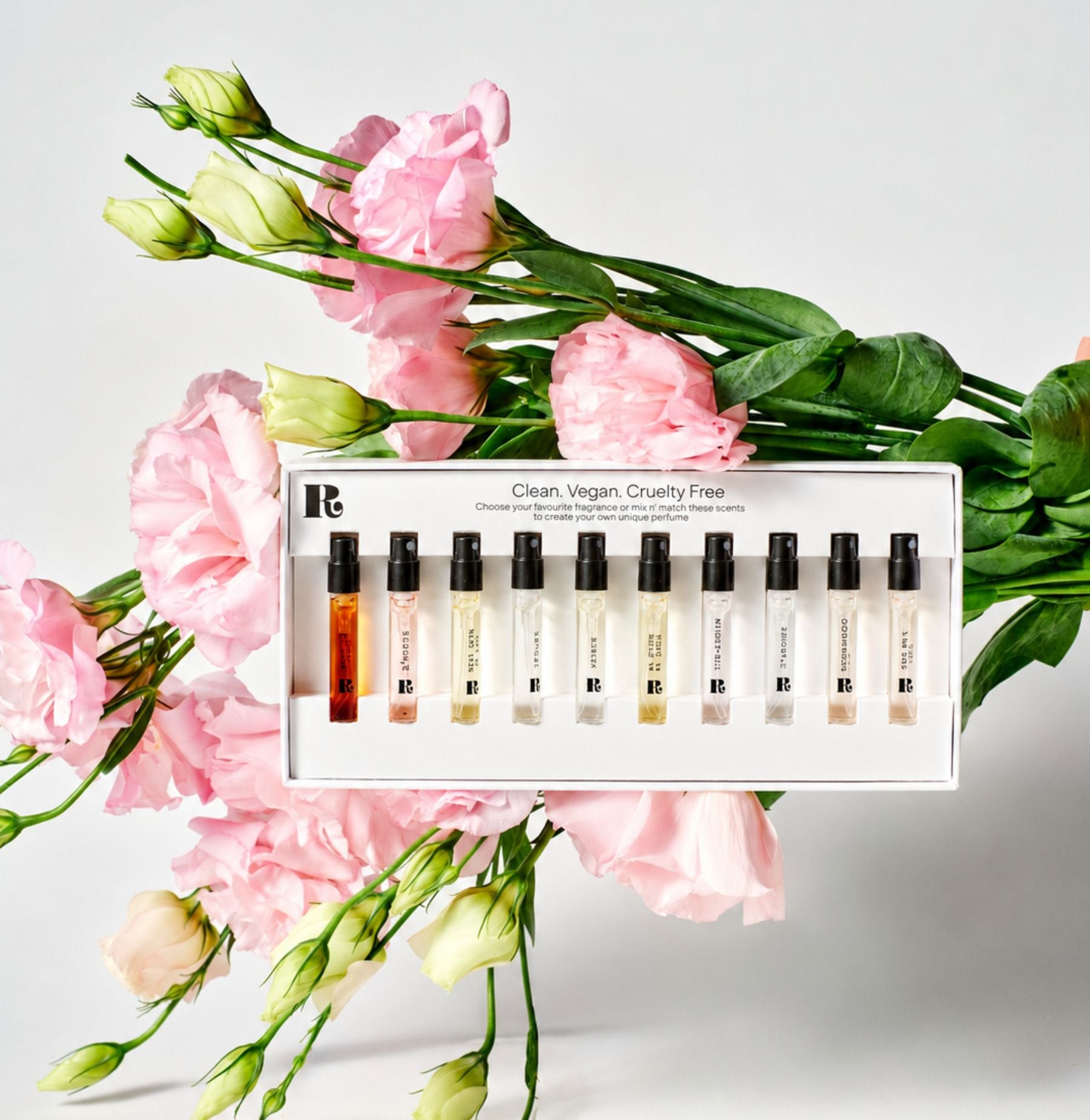
A record card can include a fragrance name or number, date, test method, first impression, later observations and a prompt to try again. Keep brand descriptions separate from the customer’s own entries. Avoid prefilled conclusions or rating language that suggests everybody should experience a fragrance in the same way.
Reduce the number of fields if the card is too small. Test whether a person can comfortably write in the available space on the actual finished stock. Preprinted names can reduce mismatches. On a combined record sheet, align row names and identifiers with the samples. A QR link can extend the guide, while printed names and basic instructions keep it useful without a phone.
Confirm the benefit before printing the voucher

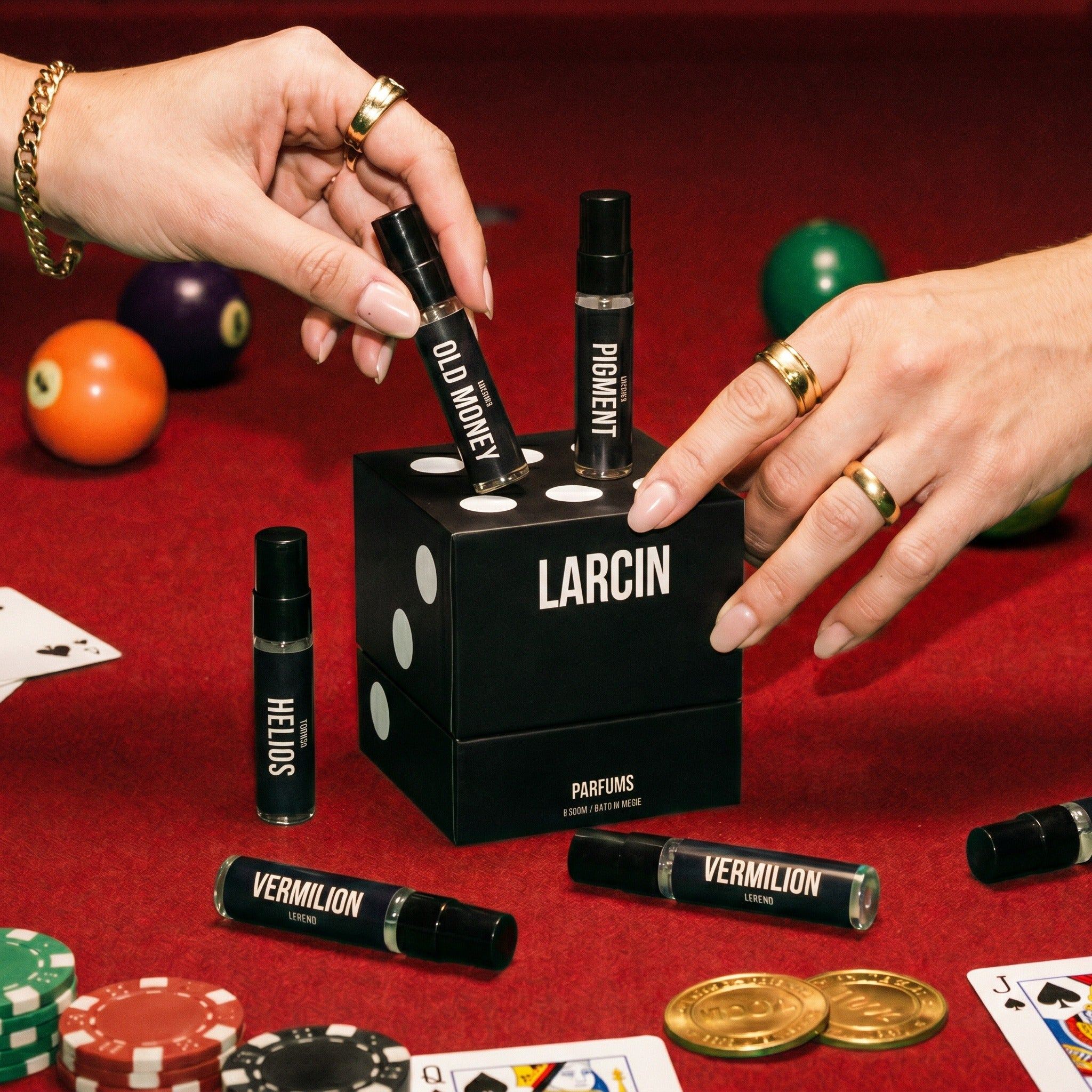
Establish whether the offer exchanges for a bottle, deducts a fixed amount or provides another benefit. Do not describe different mechanisms with a vague promise of a free full-size perfume. Ask the benefit owner to confirm eligible products and sizes, territory, purchase and redemption channels, validity and its starting point, required proof, combination rules, transferability, stock handling and a help route.
Customers should be able to obtain material conditions before purchase, rather than discovering them only inside a sealed box. Keep the card and online terms consistent, and maintain a version date or management reference. If a code is delivered by email, explain that route accurately. A gift recipient should not be left searching for a physical voucher that was never included. A photographed information card is not evidence of a redemption benefit.
Unique codes require coordination between the offer system, print data and packing process. Check the route in a test environment or with an authorised test benefit. Do not consume a customer’s entitlement or expose live codes in public previews. Clearly label illustrative wording as an example so that it cannot be mistaken for an active promotion.
Check access and packing with the complete set
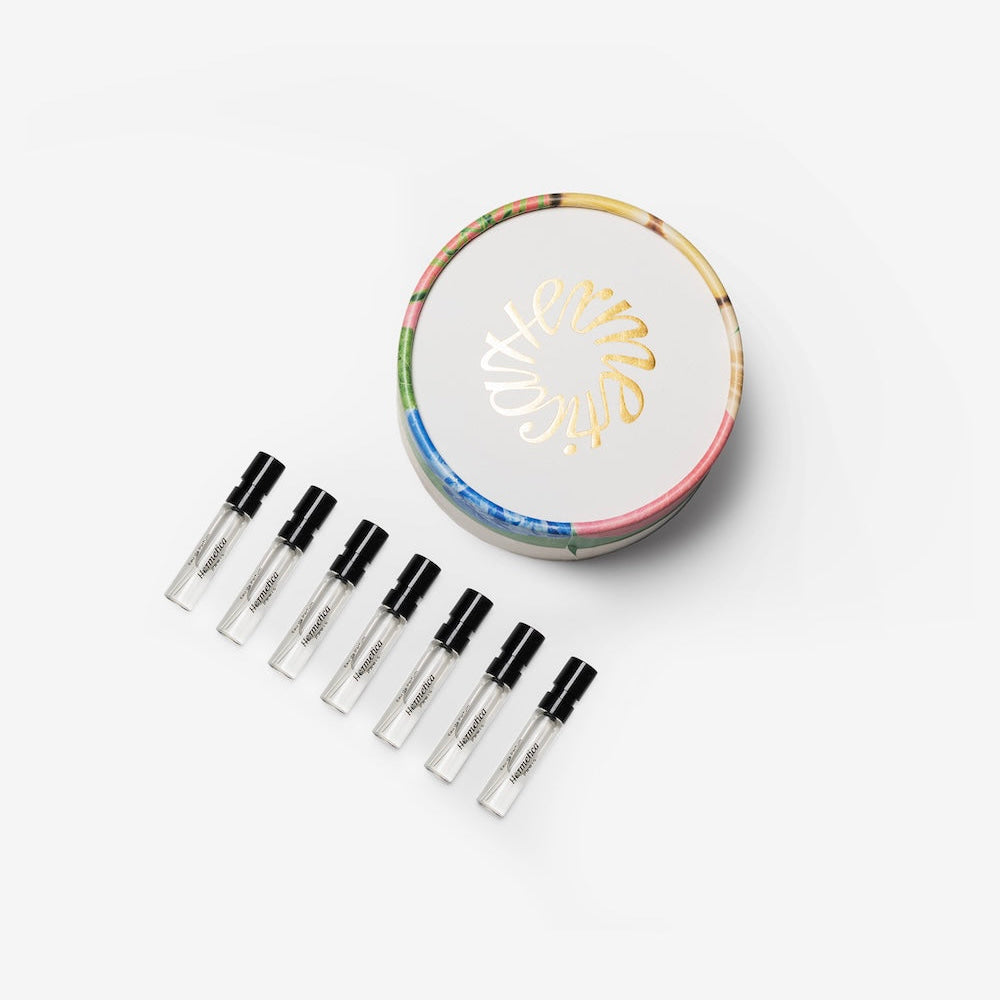
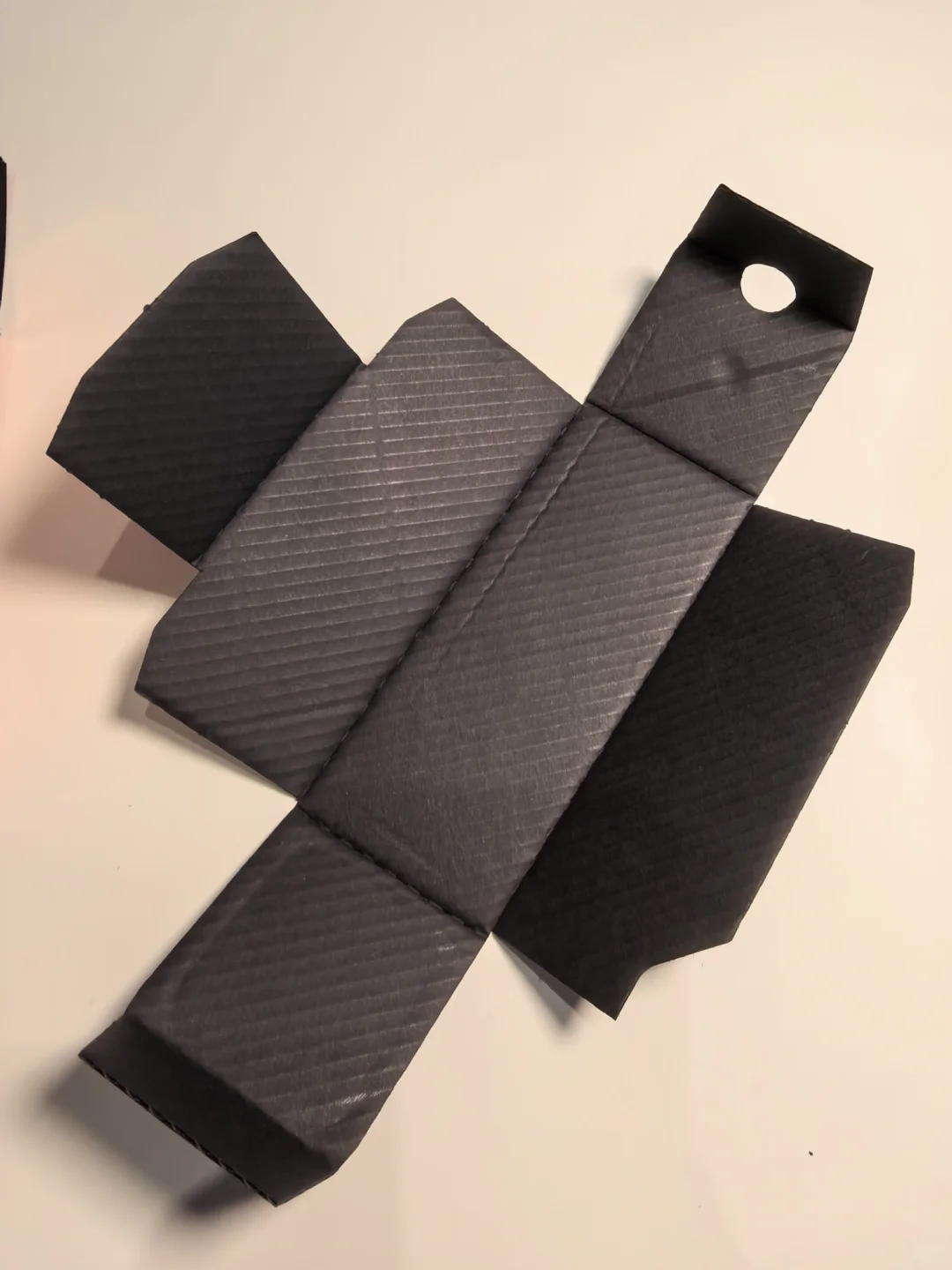
Possible locations include a visible separate position or a pocket in the lid, subject to the structure and opening sequence. The card should not obscure fragrance names, obstruct vial removal or prevent closure. If it is loosely inserted, check whether it falls out or is easily mistaken for disposable packing material during opening.
Use the actual bottles, closures, labels, supports and paper components to assess removal, replacement, closure and assembly order. Recheck after changes to stock thickness, folding or finishing. Transit protection, leakage and material compatibility require appropriate verification. Neither an attractive card nor a photograph establishes those properties.
Include cards in version control and delivery checks
State who supplies copy, translations, variable data, printed cards, packing and the benefit system. Do not assume a packaging printer also operates redemption. Once quantities and versions are agreed, compare names and offer statements across vial labels, tray identifiers, cards, outer packaging and the relevant web pages.
Review one complete use sequence: open the set, find the guide, identify a removed sample, write a note, locate the benefit conditions and check the approved test route. Retain approved artwork, finished photographs, test results and the version list for reorders. Clear information and accessible placement make the cards useful parts of the discovery set.