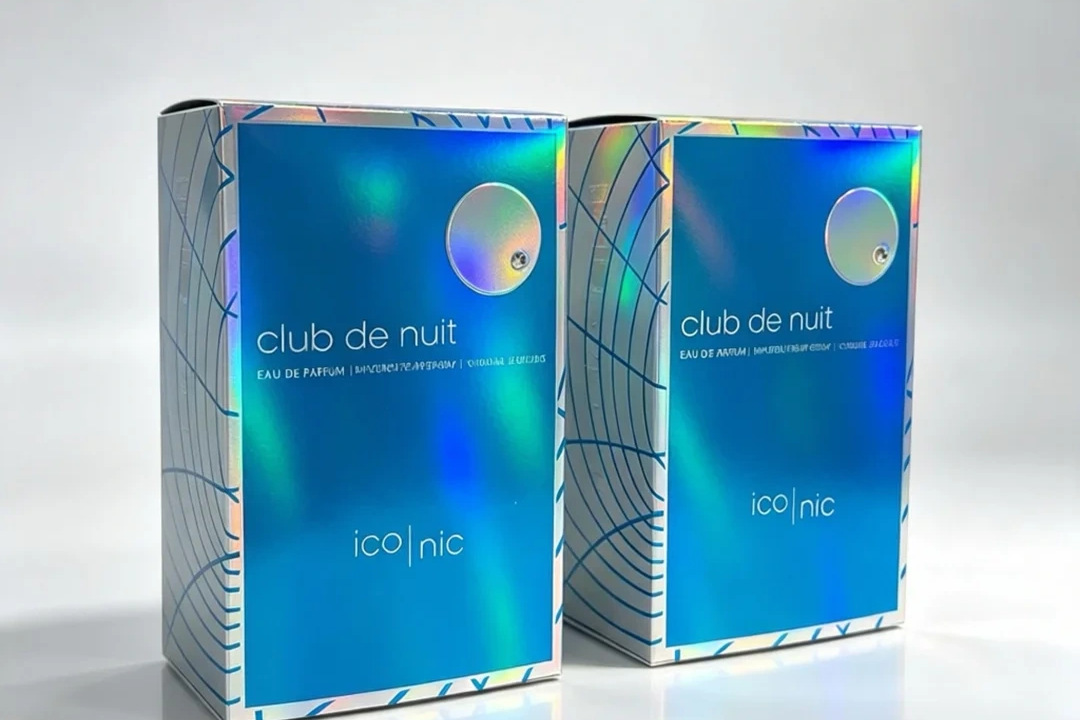
Holographic finishes can shift color and pattern with the angle. Decide whether the effect belongs on a full panel, around a mark or inside the box. Compare holographic film, diffractive board and localized transfer while keeping the product name readable.
Judge the effect from realistic angles
View the pack upright at shelf height, then in angled light. Reserve a low-glare area for important copy if the rest of the panel shifts strongly. A limited release may use a wide effect, while a regular line can keep it to a border or pattern. Ask for several samples and clarify whether the pattern is directional or positioned.


Compare full-surface and localized effects
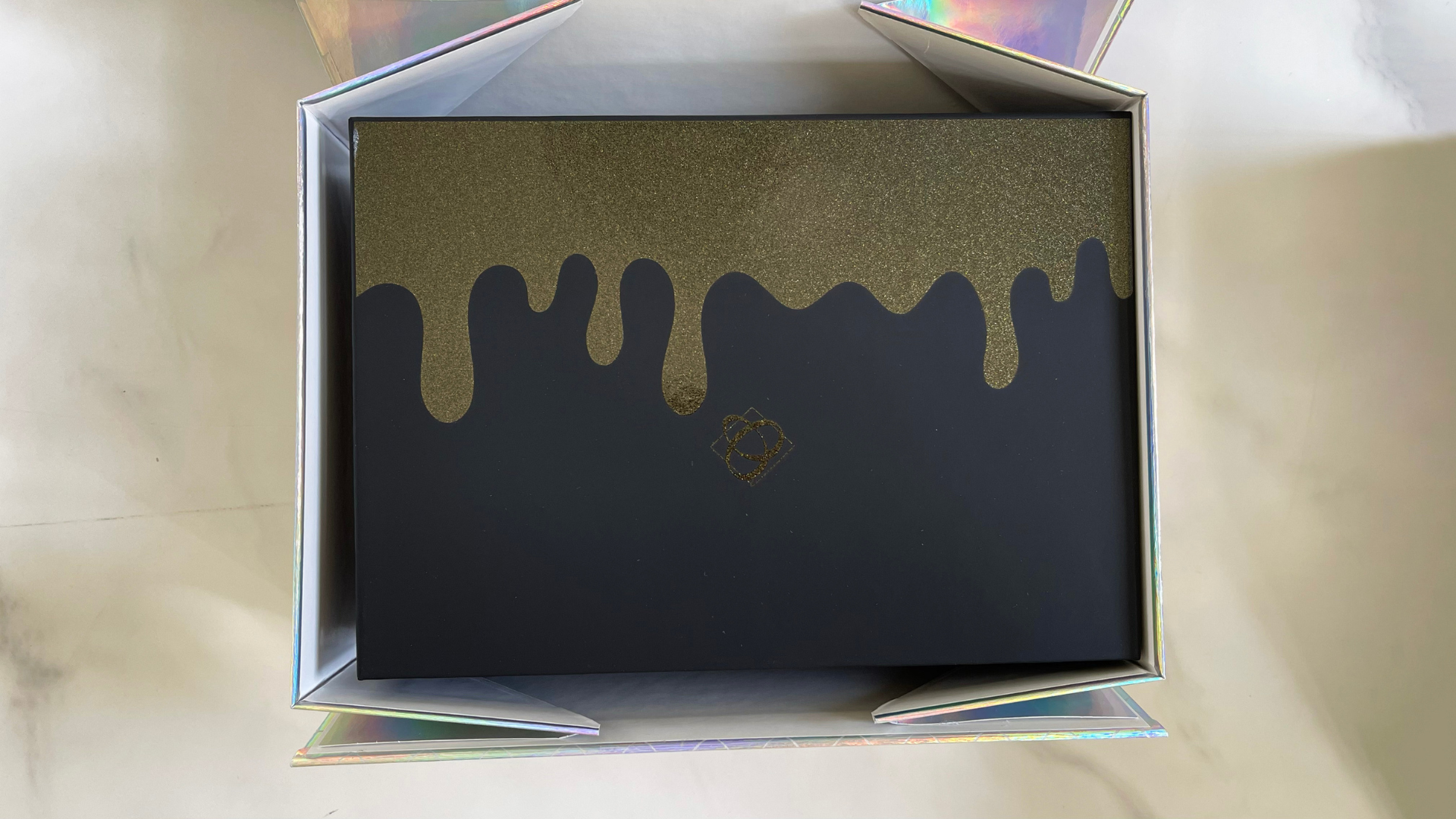
Lamination changes the surface and may require a specific web direction at imposition. Check foil compatibility, glue and rub resistance. Printing on diffractive board calls for compatible inks, opaque white and forming conditions. A local transfer keeps contrast near essential copy and can add registration and tooling. Have the quote name the actual materials, finishes and structural changes.
For a BravoPackage limited-edition scent, sample a local accent and a full holographic surface. Give the scent name and code a stable background. If reflections bury them at shelf angle, move the effect inside the lid and check the formed creases for whitening.

Mark areas where color must stay consistent
Map the reflective areas, name, brand color and barcode. Compare full, partial and absent opaque white under transparent inks. Scan the real code with the intended equipment and lighting. Establish orientation and alignment where a pattern crosses a panel or join.


Test folds, gluing and wear
Check pattern direction, brightness and alignment on the flat sheet. On formed cartons, inspect folds and seams for whitening, delamination, lifting or assembly problems. Pack samples in the intended shipper and check contact between boxes. View and photograph the carton from realistic angles to confirm the name and size remain visible.


Agree variation limits for the first order
Retain a reference and dieline showing pattern direction. Record expected changes with angle and areas that need to match across units. Recheck color zones, adhesion and scanning after film, pattern or substrate changes. If you plan a recyclability claim, ask for the full material construction and market-specific supporting information. Confirm minimums and material availability for reorders.
